Internal Pressure Equalization: Why Your AC Hisses Briefly at Startup
August 17, 2026
You are relaxing in your living room, trying to beat the heat, when your outdoor compressor kicks on. Instead of the familiar, smooth hum you expect, you hear a sharp, sudden hiss. You immediately wonder if something is broken. Understanding Internal Pressure Equalization: Why Your AC Hisses Briefly at Startup is the key to knowing whether you have an emergency or a perfectly functioning unit.
During heavy August late-summer cooling, this sound becomes much more frequent as your system works overtime. At Air On Demand, our team fields countless calls this time of year from Miami homeowners worried about this exact noise. When that unexpected noise happens, you face a direct decision point: do you shut the system down and call for emergency repair, or do you let it run? The sudden hiss of escaping air or gas naturally puts any homeowner on high alert. We rely heavily on our cooling equipment to keep our homes safe and comfortable, and any disruption feels like an immediate threat to that comfort.
Before you rush to turn off the thermostat, it helps to look at the mechanics of what is actually happening inside the metal cabinet outside your home. Whether you need extensive knowledge about air conditioning systems or reliable AC repair in Miami, understanding the physics behind your cooling equipment provides profound peace of mind and prevents unnecessary panic.
If you search online for "ac making hissing noise," you will often find dire warnings about catastrophic refrigerant leaks. The internet is full of worst-case scenarios that can make any homeowner incredibly anxious. It is easy to assume that any hissing sound means expensive chemicals are venting into your backyard.
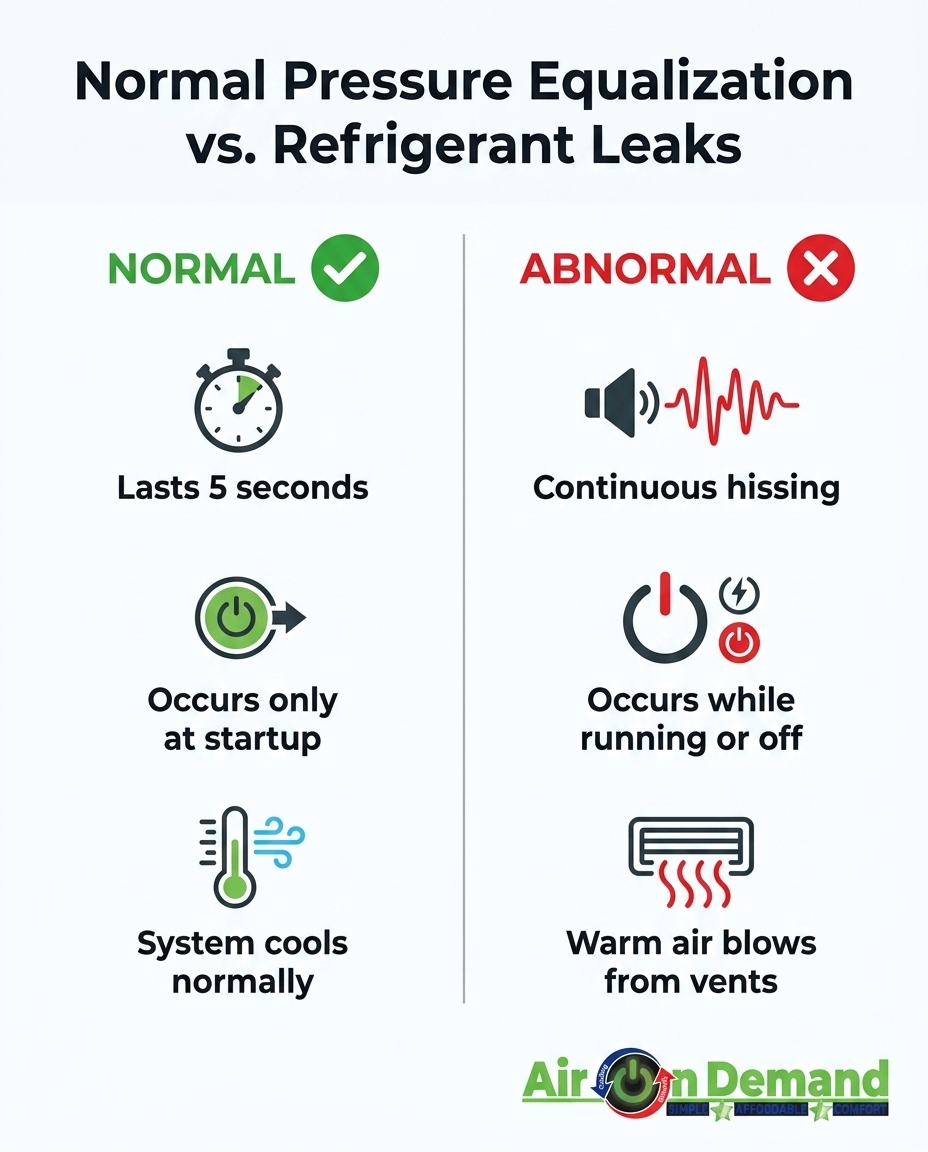
However, the critical differentiator between a normal operational function and a severe system failure comes down to time. When our technicians arrive at a home, the first thing we teach our customers is the 5-second rule. A normal operational hiss lasts exactly that—a brief 5-second duration. This specific sound occurs at the exact moment the compressor engages, not continuously while the fan runs. It is a temporary mechanical reaction to the system waking up and moving fluids.
Once the 5-second duration passes, the sound should transition smoothly into the steady, familiar hum of standard operation. If your system follows this exact pattern, it is operating exactly as the manufacturer intended.
Monitoring the exact length of the sound is the easiest way to diagnose the severity of the situation from your own property. If the hiss stops within five seconds, the system has successfully balanced its internal pressures and is ready to cool your home. If the noise continues for ten, twenty, or sixty seconds, the system is no longer balancing pressure. In our experience servicing Miami's diverse AC and heat pump installations, a prolonged hiss means the system is likely losing refrigerant through a physical hole or struggling with a blocked internal valve. By simply counting to five when the unit kicks on, you can confidently rule out most major emergencies.
To understand the noise, you have to understand how the machine actually works. Air conditioners do not "create" cold air out of nothing. Instead, they move heat out of your home by manipulating refrigerant pressure. The system is divided into two distinct halves: a high-pressure side (the condenser located outside) and a low-pressure side (the evaporator coil located inside).
These two sides are separated by a critical component called the metering device, often referred to as a thermal expansion valve (TXV) or a fixed orifice. When the unit is off, the pressure naturally attempts to balance out across this valve, setting the stage for the next startup cycle. In a demanding environment like Miami FL, where units work incredibly hard for months on end, our installation crews see firsthand how this balancing act is a constant, daily occurrence.
The metering device acts as a deliberate bottleneck to control the flow of liquid refrigerant. It creates the massive pressure drop necessary for the refrigerant to absorb heat from your home's indoor air. Think of it like placing your thumb tightly over the end of a flowing garden hose. The water—or in this case, the chemical refrigerant—builds up intense high pressure behind your thumb and sprays out at a much lower pressure on the other side.
When the system shuts down, the high pressure behind that "thumb" slowly bleeds through the tiny opening to the low-pressure side until both sides are completely equal. This equalization must happen so the compressor does not have to fight against a massive wall of pressure the next time it tries to start. The hissing sound is simply the physical evidence of this necessary pressure transfer.
The exact moment the compressor turns on is a violent mechanical event. Refrigerant is suddenly forced through the system at high velocity. The physical rush of gas and liquid is exactly why an air conditioner making hissing noise occurs momentarily. It is the audible evidence of internal pressure equalization successfully taking place.
Here is the step-by-step breakdown of exactly what happens during that brief 5-second duration:
1. The Thermostat Calls for Cooling: The indoor temperature rises above your set preference, and your thermostat sends an electrical signal to the outdoor compressor to begin the cooling cycle.
2. The Compressor Engages: The compressor violently re-pressurizes the refrigerant. It acts as a massive vapor pump that pushes the chemical compound through the copper lines toward your home.
3. Refrigerant Hits the Bottleneck: The newly pressurized liquid refrigerant rushes toward the narrow metering device at a very high velocity, looking for a way into the indoor coil.
4. Pressure Equalizes: The sudden surge of gas and liquid squeezing through the tiny opening of the metering device creates an audible hiss. If the system has been off for only a short time, the pressure differential between the two sides is much higher, making the resulting hiss significantly louder.
5. Normal Operation Resumes: After the initial 5-second duration, the pressure stabilizes across the valve, the hiss fades completely, and the system settles into a steady hum.
If this sequence does not resolve smoothly, or if the unit struggles to turn over entirely, scheduling a professional AC inspection is the safest next step to protect your equipment from permanent damage.
A common query we get from worried homeowners is why an AC makes a hissing noise when turned on versus when it is actively running. A normal pressure equalization hiss stops completely after the initial 5-second duration. Conversely, a true refrigerant leak produces a continuous, high-pitched hissing or bubbling sound that persists as long as the system is pressurized.
Refrigerant leaks are serious issues that are often accompanied by warm air blowing from your indoor vents and solid ice forming on your evaporator coils. Our highly trained technicians at Air On Demand possess the technical expertise to accurately diagnose normal operational sounds versus failing components, ensuring homeowners never pay for unnecessary repairs when a sound is perfectly normal. If you hear a noise that doesn't stop, you might be dealing with a situation that requires diagnosing high-pressure hissing sounds.
• Duration of the Sound — Normal Pressure Equalization: Brief 5-second duration only. — Dangerous Refrigerant Leak: Continuous hissing while running or off.
• Timing of the Noise — Normal Pressure Equalization: Only at the exact moment of startup. — Dangerous Refrigerant Leak: Anytime the system is pressurized.
• Cooling Performance — Normal Pressure Equalization: System cools the home normally. — Dangerous Refrigerant Leak: Warm, humid air blows from vents.
• Accompanying Warning Signs — Normal Pressure Equalization: None; smooth transition to a steady hum. — Dangerous Refrigerant Leak: Frozen evaporator coils or bubbling sounds.
During August late-summer cooling, as kids head back to school and the heat lingers, systems operate under maximum load with very short off-cycles. When the temperature outside refuses to drop, your thermostat constantly demands more cold air. Because the off-cycle is so incredibly brief, the internal pressure simply does not have enough time to fully equalize while the unit is resting.
In Miami's extreme heat and humidity, AC units cycle on and off frequently throughout the day. This regional climate reality makes homeowners highly attuned to startup noises. When the compressor kicks back on after only a few minutes of rest, it hits a much higher pressure wall, making the resulting hiss much more noticeable, sharp, and aggressive.
Homeowners may hear this specific noise dozens of times a day simply because the system is cycling frequently to combat the intense, relentless heat. The more often the system cycles, the more frequently you will hear that sudden rush of refrigerant. Understanding this environmental factor helps explain why the noise might seem louder or more frequent at the end of the summer compared to the cooler spring months. In fact, our service boards are typically packed in August specifically because these amplified sounds make homeowners suspect a breakdown.
While a brief startup hiss is a normal function of thermodynamics, other sounds are clear warning signs of mechanical trouble. It is vital to outline the specific scenarios where a hissing noise transitions from normal physics to requiring professional intervention. In a demanding climate like Miami FL, we always stress to our customers that staying ahead of mechanical stress is crucial to extending the lifespan of your unit.
Here is what to look for when evaluating your system's sounds:
• Extended sound duration: If the hissing lasts longer than the standard 5-second duration, it warrants immediate investigation. The system is failing to balance pressure.
• Accompanying mechanical noises: Listen closely for accompanying sounds like grinding, squealing, clanking, or bubbling. These sounds indicate severe mechanical stress, failing compressor valves, or a dying fan motor.
• Decreased cooling performance: Pay close attention to your indoor comfort. If the hiss is accompanied by rising indoor temperatures or high humidity levels, the system is struggling to remove heat and may lack the necessary refrigerant charge.
• Visible ice accumulation: Check the outdoor refrigerant lines and the indoor evaporator coil. If you see ice forming alongside a continuous hissing sound, you likely have a significant refrigerant leak causing a pressure drop.
• Frequent short cycling: If the unit turns on, hisses loudly, and shuts off repeatedly within a span of minutes, the system is short-cycling. This points to an electrical failure or a tripped safety switch.
Regular check-ups and routine AC maintenance ensure that all internal valves and metering devices are operating at the correct pressures, preventing minor pressure issues from becoming catastrophic major breakdowns.
Understanding that a brief hiss is just internal pressure equalization can save you incredible amounts of unnecessary worry during heavy August late-summer cooling. You do not need to panic every time the compressor kicks on and makes a brief noise. The physics of your system require that pressure transfer to keep your home comfortable.
However, if you are ever in doubt about the sounds your system is making, professional guidance is always available. Ensure your system is running safely and efficiently by having a qualified technician evaluate any continuous or concerning noises. For reliable, expert AC repair in Miami, trust a team that understands the exact physics of your cooling equipment and delivers the peace of mind you deserve.
A hissing noise at startup is typically the sound of normal internal pressure equalization. When the compressor kicks on, it forces high-pressure refrigerant through a narrow metering device, creating a brief, audible rush of gas and liquid. This is a completely normal physical reaction that allows the system to begin absorbing heat from your home. The sound should only last for a few seconds before fading away.
AC pressure equalization is the process of balancing refrigerant pressure between the high-pressure condenser outside and the low-pressure evaporator inside. When the system is off, the pressure naturally tries to level out across the metering device. When the unit turns back on, the sudden surge of refrigerant being pumped through the system causes a temporary pressure differential that often results in a brief hissing sound.
The easiest way to tell the difference is by timing the duration of the sound. A normal pressure equalization hiss lasts for about five seconds right at startup and then fades into a smooth hum. A true refrigerant leak produces a continuous hissing or bubbling sound that persists the entire time the system is running, and often continues even when the thermostat is turned off.
Yes, a brief hiss lasting only a few seconds at startup is completely normal. However, if the hissing is continuous, overly loud, or accompanied by warm air blowing from your vents, it is no longer a normal operational sound. Continuous hissing usually points to a refrigerant leak or a failing internal valve that requires professional attention to resolve.
A normal startup hiss should last for a brief 5-second duration. Once those five seconds have passed, the internal pressures have equalized enough for the sound to stop entirely. If the noise continues for ten seconds, a full minute, or the entire cooling cycle, you should turn off the system at the thermostat and request a professional inspection.
A refrigerant leak typically sounds like a continuous, high-pitched hissing, whistling, or bubbling noise coming directly from the copper refrigerant lines or the indoor coil. Unlike a normal startup hiss, this sound does not stop after a few seconds. It is also frequently accompanied by a noticeable drop in cooling performance and potential ice buildup on the coils.