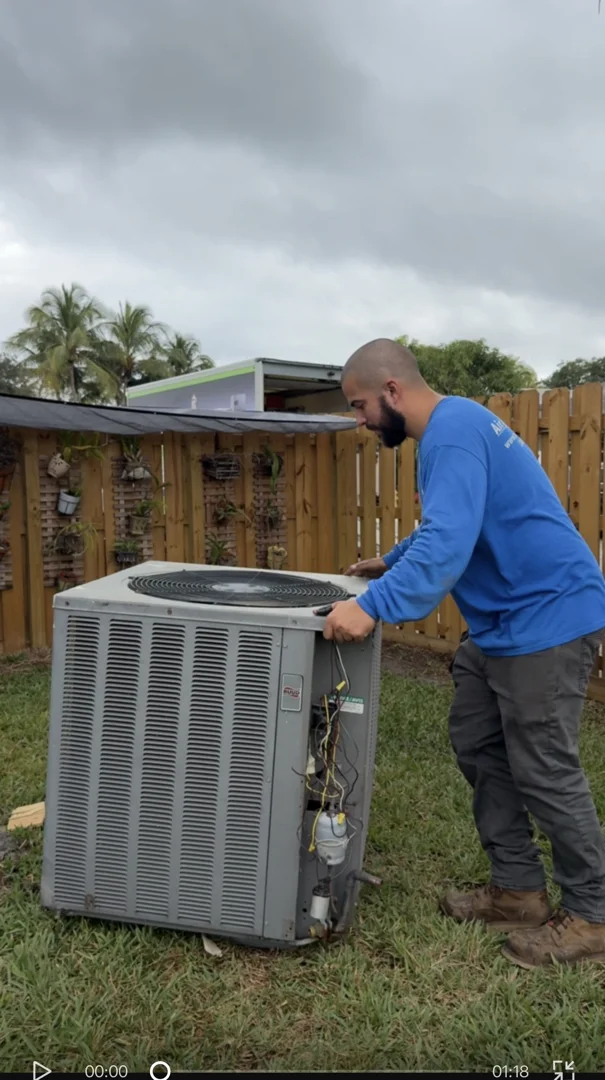
How to Secure Your Outdoor AC Unit Before a Storm Hits
August 17, 2026
Knowing how to protect your ac during hurricane season can mean the difference between staying cool after the storm passes and facing a system replacement. Here's a quick overview of the most important steps:
1. Schedule a pre-season inspection before June 1
2. Secure the outdoor unit with hurricane straps rated for 150 mph winds
3. Clear a 10-foot perimeter of debris, loose furniture, and branches
4. Install surge protection to guard against lightning and grid fluctuations
5. Shut off power at the breaker when a hurricane watch is issued
6. Cover the condenser with a breathable, well-secured cover
7. Wait at least 24 hours after power returns before restarting your system
8. Call a licensed technician if the unit was flooded, tipped, or shows signs of damage
If you live in South Florida — in Kendall, Coral Gables, Homestead, or anywhere across Miami-Dade — you already know that hurricane season is not a hypothetical. It runs from June 1 through November 30, and the storms it brings can do serious damage to one of the most important systems in your home: your air conditioner.
A new AC installation in the Jacksonville area is a significant undertaking, and a hurricane-damaged unit can require extensive repairs. In South Florida's coastal climate, the stakes are even higher. Wind-driven debris, floodwater, power surges, and salt air all create unique threats to outdoor condenser units — threats that most homeowners don't think about until it's too late.
The good news is that most hurricane damage to AC systems is preventable. With the right preparation before the season starts and a clear plan as storms approach, you can protect your system and keep your family comfortable when it matters most.
Living in places like Palmetto Bay or Pinecrest, we enjoy the beautiful tropical climate, but that same climate turns fierce come June. The primary threats to your HVAC system during a hurricane are three-fold: wind, water, and electricity.
When wind speeds exceed 74 mph, your outdoor condenser unit becomes a target. It’s not just the wind itself; it’s what the wind carries. High-speed projectiles—ranging from roof shingles to your neighbor’s patio umbrella—can strike the delicate aluminum fins of your condenser. If these fins are crushed, your AC "suffocates," leading to overheating and potential compressor failure.
Furthermore, Can Severe Weather In Miami Disrupt My Air Condi is a question we answer frequently. The answer is a resounding yes. Beyond physical impacts, electrical surges and lightning strikes are the number one cause of post-hurricane AC failures. Even if your home isn't hit directly, grid fluctuations as power lines go down can fry sensitive control boards and capacitors.
Finally, we have to talk about floodwater and salt air. For our coastal neighbors in Lakes By the Bay or Cutler Bay, salt air corrosion is a year-round battle, but hurricane-driven rain can force salt and moisture into normally protected seals.
In April 2026, as we look toward another active season, we want to emphasize that lightning doesn't have to strike your house to destroy your AC. Lightning can cause massive electrical surges that travel through the power lines. These surges lead to sparks and fires in HVAC wiring and can cause immediate failure of the compressor motor.
Even after the storm, "power restoration jolts" occur as utility crews work to bring the grid back online. These sudden spikes in voltage can be just as damaging as the storm itself.
Flooding is perhaps the most devastating threat because its damage is often internal and invisible. According to FEMA, even a small amount of floodwater can cause significant damage to a home. For your AC, standing water can quietly destroy electrical components and the compressor.
• Wind (74+ mph) — Potential Damage: Unit displacement, crushed fins — Prevention Strategy: Hurricane straps, plywood cages
• Flying Projectiles — Potential Damage: Punctured coils, broken fan blades — Prevention Strategy: Clearing the perimeter, protective covers
• Floodwater — Potential Damage: Electrical shorts, internal corrosion — Prevention Strategy: Elevating the unit (12-24 inches)
• Electrical Surges — Potential Damage: Blown fuses, fried control boards — Prevention Strategy: Surge protectors, manual breaker shutoff
Preparation should start long before a tropical depression even has a name. In Miami-Dade, the "clear sky" days of April and May are the best times to ensure your system is structurally sound.
First, check your mounting. Your outdoor unit should be firmly anchored to a concrete pad. We recommend using code-approved hurricane straps that can hold up to 150 mph winds. These straps, combined with heavy-duty anchor bolts, prevent the unit from tipping over or becoming a "lawn dart" during extreme gusts.
Additionally, Protect Your Air Conditioner When It S Rainy involves more than just wind protection. A professional pre-season inspection is vital. A technician can check for existing leaks or weakened components that might fail under the stress of a storm. 25% to 40% of the energy used for cooling is wasted in dirty, poorly maintained systems. A clean system is a resilient system.
A pre-season "health check" should include:
• Filter Replacement: Ensure maximum airflow before the humidity spikes.
• Coil Cleaning: Remove salt buildup and dirt that can cause corrosion.
• Refrigerant Levels: A system low on refrigerant works harder and is more likely to overheat if airflow is restricted by debris.
• Electrical Connections: Tightening connections prevents vibrations from shaking them loose during high winds.
Your yard is a potential ammunition depot for a hurricane. We suggest maintaining a 10-foot debris-free radius around your outdoor unit.
• Tree Trimming: Trim overhanging branches that could snap and crush the unit.
• Loose Furniture: Bring patio chairs, grills, and garden gnomes inside. At 80 mph, a plastic chair becomes a wrecking ball.
• Yard Drainage: Ensure the area around the unit doesn't pool water. Proper grading or clearing gutters can prevent localized flooding around the condenser base.
As a hurricane approaches—usually when a watch is issued 48 to 72 hours before impact—it is time to execute your shutdown plan.
Many homeowners make the mistake of just turning off the thermostat. This is not enough. You should switch the AC system to "OFF" at the thermostat and then locate your main electrical breaker and flip it to the "OFF" position. This physically disconnects the unit from the grid, protecting it from those nasty electrical surges we mentioned earlier.
While you are at it, consider your indoor air quality. Indoor air can be 2 to 5 times more polluted than outdoor air, and during a storm when the house is sealed tight, that pollution stays trapped. Ensuring your filters are fresh before you shut down is a small but important step for your family's comfort.
We cannot stress this enough: Do not run your AC during the storm. Some people try to keep the house cool as long as the power is on, but this is incredibly risky. High winds can cause the outdoor fan to spin in the wrong direction, or debris can get sucked into the unit while it is running, leading to immediate compressor burnout. There is also a significant risk of electrical fire if water enters the system while it is energized.
If you decide to cover your unit, do it correctly. Use a manufacturer-approved, breathable AC cover or a heavy-duty tarp secured with multiple bungee cords.
• Avoid Plastic Wrap: Never wrap your unit tightly in plastic or shrink wrap. This traps moisture inside, which leads to rapid corrosion and can damage the electrical components.
• Plywood Cages: For Category 4 or 5 storms, some homeowners in areas like Country Walk build a three-sided plywood structure around the unit to deflect large debris. Just ensure it is anchored deeply into the ground or the concrete pad.
Once the winds have died down and it is safe to go outside, do not rush to flip the breaker. A cautious approach is required to avoid turning a minor issue into a total system failure.
Start with a visual inspection. Is the unit still level? Are there high-water marks on the side? If the unit was submerged, do not turn it on. Water in the electrical compartment requires a professional to clean and dry the components to prevent a short circuit.
Also, You Know What Can Withstand A Hurricane Your Duc is a great reminder that while your outdoor unit is vulnerable, your ductwork is often the unsung hero of your home. However, if water got into your ducts through a damaged roof or window, you’ll need an inspection to prevent mold growth.
1. Remove Covers: Take off all tarps, plywood, or bungee cords. Running a covered unit will burn out the compressor in minutes.
2. Clear Debris: Remove leaves, pine needles, or bits of screen from the top and sides of the condenser.
3. Check Refrigerant Lines: Look for kinks, bends, or hissing sounds.
4. Restore Power at Breaker: Flip the breaker back to "ON."
5. The 24-Hour Rule: Wait. If the power was out for more than a few hours, your unit needs time for the "crankcase heater" to warm the compressor oil. This prevents "slugging," where liquid refrigerant enters the compressor and causes catastrophic damage. We recommend waiting at least 24 hours after power is stable.
6. Thermostat Activation: Set the thermostat to "COOL" and listen for unusual noises like grinding or popping.
You should call us at Air On Demand if you notice any of the following:
• The unit is tipped or has shifted on its pad.
• You see crushed fins or visible holes in the cabinet.
• The breaker trips immediately after you try to start the unit.
• You smell burning electronics or see smoke.
• The system runs, but it only blows warm air after 12 hours.
If you are looking to upgrade your system in 2026, consider hurricane-rated equipment. Modern Daikin units are built with durability in mind, but you can enhance them with long-term protection strategies.
Unit Elevation: If you live in a flood-prone area of Homestead or Coconut Grove, talk to us about elevating your condenser on a 12-to-24-inch platform. This simple step can save the entire system from a minor storm surge.
Surge Protection: Install a whole-home surge protector as well as a dedicated HVAC surge protector. These act as "voltage sponges" that eat spikes before they reach your sensitive equipment.
Insurance Documentation: Take date-stamped photos of your AC unit from all angles before every hurricane season. This provides "before" evidence that claims adjusters love, making the process much smoother if you do suffer a loss.
Maintenance Plans: Enrolling in a maintenance plan with Air On Demand ensures you get priority service after a storm. When thousands of people are calling for repairs in Miami, being on a priority list is a major advantage. Plus, our Daikin products come with an industry-leading 12-year parts warranty and our Comfort Promise, giving you peace of mind year-round.
Yes, but with caveats. You must have a properly sized generator and a transfer switch installed by a licensed electrician. However, we still advise against running the AC during the actual storm. Wait until the winds have subsided and you can verify the outdoor unit hasn't been damaged by debris.
Do not turn it on. Even if the water has receded, mud and silt can be trapped inside the electrical components or the compressor. Operating a submerged unit can cause a fatal short circuit or permanent mechanical failure. It must be professionally cleaned and inspected first.
Generally, no. Standard manufacturer warranties cover defects in parts and workmanship, not "acts of God" like hurricanes, floods, or lightning strikes. This is why having proper homeowner's insurance and documenting your system with photos is so critical.
Protecting your home in Miami-Dade means more than just boarding up the windows. Your air conditioner is a vital part of your home’s comfort and safety, especially in the sweltering heat that follows a Florida storm. By following these steps on how to protect your ac during hurricane season, you are safeguarding your system and ensuring your family won’t be left in the heat.
At Air On Demand, we pride ourselves on being the local experts in residential AC service for Coral Gables, Homestead, Pinecrest, and the surrounding areas. Whether you need a pre-season tune-up, hurricane strap installation, or a post-storm inspection for your Daikin system, our team is ready to provide fast, reliable service with the professional touch you deserve.
Don't wait until the first tropical storm warning pops up on your phone. Schedule your professional AC service in Miami with Air On Demand today and stay ahead of the storm.