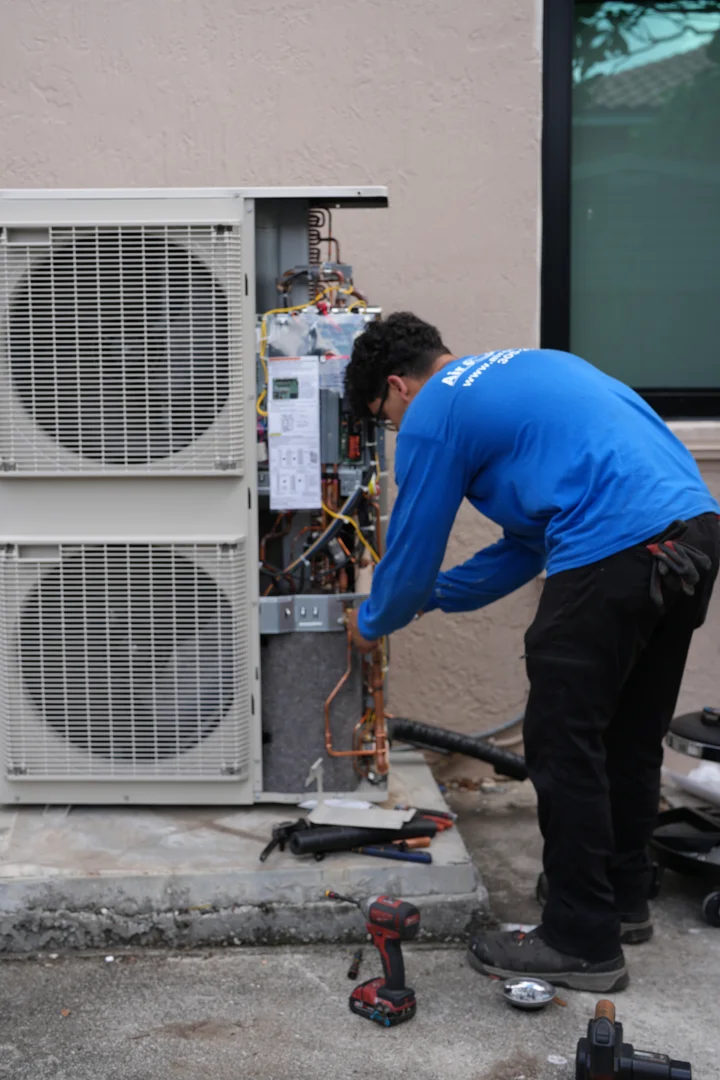
How to Fix Ice on AC Unit Fast
August 17, 2026
Ice forming on your ac unit causes and what to do is something every South Florida homeowner should know — because in Miami-Dade's relentless heat, a frozen system means zero cooling at exactly the wrong moment.
Here's a quick summary before we dive in:
Causes of ice on your AC unit:
• Dirty or clogged air filter blocking airflow
• Low refrigerant levels due to a leak
• Dirty evaporator coils
• Blocked or closed vents
• Faulty blower fan
What to do right now:
1. Turn your thermostat from COOL to OFF immediately
2. Switch the fan setting to ON to help thaw the coils
3. Check and replace your air filter
4. Let the unit thaw fully — typically 1 to 3 hours
5. Call a professional if ice returns after restarting
Ice on your AC is never a sign it's cooling extra well. It's a warning that something is wrong — and running the system while frozen can destroy your compressor, one of the most critical components to replace. The good news is that many cases start with something as simple as a clogged filter, and you can address it right now without any tools.
Read on to understand exactly why this happens, how to fix it safely, and how to make sure it never catches you off guard again.
To understand why your air conditioner is suddenly mimicking an Arctic glacier in the middle of a sweltering South Florida afternoon, we have to look at the physics of how your system cools. Your air conditioner doesn't actually "create" cold air; instead, it extracts heat and moisture from your indoor air and transfers it outside.
This heat exchange happens at the indoor evaporator coil. Inside these copper coils, refrigerant circulates under precise pressure. As warm, humid air from your home in Coral Gables or Palmetto Bay is blown across this cold coil, the refrigerant absorbs the heat.
However, if something disrupts this delicate balance of temperature, airflow, and pressure, the temperature of the evaporator coil will plummet below 32°F. When the moisture in your home's humid air hits a super-cooled coil, it instantly freezes. Layer by layer, ice builds up until your evaporator coils and the connected refrigerant lines are completely encased in a thick block of ice.
This drop in temperature and pressure is rooted in a scientific principle known as the Joule-Thomson effect. When a gas or refrigerant expands rapidly under low pressure, its temperature drops significantly. If your system is low on refrigerant or if airflow is restricted, the pressure inside the evaporator coil drops too low, causing the coil's surface temperature to fall far below freezing.
Ignoring a frozen air conditioner is one of the fastest ways to permanently ruin your system. Your AC's compressor, located in the outdoor unit, is designed to compress refrigerant gas, not liquid.
When your evaporator coils are insulated by a thick layer of ice, the refrigerant inside cannot absorb heat from your home's air. Because it doesn't absorb heat, the refrigerant remains a cold liquid instead of boiling off into a vapor. This liquid refrigerant travels back down the suction line to the outdoor compressor.
This dangerous phenomenon is called liquid slugging. Because liquids cannot be compressed, the liquid refrigerant entering the compressor can bend valves, break pistons, and completely destroy the compressor motor. If you want to dive deeper into why this occurs, you can read more about the Reasons Your AC Coils May Freeze.
By far, the most common reason for ice forming on your AC unit is restricted airflow. Your air conditioner needs a constant, steady stream of warm indoor air flowing over the evaporator coils to keep them warm enough to prevent freezing. If that airflow is choked off, the temperature of the coil drops below freezing, and ice begins to form.
Several issues can restrict airflow in your home:
• Clogged Air Filters: This is the absolute number-one cause of frozen AC systems. A filter caked in dust, pet dander, and Miami humidity acts like a solid wall, preventing air from reaching the coils.
• Blocked or Closed Vents: Many homeowners mistakenly believe that closing vents in unused rooms disrupts the system's static pressure, starves the system of air, and can cause the coils to freeze.
• Dirty Evaporator Coils: Dust that slips past a cheap or dirty filter can settle on the wet evaporator coils, forming a grimy barrier that insulates the coil and prevents heat exchange.
• Blower Fan Failures: If your blower motor is failing, running at the wrong speed, or dirty, it won't push enough air over the coils to keep them warm.
When airflow is severely restricted, your system has to work twice as hard to cool your home, which often leads to short-cycling. If you notice your system starting and stopping rapidly, check out our guide on Why Your AC Keeps Turning Off to see if restricted airflow is the underlying issue.
Another major cause of ice formation is low refrigerant. A common misconception is that air conditioners "use up" refrigerant over time, similar to gas in a car. In reality, your AC is a sealed, closed-loop system. The refrigerant is constantly recycled. If your refrigerant levels are low, you have a leak.
When there is a leak in your copper coils or refrigerant lines, the overall pressure within the system drops. According to the laws of thermodynamics, a drop in pressure directly results in a drop in temperature. The remaining refrigerant expands too much, causing the evaporator coil to drop below 32°F.
If you suspect your system is losing its charge, you should look for signs of a leak. These include:
• A hissing or bubbling sound near the indoor air handler or outdoor unit.
• Warm air blowing from your supply registers.
• Unusually high energy usage.
• Visible ice on the copper lines leading to the outdoor unit.
If you suspect this is your issue, read our article Are You Leaking Refrigerant to learn how to identify a leak early, and check out the Signs of Low Refrigerant Levels in Your Air Conditioner for a detailed breakdown of symptoms.
If you walk past your closet or garage in Kendall or Pinecrest and notice water pooling on the floor or a block of ice encasing your copper lines, you must act immediately. Do not wait for the system to "cool itself out."
Immediately switch your thermostat from COOL to OFF. This stops the cooling cycle and prevents the compressor from pumping more cold refrigerant through the frozen coils, halting further ice accumulation and protecting your compressor from liquid slugging.
Change your fan setting from AUTO to ON. This keeps the indoor blower fan running continuously even though the cooling is off. The blower will pull warm air from your home and push it over the frozen coils, which significantly speeds up the natural defrosting process.
While the system is thawing, pull out your air filter. If you cannot see light through it, replace it immediately. Putting a fresh, clean filter in place is the easiest way to restore proper airflow once the ice has melted.
As the ice melts, it will shed a substantial amount of water—sometimes several gallons. This water will drain into your primary condensate pan. If your condensate drain line is partially clogged, this sudden rush of water can overflow, leading to water damage on your ceilings, walls, or floors. Place towels around the indoor unit to catch any overflow, and check that water is draining safely to the outside. If your system is shut down and you need to troubleshoot further, refer to our guide on what to do when your AC Unit Not Cooling.
Thawing your air conditioner must be done safely. Attempting to speed up the process using aggressive methods can permanently damage your sensitive HVAC components.
Below is a comparison of safe, natural thawing methods versus unsafe methods that you should avoid:
• Natural Thawing (Fan ON, System OFF) — Safe?: Yes — Estimated Thaw Time: 1 to 3 hours (up to 24 hours for severe ice blocks) — Risk / Benefit: Benefit: Safely melts ice using ambient indoor air without risking damage to coils or electrical parts.
• Hair Dryers or Heat Guns — Safe?: No — Estimated Thaw Time: 30 to 60 minutes — Risk / Benefit: Risk: High heat can cause extreme thermal shock, cracking the copper refrigerant lines or warping aluminum fins.
• Chipping Ice with Sharp Tools — Safe?: No — Estimated Thaw Time: N/A — Risk / Benefit: Risk: Screwdrivers or knives will easily puncture the delicate copper coils, causing a catastrophic refrigerant leak.
• Pouring Hot Water on Coils — Safe?: No — Estimated Thaw Time: 30 to 45 minutes — Risk / Benefit: Risk: Rapid temperature changes can crack the coils, and excess water can ruin electrical components below.
If you notice that your system takes an unusually long time to thaw, or if you hear strange noises as the ice melts, your system may be signaling a deeper mechanical issue. Review our checklist of Signs That Your AC Is in Trouble to determine if you need to schedule a professional diagnostic visit.
In the humid climate of South Florida, your air conditioner runs almost continuously for most of the year. To prevent ice from forming on your AC unit in the future, you need to practice consistent, proactive maintenance.
• Replace Your Filters Regularly: In homes with pets or high dust levels in areas like Country Walk or Lakes By the Bay, check your air filter every 30 days. Replace it at least every 90 days to maintain unrestricted airflow.
• Keep Vents and Registers Open: Ensure that furniture, curtains, or rugs are not blocking your return air grilles or supply vents. Keep at least 85% of your indoor vents fully open to maintain proper system pressure.
• Maintain Clearance Around the Outdoor Condenser: Ensure there is at least a 2-foot clearance around your outdoor unit. Clear away weeds, leaves, and debris that can block airflow through the condenser coils.
• Schedule Annual Professional Tune-Ups: Having a certified professional inspect your system once a year is the best way to catch slow refrigerant leaks, clean dirty coils, and check blower motor performance before they lead to a frozen system.
Investing in regular upkeep is the most effective way to protect your comfort. For a comprehensive look at how routine care protects your system, see our guide on How to Prevent HVAC Emergencies with Maintenance. You can also learn about what our technicians check by reading about What Really Happens During an AC Maintenance Visit.
Absolutely not. You should never run your air conditioner if you see ice on the coils or refrigerant lines. Operating a frozen AC blocks all airflow, meaning your home will not cool down anyway.
More importantly, running a frozen system forces liquid refrigerant back into the compressor. This can cause liquid slugging, which will destroy the compressor motor and lead to a major system replacement.
The defrosting process typically takes between 1 and 3 hours if you turn the cooling system OFF and set the fan to ON.
However, if your system has been running frozen for days and is encased in a solid block of ice, it can take up to 24 hours to thaw completely. Always wait until the ice has fully melted before attempting to restart the cooling mode.
No, a frozen AC does not always mean you are low on refrigerant. In fact, a dirty air filter or blocked return vents are much more common causes of frozen coils.
You should always check and replace your air filter first. If your system freezes up again after you have replaced the filter and allowed it to thaw completely, then you likely have a refrigerant leak or a blower motor issue that requires professional diagnostic tools. For more help identifying issues, read our Signs AC Repair Guide.
Finding ice on your air conditioner on a hot Miami-Dade day can be incredibly stressful, but acting quickly can save your system from catastrophic failure. Start by shutting down the cooling, running the fan to thaw the ice, and checking your air filter.
If the ice returns after you've replaced the filter and restarted the system, it is time to bring in the professionals. At Air On Demand, we specialize in providing fast, seamless HVAC solutions throughout Coconut Grove, Coral Gables, Country Walk, Cutler Bay, Homestead, Kendale Lakes, Kendall, Lakes By the Bay, Palmetto Bay, and Pinecrest.
As a Daikin specialist, we offer our customers incredible peace of mind with the Daikin Comfort Promise and industry-leading 12-year parts warranties. With our convenient online booking and real-time service updates, you will never be left guessing when your technician will arrive.
Don't let a frozen AC ruin your comfort. Schedule our professional AC Maintenance Services today, and let us keep your home cool, efficient, and ice-free all year long!