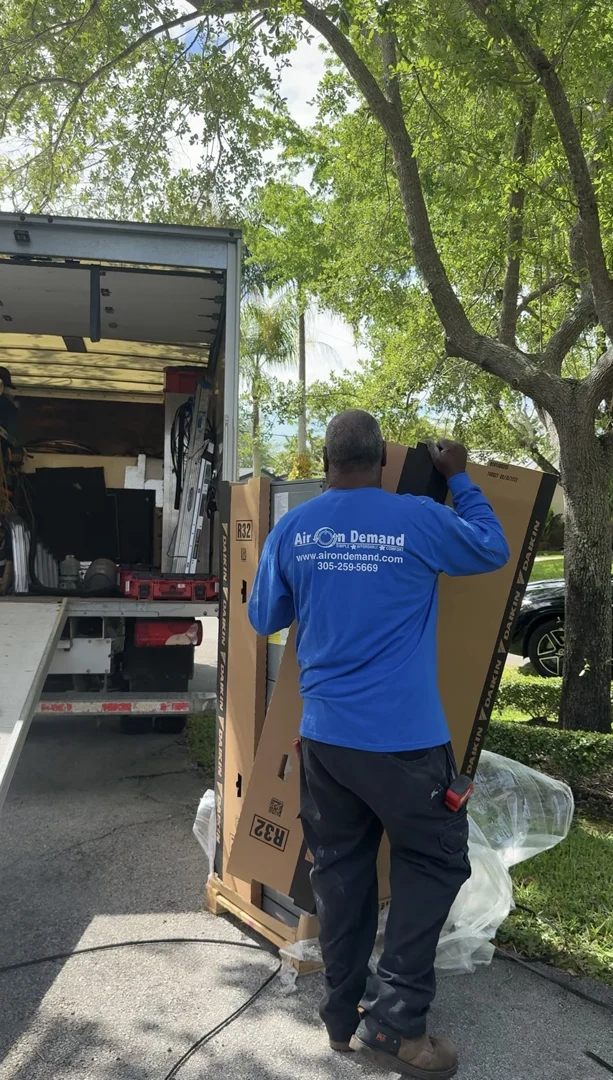
Beginner's Guide to Preparing for Low GWP Refrigerants
August 17, 2026
How to prepare for the shift to low GWP refrigerants starts with understanding what's already changed — and what's coming next. Here's a quick snapshot:
1. Know your system's refrigerant — Most Florida homes built before 2025 use R-410A, which is now being phased down.
2. Check your AC's age — Systems over 10 years old are most at risk of needing repairs as R-410A becomes less available.
3. Understand the new rules — The EPA now requires all new residential AC systems to use refrigerants with a GWP below 700.
4. Don't retrofit — You cannot simply swap a low-GWP refrigerant into an older R-410A system.
5. Plan your next replacement — New systems use refrigerants like R-454B or R-32, which are more efficient and future-proof.
6. Work with a qualified local HVAC pro — Especially one familiar with South Florida building codes and the latest equipment.
If you've noticed your energy bills creeping up, heard about refrigerant shortages, or simply want to stay ahead of new EPA rules, you're not alone. Homeowners across Kendall, Pinecrest, and Cutler Bay are asking the same question right now: what does this refrigerant transition actually mean for my home?
The short answer is that R-410A — the refrigerant in most AC systems installed before 2025 — is being phased down under federal law. New systems can no longer be manufactured with it, and the supply of R-410A is shrinking fast. This supply reduction affects maintenance and repairs on older systems.
For homeowners in South Florida, where your AC runs hard for most of the year, this transition isn't a distant concern — it's happening right now. The good news is that with a little planning, the shift to low-GWP refrigerants can also mean a more efficient, more reliable system for your home.
To understand how the air conditioning industry arrived at this point, we have to look at the legislative background driving these changes. The transition is governed primarily by the American Innovation and Manufacturing (AIM) Act, which was passed by Congress in late 2020. The AIM Act directs the Environmental Protection Agency (EPA) to phase down the production and consumption of hydrofluorocarbons (HFCs) by 85% by the year 2036.
HFCs are chemical compounds that became the industry standard after older, ozone-depleting refrigerants like R-22 (Freon) were phased out. While HFCs do not harm the ozone layer, they are incredibly potent greenhouse gases. In fact, their Global Warming Potential (GWP) can be hundreds to thousands of times higher than carbon dioxide ($CO_2$).
To address this, the EPA finalized its Technology Transitions Rule. Under this rule, a strict GWP limit of 700 has been established for all newly manufactured residential air conditioning and split systems. Because R-410A has a GWP of approximately 2,088, it falls well above this limit and is being systematically phased out of new equipment. For a deeper look into how these chemical compounds function within your cooling system, you can read A Brief Guide on Air Conditioner Refrigerant.
As we navigate through June 2026, the reality of the HFC phasedown is setting in. While you are not legally required to rip out your perfectly functioning R-410A system, keeping it running over the next few years is going to become increasingly challenging due to supply limitations.
The primary catalyst for this is the looming 2029 AIM Act step-down. In 2029, the federal allowance for HFC production drops sharply from 60% of the baseline down to just 30%. This is the steepest single drop in the phasedown schedule. Because the installed base of R-410A systems across Florida remains massive, the sudden halving of available virgin refrigerant will inevitably trigger severe supply constraints.
If your air conditioning system develops a leak, you cannot simply let it slowly drip away. Not only is venting refrigerant illegal, but your system will also suffer severe performance drops and eventually fail. As a homeowner, you must realize that Your AC System Should Not Run Out of Refrigerant. If it does, a leak is present, and repairing that leak in an older R-410A unit will require reclaimed gas, which is becoming harder to source. Proactive planning today prevents emergency system failures tomorrow.
The EPA transition timeline has been rolled out in phases to give manufacturers, distributors, and homeowners time to adjust:
• January 1, 2025: The manufacturing and importing of new residential air conditioning and split systems utilizing refrigerants with a GWP above 700 (such as R-410A) was officially banned.
• The Sell-Through Period: To prevent distributors from being stuck with unusable inventory, the EPA established a sell-through window, allowing existing stock manufactured prior to 2025 to be installed for a limited time.
• The 2026 Reality: As of June 2026, the transition is in full swing. New installations are almost exclusively low-GWP systems.
For South Florida homeowners in hot, humid climates like Coral Gables and Palmetto Bay, this means any new air conditioning installation you schedule today will utilize next-generation, environmentally friendly refrigerants.
The transition away from R-410A has introduced two primary low-GWP alternatives to the residential market: R-32 and R-454B. Both of these alternatives offer significantly lower environmental impacts while maintaining or exceeding the cooling capacity of legacy systems.
• R-410A — Safety Classification: A1 (Non-flammable) — Global Warming Potential (GWP): 2,088 — Relative Charge Size Required: 100% — Key Benefit: Legacy standard; being phased down
• R-32 — Safety Classification: A2L (Mildly Flammable) — Global Warming Potential (GWP): 675 — Relative Charge Size Required: ~60% — Key Benefit: Single-component; highly efficient
• R-454B — Safety Classification: A2L (Mildly Flammable) — Global Warming Potential (GWP): 466 — Relative Charge Size Required: ~90% — Key Benefit: Lowest GWP of the primary options
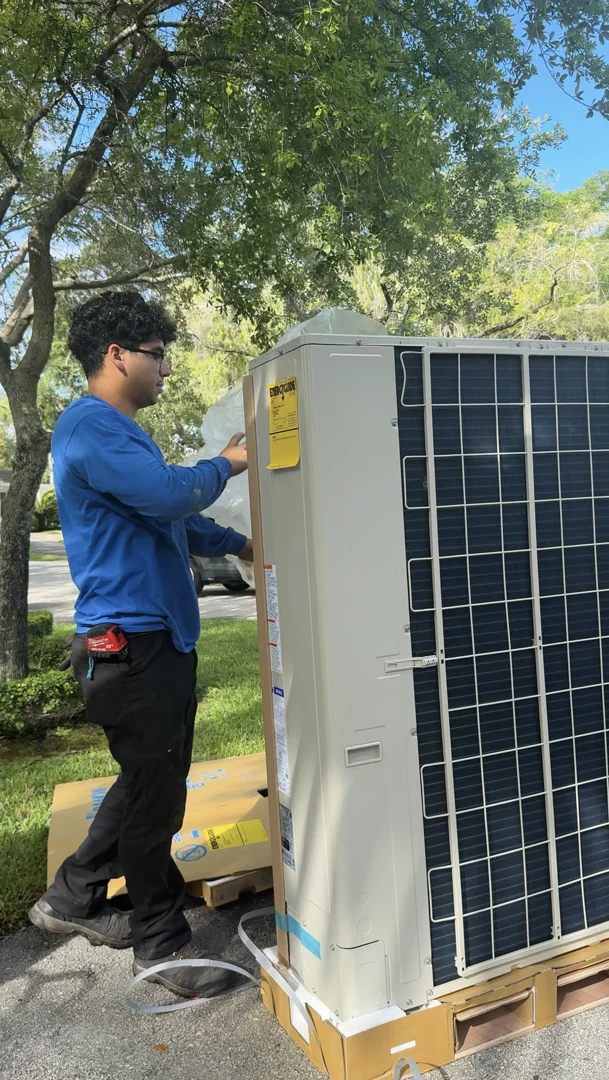
You might have heard the term "A2L" thrown around by HVAC technicians, and it’s important to understand what it means. Under the ASHRAE Standard 34 safety classification, refrigerants are rated by toxicity and flammability:
• Class A denotes low toxicity (safe for residential use).
• Class 1 means no flame propagation (like R-410A).
• Class 2L means "mildly flammable."
A2L refrigerants like R-32 and R-454B are classified as mildly flammable because they have a very slow burning velocity (less than 10 centimeters per second) and require a highly concentrated spark to ignite. In practical terms, they are incredibly difficult to ignite and do not pose a danger under normal residential operating conditions.
Furthermore, R-32 is a single-component refrigerant, meaning it doesn't fractionate (separate) and can be easily topped up or recycled. It also delivers up to 10% better energy efficiency and allows systems to run with up to 40% less refrigerant charge compared to legacy R-410A units. This is why leading manufacturers like Daikin have heavily embraced A2L technologies for their residential line-ups.
Some environmental advocates point to "natural" refrigerants as the ultimate solution. These include carbon dioxide ($CO_2$ or R-744), propane (R-290), and ammonia (R-717). While these substances have incredibly low or zero GWP, they present major practical challenges for residential central air conditioning:
• Propane (R-290) is highly flammable (Class A3). Due to safety standards like UL 60335-2-40, strict charge limits are placed on propane in residential systems, making it unsuitable for large central AC units.
• Carbon Dioxide (R-744) operates at extremely high pressures (up to 100 bar), requiring heavily reinforced steel copper piping and complex multi-stage compressors that are not practical for home use.
• Ammonia (R-717) is highly toxic (Class B2L) and cannot be safely used in residential ducted systems.
Because of these limitations, A2L refrigerants represent the ideal middle ground for residential cooling: they are safe, highly efficient, and perfectly suited for the demands of South Florida homes.
Preparing for this transition doesn't require drastic, immediate action, but it does require strategic planning. By understanding the health of your current system and knowing what to look for in a replacement, you can reduce your carbon footprint and ensure your home remains a cool sanctuary during our brutal summer months.
If you want to stay ahead of the curve, follow this practical checklist:
• Step 1: Audit your existing system's age and refrigerant type. Look at the manufacturer's label on your outdoor condenser. It will state whether the system uses R-22, R-410A, or a newer low-GWP refrigerant.
• Step 2: Check your maintenance history. If your AC has a history of leaks, it is a prime candidate for an early upgrade. Repeatedly patching and recharging an R-410A system is not a sustainable long-term solution.
• Step 3: Consult local HVAC experts. Have a professional technician assess your ductwork, electrical connections, and overall system performance.
• Step 4: Align with local building codes. South Florida has strict building and electrical codes. Ensure any future installation is handled by a licensed contractor who understands local permitting and A2L safety standards.
• Step 5: Plan your next steps. While you don't need to replace a working system today, start planning for a new system if your current unit is over 10 to 12 years old.
If your current R-410A system is relatively new and running efficiently, your best strategy is strict preventive maintenance. Because virgin R-410A production is shrinking, keeping your system sealed is paramount.
Refrigerant leaks are the most common cause of premature system failure and high energy bills. If you suspect a leak, you should investigate immediately. Ask yourself, Are You Leaking Refrigerant?
Ignoring a small hiss or a slight drop in cooling performance can lead to major issues. Leaky Refrigerant is a Bigger Problem Than You Might Think. Beyond the environmental impact, running your system with low pressure puts immense strain on the compressor, leading to total system burnout. To protect your investment, learn How Leaky Refrigerant Affects Your Air Conditioner so you can spot the warning signs early.
Navigating federal regulations can be confusing. Here are answers to the most common questions we receive from homeowners in Coconut Grove, Homestead, and Country Walk.
No, you cannot. This is one of the most common misconceptions about the transition. Converting a system designed for an A1 refrigerant (like R-410A) to run on an A2L refrigerant (like R-32 or R-454B) is strictly prohibited by the EPA and safety standards like UL 60335-2-40.
A2L systems require specific safety components, including integrated refrigerant detection sensors (RDS), specialized expansion valves, different compressor lubricants, and A2L-compatible electrical components to prevent ignition risks. Attempting to "drop in" a low-GWP gas will void your manufacturer warranty, ruin your compressor, and create safety hazards. If your system is failing, you must address The Problem with a Refrigerant Leak or plan for a full system replacement.
Your air conditioner is a closed-loop system; it should never "consume" or run out of refrigerant. If the levels are low, you have a leak. Common signs include:
• Warm air blowing from your supply vents.
• A noticeable hissing or bubbling sound near your indoor or outdoor coils.
• Ice forming on the evaporator coils or the brass refrigerant lines outside.
• A sudden, unexplained spike in your monthly electric bill.
For a complete breakdown of these symptoms, read about the Signs of Low Refrigerant Levels in Your Air Conditioner. If you notice any of these signs, you should contact a professional immediately to determine if You Need to Get Your Refrigerant Supply Refilled and have the leak permanently repaired.
Yes, R-410A is still available for servicing existing systems in 2026, but the supply of newly manufactured "virgin" gas is highly restricted. Most servicing now relies on reclaimed and recycled R-410A. Because of the shrinking supply and the high demand across older systems, sourcing R-410A will continue to become more difficult as we head toward the 2029 quota cliff. While you can still get your system repaired, you should weigh the challenges of ongoing repairs against the long-term efficiency benefits of upgrading to a modern, low-GWP system.
The shift to low-GWP refrigerants is a major step forward for environmental sustainability and home energy efficiency. While change can feel overwhelming, preparing for this transition is simple when you have the right partner.
At Air On Demand, we specialize in providing seamless, future-proof residential air conditioning solutions throughout Coconut Grove, Coral Gables, Country Walk, Cutler Bay, Homestead, Kendale Lakes, Kendall, Lakes By the Bay, Palmetto Bay, and Pinecrest. As premier Daikin specialists, we are proud to offer advanced, highly efficient systems that utilize next-generation low-GWP refrigerants.
When you choose us, you benefit from our outstanding service guarantees, including convenient online booking, rapid response times, and real-time updates. Plus, we back our installations with incredible manufacturer warranties, such as the Daikin 12-year parts warranty and the Daikin Comfort Promise.
Don't wait for a disruptive refrigerant leak to affect your comfort. Contact us today to schedule a comprehensive system audit and explore our premium Air Conditioning Services to keep your home cool, efficient, and compliant for years to come.