The Complete Guide to Summer Efficiency Tips for Tropical Coastal Florida Homes
August 17, 2026
If you're looking for the most effective summer efficiency tips for tropical coastal florida homes, here's a quick overview of what works:
• Set your thermostat to 78°F when home and 80°F when away
• Block solar heat gain with window films, cellular shades, or solar screens
• Seal duct leaks that can waste 20-30% of your cooled air
• Run ceiling fans counterclockwise to feel cooler without lowering the thermostat
• Keep attic insulation at R-38 and use a cool or reflective roof
• Schedule annual HVAC maintenance to prevent efficiency losses of up to 5% per year
• Use portable dehumidifiers and exhaust fans to manage humidity
Here in Miami-Dade County and the surrounding coastal communities, summer isn't just hot — it's relentless. From May through October, temperatures push into the low-to-mid 90s, humidity regularly tops 70%, and your air conditioner runs nearly non-stop just to keep up. The result? Cooling alone can account for 50% or more of your total summer energy consumption.
That's a real problem for homeowners in Kendall, Coral Gables, Cutler Bay, and Pinecrest who want comfort without watching their energy usage spiral out of control every June through September.
The good news is that a combination of smart habits, targeted home improvements, and a well-maintained AC system can make a significant difference — without sacrificing comfort. This guide walks you through every practical step, from window treatments to HVAC upgrades, so you can take control of your home's cooling this summer.
When it comes to keeping a coastal Florida home comfortable, your first line of defense is preventing heat from getting inside in the first place. This is known as managing your "solar heat gain." Approximately 30% of a home's unwanted heat enters directly through its windows and doors.
If your home is still fitted with older, single-pane windows, they act like magnifying glasses in the intense South Florida sun. Upgrading to high-performance, double-pane windows with low-E (low-emissivity) glass can block up to 70% of solar heat gain. These windows feature a microscopic metal oxide coating that reflects infrared heat while still letting natural light pass through.
For many homeowners in Palmetto Bay and Country Walk, replacing every window at once is a significant undertaking. Fortunately, there are many highly effective steps you can take today to block the sun and improve efficiency during summer without a full window overhaul.
Passive design is all about working with nature rather than fighting it. In South Florida, the orientation of your home dictates how much direct sunlight hits your living spaces throughout the day:
• South-Facing Windows: These receive consistent, bright light. Adding architectural overhangs or awnings is highly effective here because the high summer sun can be blocked while still allowing pleasant indirect light inside.
• East and West Exposures: These are the most challenging. East-facing windows catch the intense morning sun, while west-facing windows bear the brunt of the blistering afternoon heat. Minimizing window sizes on these sides or heavily shading them is crucial.
One of the most natural, beautiful, and effective ways to manage this heat is through strategic landscaping. By planting native shade trees—such as wild tamarind, live oaks, or even strategically placed palms—on the eastern and western sides of your property, you can block the sun before it ever touches your glass.
Additionally, shading your outdoor air conditioning condenser unit with shrubbery can improve its efficiency, provided you maintain at least a two-foot clearance around the unit so it has room to breathe. Adopting these landscaping adjustments is one of many 5 Efficiency Boosting Habits to Adopt that pay dividends season after season.
If you want to keep the sun out without changing your landscaping, high-performance window treatments are your best bet. According to the U.S. Department of Energy, properly fitted energy-efficient window treatments can lower summer cooling energy use by up to 30%.
Here are the top options for coastal Florida homes:
1. Cellular Shades (Honeycomb Shades): These shades feature individual air pockets that trap air, creating a powerful thermal barrier between the hot glass and your living room.
2. Blackout Thermal Curtains: Ideal for bedrooms, these heavy, tightly woven curtains block 99% of light and prevent heat transfer. Opt for light-colored backings to reflect the sun back outside.
3. Solar Roller Shades: These filter out harsh glare and harmful UV rays while preserving your beautiful coastal views—perfect for living areas in Coconut Grove or Lakes By the Bay.
4. UV-Blocking Window Films: These thin, retrofitted sheets are applied directly to the glass. They can block up to 99% of UV rays and a massive portion of infrared heat, protecting your skin and preventing your furniture from fading.
By layering solar shades with light linen curtains, you can easily control privacy, light, and heat throughout the day. To explore more ways to optimize your windows, check out our guide on optimize your air conditioning.
Your home’s "envelope" is the barrier between your air-conditioned indoor sanctuary and the brutal outdoor elements. If this envelope is weak, your air conditioner will constantly run to replace the cold air that is escaping.
In South Florida, the attic is often the hottest part of the entire house, frequently reaching temperatures north of 130°F. If you do not have adequate attic insulation, that heat radiates directly down through your ceiling.
Current building standards recommend insulating South Florida attics to an R-38 rating. If your home was built more than a decade ago, you likely only have R-19 insulation, which is simply not enough to stop the thermal downward draft. Upgrading your insulation can drastically reduce your AC's daily workload.
Your roof color also plays a massive role. Traditional dark shingles absorb up to 90% of solar energy. Upgrading to a "cool roof"—such as white concrete tile, light-colored metal, or reflective shingles—can reflect the majority of this heat away from your home entirely. For more ideas on securing your home envelope, read our Year-Round HVAC Efficiency Tips.
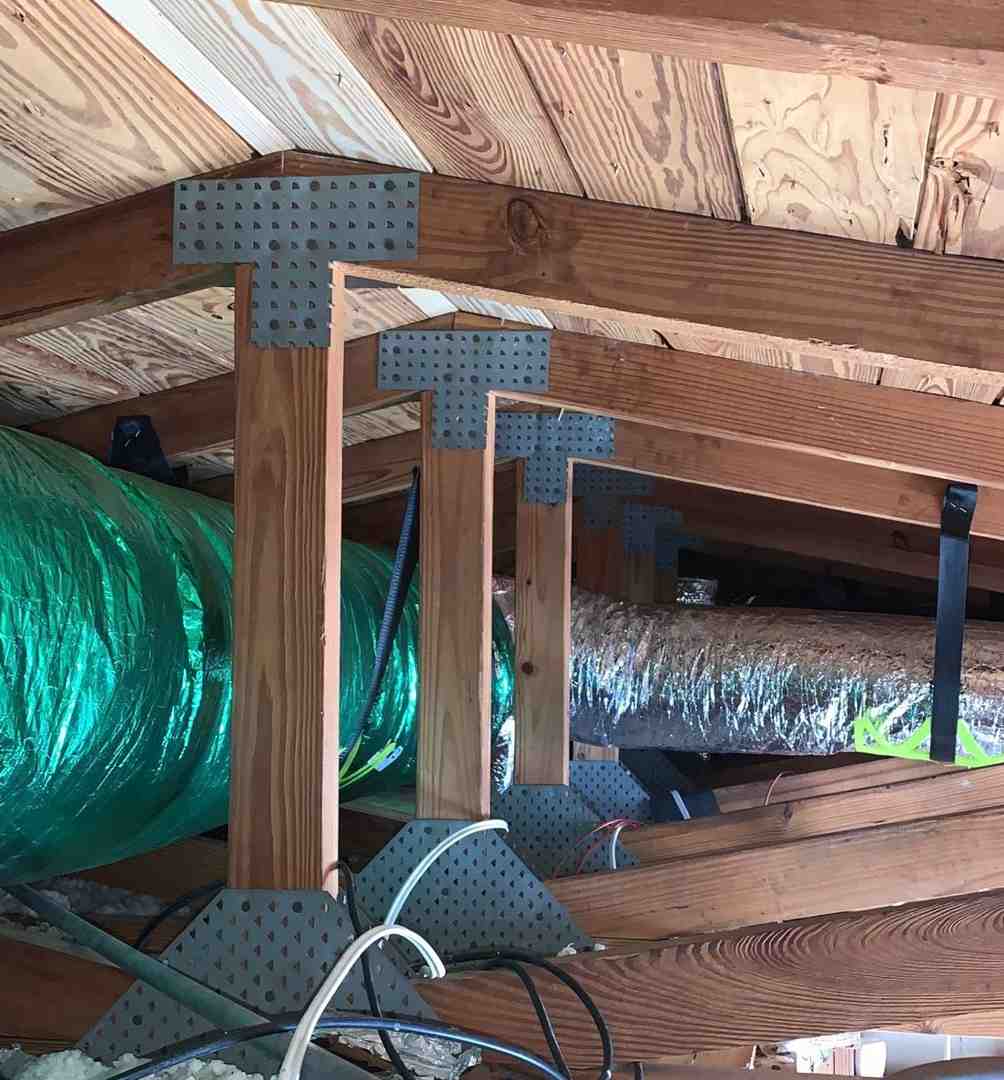
Did you know that the average Florida home loses 20% to 30% of its conditioned air to the attic through ductwork leaks?
Because most ductwork in places like Homestead and Kendale Lakes runs through the unconditioned, scorching attic space, even a tiny tear or loose joint can pull superheated attic air into your system or dump cold, conditioned air into the rafters. This causes severe pressure imbalances, forcing your AC to work twice as hard.
Professional duct sealing using mastic sealant or specialized aerosol systems is one of the most effective improvements you can make.
Beyond the ducts, you should perform a quick perimeter walk of your home on a hot day. Check for drafts around your doors and windows. Replacing worn weatherstripping and applying high-quality outdoor caulk to gaps around window frames, pipes, and electrical outlets will seal your home's envelope, ensuring you Make Your Air Conditioning More Efficient This Year.
To truly maximize your efficiency, you need to combine a tight home envelope with smart climate controls. Your thermostat is the brain of your cooling system, and how you program it directly impacts your monthly energy consumption.
The Department of Energy recommends setting your thermostat to 78°F when you are at home during the summer. We understand that 78°F can sound warm to some, but here is the reality: each degree you set your thermostat below 78°F increases your energy usage by approximately 6% to 8%.
A smart thermostat (such as a Nest or Ecobee) helps you manage this effortlessly:
• Setback Schedules: Program the thermostat to automatically rise to 82°F–85°F when the house is empty for more than four hours.
• Geofencing: This feature tracks your smartphone’s location, cooling the house back down to 78°F just as you pull into your driveway in Pinecrest or Coral Gables.
• Humidity Sensing: High humidity makes 76°F feel like 82°F because your sweat cannot evaporate to cool you down. Many smart thermostats can run your AC on a slower cycle specifically designed to pull moisture out of the air.
To learn more about how humidity affects your indoor comfort levels, read our detailed article on Humidity and Air Conditioning in Miami FL.
Many South Florida residents are "snowbirds" who head north for the summer, or families who travel for weeks at a time. Leaving your AC completely off while you are away is a recipe for disaster. Within days, indoor relative humidity will spike above 70%, leading to mold, mildew, warped wood, and ruined drywall.
If you are away for extended periods:
• Set your thermostat to 80°F (or 77°F if you live in a high-rise condo).
• Use a humidistat set to 58% relative humidity to prevent mold growth while minimizing energy use.
• Install a float switch on your AC condensate pan. If the drain line clogs while you are away, the float switch will instantly shut the system down, preventing catastrophic water damage.
• Leave interior doors open to maintain balanced airflow throughout the home.
To see how your cooling system works double-duty as a moisture manager, explore How Your Air Conditioner Helps to Control the Humidity.
If your air conditioner is more than 10 to 12 years old, it is likely running at the end of its lifespan and operating at a fraction of its original efficiency. Replacing an old, inefficient system with a modern, high-SEER2 system is one of the best long-term investments you can make for your home.
In January 2023, the Department of Energy transitioned to the stricter SEER2 (Seasonal Energy Efficiency Ratio 2) testing standard to better reflect real-world operating conditions in hot, humid climates. In Florida, the minimum allowable rating for a new split-system AC is now 14.3 SEER2 (equivalent to the old 15 SEER).
• Legacy SEER 10 (Pre-2015) — Estimated Annual Energy Use (3-Ton Load): High Energy Use — Efficiency Improvement vs. Legacy SEER 10: Baseline
• Standard SEER2 14.3 (Minimum) — Estimated Annual Energy Use (3-Ton Load): Moderate Energy Use — Efficiency Improvement vs. Legacy SEER 10: ~15% - 20% Reduction
• High-Efficiency SEER2 18 (Inverter) — Estimated Annual Energy Use (3-Ton Load): Low Energy Use — Efficiency Improvement vs. Legacy SEER 10: ~35% - 40% Reduction
• Ultra-Efficiency SEER2 22+ (Inverter) — Estimated Annual Energy Use (3-Ton Load): Extremely Low Energy Use — Efficiency Improvement vs. Legacy SEER 10: ~50%+ Reduction
Modern systems utilizing inverter technology and variable-speed compressors do not constantly turn fully on and fully off. Instead, they modulate their speed up and down in tiny increments to match the exact cooling load of your home. This eliminates the massive energy spikes associated with traditional compressors starting up, while providing unmatched humidity removal.
To help you decide if it is time to upgrade, read our AC Efficiency Tips for the End of Summer to evaluate your current system's health.
While upgrading your equipment is highly effective, your daily habits can also play a major role in keeping your home cool:
• Switch to LED Bulbs: Incandescent bulbs convert 90% of their energy into heat. Replacing them with LEDs keeps your rooms cooler and lowers your lighting energy use.
• Cook Smart: Your oven and stove can quickly turn your kitchen into an oven. On hot afternoons, grill outdoors, use a microwave, or utilize a slow cooker. If you must cook indoors, always run your range hood to vent heat and steam outside, and keep lids on boiling pots.
• Time Your Appliances: Run your dishwasher, washing machine, and clothes dryer after 7:00 PM when outdoor temperatures are cooler and grid demand is lower.
• Run Ceiling Fans Wisely: Ensure your ceiling fans are rotating counterclockwise to create a wind-chill effect. Remember: fans cool people, not rooms. Turn them off when you leave the room to reduce electricity use.
The Department of Energy recommends 78°F when you are at home. This setting provides an ideal balance between efficiency and comfort. For every single degree you lower the thermostat below 78°F, you will increase your cooling energy consumption by approximately 6% to 8%.
The average Florida home loses 20% to 30% of its conditioned air through leaks, tears, and poor connections in the ductwork. Because these ducts run through a superheated attic, sealing them is one of the fastest ways to lower your energy consumption and improve your indoor air quality.
No. Turning your AC completely off in Florida is highly discouraged. Doing so allows indoor humidity to skyrocket, which can lead to mold growth in as little as 24 to 48 hours. Instead, raise your thermostat to 80°F–85°F while you are away to reduce energy use while keeping humidity under control.
Managing your summer energy usage in tropical coastal Florida doesn't have to be an uphill battle. By combining simple daily habits—like managing your window treatments and utilizing ceiling fans—with smart home improvements like attic insulation and duct sealing, you can enjoy a cool, comfortable home all summer long.
To keep your system running efficiently, regular maintenance is key. You can learn more about the Benefits of Regular HVAC Maintenance in Tropical Coastal Florida or explore standard AC Maintenance Services to keep your home comfortable all year long.