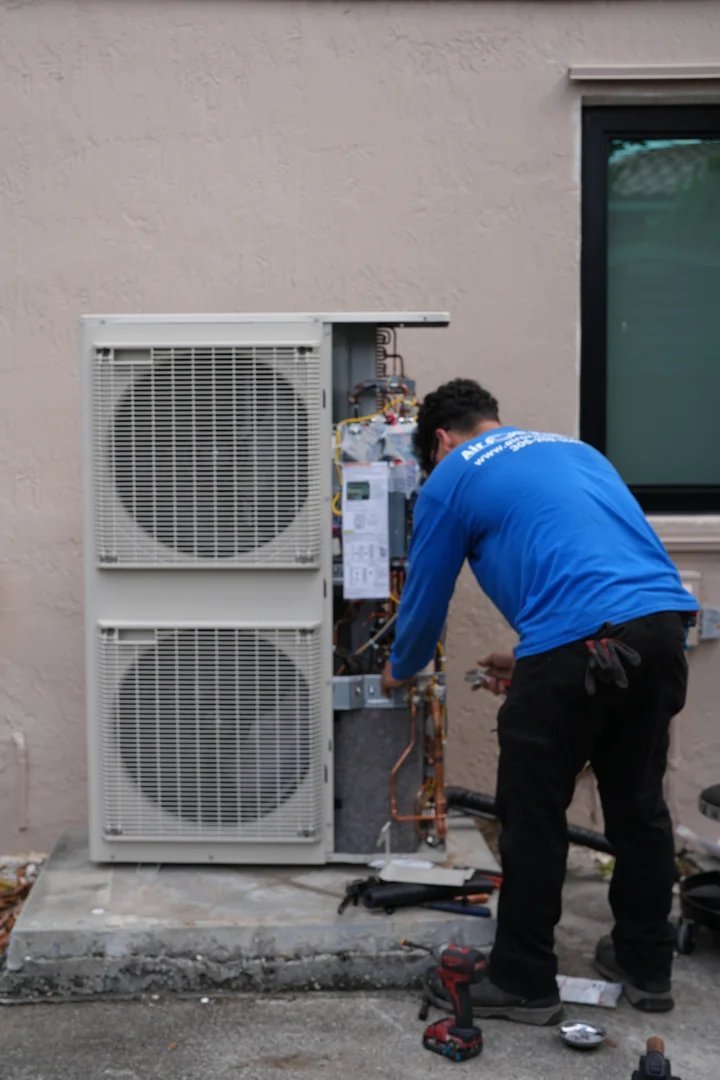
The Destructive Power of Floodwaters on Your Home Cooling System
August 17, 2026
Understanding how flooding and debris damage your ac equipment could save you from a costly mistake — like turning on a compromised system and destroying it completely. Here's a quick breakdown of the core damage types:
• Electrical failure: Floodwater penetrates contactors, capacitors, and circuit boards, causing short circuits and corrosion
• Condenser coil contamination: Debris, silt, and mud clog coils, reducing efficiency and triggering overheating
• Refrigerant system breach: Physical movement or impact from floodwater can compromise sealed refrigerant lines
• Compressor damage: Running a wet system can permanently destroy the compressor
• Mold and pathogen growth: Standing water introduces bacteria like E. coli that spread through your ductwork when the system runs
• Structural instability: Soil erosion can shift your outdoor unit off its pad entirely
In South Florida, flooding is not a rare event — it's a seasonal reality. From Coconut Grove to Cutler Bay, heavy summer rains and tropical storms regularly push water levels high enough to threaten outdoor AC units. According to industry guidelines, water only needs to reach about 12 to 15 inches deep before it begins causing serious damage to your system's critical components.
The problem is that flood damage is rarely obvious. A unit can look perfectly fine on the outside while hiding corrosion, contaminated coils, and waterlogged electrical components that are one power cycle away from failure — or worse, a fire hazard.

When the waters begin to recede in Palmetto Bay or Pinecrest, your first instinct might be to flip the switch and see if your AC still works. After all, the Miami heat in April 2026 is no joke! However, that is the most dangerous thing you can do. If your outdoor unit has been sitting in water, you need to treat it like a downed power line: look, but don't touch.
Before you even step into the yard to inspect the unit, head to your main electrical panel. Locate the circuit breaker for the HVAC system and flip it to the "off" position. Floodwater is an excellent conductor of electricity, and internal components that aren't usually exposed to water can create a lethal shock hazard if the system is energized.
We’ve seen homeowners try to "dry out" the system by running the fan. This is a recipe for disaster. If there is silt or moisture inside the compressor or electrical cabinet, turning it on can cause an immediate short circuit or mechanical seizure. Most outdoor units can survive up to a foot of standing water if they remain powered off, but the moment you introduce electricity to a wet circuit board, the damage becomes permanent.
Once the power is off and the standing water has drained away, you can clear away large debris like branches or trash that might be leaning against the unit. However, do not attempt to open the cabinet or spray it down with a high-pressure hose yet. For more tips on handling the wet season, check out our guide on how to Protect Your Air Conditioner When It S Rainy.
Take photos of the water line on the unit and any visible debris. This is crucial for insurance purposes. Whether you have a standard policy or specific flood insurance, having a visual record of the water depth (especially if it hit that 12-15 inch danger zone) will help your claim.
It’s a common misconception that because AC units live outside, they are "waterproof." While they are certainly weather-resistant, they are not designed to be submarines. There is a huge difference between a Miami downpour and a unit being submerged.
When we talk about how flooding and debris damage your ac equipment, we’re looking at three main enemies: moisture, salt (in our coastal areas), and silt. Even if the water only reaches the bottom few inches of the unit, it can still cause catastrophic failure over time. You can learn more about this in our article on how Can Severe Weather In Miami Disrupt My Air Condi.
Debris isn't just about big branches hitting the fan. The "micro-debris" is often more destructive. Floodwaters in areas like Homestead or Florida City are often filled with silt, sand, and organic matter.
• Silt Accumulation: As water recedes, it leaves behind a thick layer of mud and silt inside the tiny fins of your condenser coils. This acts like a thermal blanket, preventing the coils from releasing heat.
• Airflow Restriction: If the coils are clogged, your system has to work twice as hard to cool your home, leading to skyrocketing energy bills and a shortened lifespan for the motor.
• Fan Blade Balance: Even a small amount of dried mud on a fan blade can throw the entire motor out of balance, leading to vibrations that can crack refrigerant lines.
The electrical cabinet of your AC is "shielded," but it isn't airtight. When floodwater enters, it brings contaminants that stay behind long after the water evaporates.
• Corrosion of Contactors: The contactor is the switch that tells your AC to turn on. If it gets wet, it can "weld" shut or corrode, leading to a system that won't turn off or won't start at all.
• Capacitor Failure: These components store electricity to start the motor. Water exposure often leads to immediate failure or a "leaky" capacitor that eventually pops.
• Circuit Board Shorting: Modern units, especially high-efficiency Daikin systems, rely on sophisticated circuit boards. These are extremely sensitive to moisture and silt.
Your AC system doesn't just cool the air; it circulates it. When floodwater enters the system, it brings along a cocktail of bacteria, mold spores, and sometimes even sewage or chemicals. If you turn that system back on without a professional cleaning, you are effectively turning your home into a giant petri dish.
Standing water in the Miami heat is a breeding ground for pathogens like E. coli and Legionella. These can settle in the dark, damp crevices of your indoor air handler or outdoor unit. Once the fan starts spinning, those contaminants become airborne. If you notice a musty, "sock-like" odor after a storm, that’s a major red flag. We’ve covered more on this in our Miami Air Conditioning Tip How To Protect Your A article.
If you live in a home with floor vents or a crawlspace that flooded, your ductwork is likely compromised. This is perhaps the most serious health risk of all.
• Insulation Saturation: Most ducts are wrapped in fiberglass insulation. Once this gets wet, it loses its R-value and becomes a perfect home for mold.
• Decontamination Difficulty: You can't just "wipe down" the inside of a flexible duct. In almost every case where ductwork has been submerged, replacement is the only safe option.
• Air Quality: Mold in the ducts can lead to respiratory issues, especially for children and the elderly in communities like Kendale Lakes and Country Walk.
While some rigid metal ducts can be cleaned and disinfected, the labor involved often makes replacement more practical. For a deeper look at what your ducts can handle, see You Know What Can Withstand A Hurricane Your Duc.
When our technicians arrive at your home in Coral Gables or Kendall, the first question is always: "Can you fix it, or do I need a new one?" The answer depends on several factors, including the age of the unit and the height of the floodwater.
• Water Depth — Favor Repair: Below 6 inches (base only) — Favor Replacement: Above 12 inches (controls/motor)
• System Age — Favor Repair: Under 5 years old — Favor Replacement: Over 10 years old
• Component Damage — Favor Repair: Only the capacitor or contactor — Favor Replacement: Compressor or main circuit board
• Refrigerant Type — Favor Repair: R-410A (Modern) — Favor Replacement: R-22 (Obsolete/Expensive)
• Coastal Exposure — Favor Repair: Low (Inland Kendall) — Favor Replacement: High (Coconut Grove salt air)
• Warranty Status — Favor Repair: Under active warranty — Favor Replacement: Warranty expired
Repairing a flooded unit is often a gamble. Even if it works today, the internal corrosion started by the floodwater might not cause a total failure for another six months. If your system is older, the cost of deep cleaning, disinfecting, and replacing electrical parts often approaches the cost of a new, high-efficiency Daikin unit. Plus, new units come with that peace of mind — like Daikin’s 12-year parts warranty.
We can't stop the rain in Miami, but we can stop it from destroying your comfort. After seeing how flooding and debris damage your ac equipment firsthand, many homeowners in Lakes By the Bay and Palmetto Bay are taking proactive steps to "flood-proof" their HVAC systems.
The most effective way to prevent flood damage is to get the unit off the ground. We recommend installing a hurricane-rated concrete pedestal or a heavy-duty aluminum stand. Elevating the unit just 18 to 24 inches can keep it above the typical "100-year flood" levels for most Miami neighborhoods.
Sometimes, the "flood" is just a massive puddle caused by poor drainage. Ensure your gutters are clear and that downspouts are directed away from the AC unit. In some cases, installing a French drain or a small retaining wall can redirect water away from your equipment.
Flooding often goes hand-in-hand with power surges and lightning strikes. A dedicated HVAC surge protector can save your system’s expensive circuit boards from the electrical "noise" that happens when the grid is struggling during a storm.
A clean unit is a resilient unit. During our regular maintenance visits, we clear away the small debris and "pre-silt" that accumulates in your coils. This ensures that if a storm does hit, your system is at peak health and better able to withstand the elements.
Most outdoor units are designed to handle heavy rain and splashes. They can typically survive standing water up to about a foot deep, provided the power is off. However, once water reaches the 12-15 inch mark, it enters the electrical cabinet and the compressor's connections, which usually leads to critical failure.
Standard homeowners insurance policies in Florida often exclude damage caused by rising floodwaters. You generally need a separate flood insurance policy (like through the NFIP). To make a successful claim, you’ll need thorough documentation from a licensed HVAC professional detailing the extent of the water damage and whether the unit is repairable.
There are three major risks:
1. Electrocution: Standing water and wet wires are a lethal combination.
2. Fire: Short circuits in the control board can spark and start a fire.
3. Total System Loss: If there is water inside the compressor, turning it on will "slug" the motor, causing it to seize instantly. What might have been a repairable issue becomes a total system replacement.
At Air On Demand, we’ve spent years helping our neighbors in Coconut Grove, Coral Gables, and Homestead recover from the unique challenges of Miami weather. We know that a flooded AC is more than just an inconvenience — it’s a threat to your home’s safety and air quality.
Whether you need a post-storm safety check or you’re looking to upgrade to a flood-resistant Daikin system with a 12-year warranty, we’re here to help. Our team provides fast, professional service with real-time updates, so you’re never left in the heat.
Don't let hidden damage compromise your home's comfort. Schedule your professional post-flood AC inspection in Miami today and breathe easier knowing your system is safe, clean, and ready to handle the Florida heat.