
All About How AC Refrigerant Changes Affect Homeowners
August 17, 2026
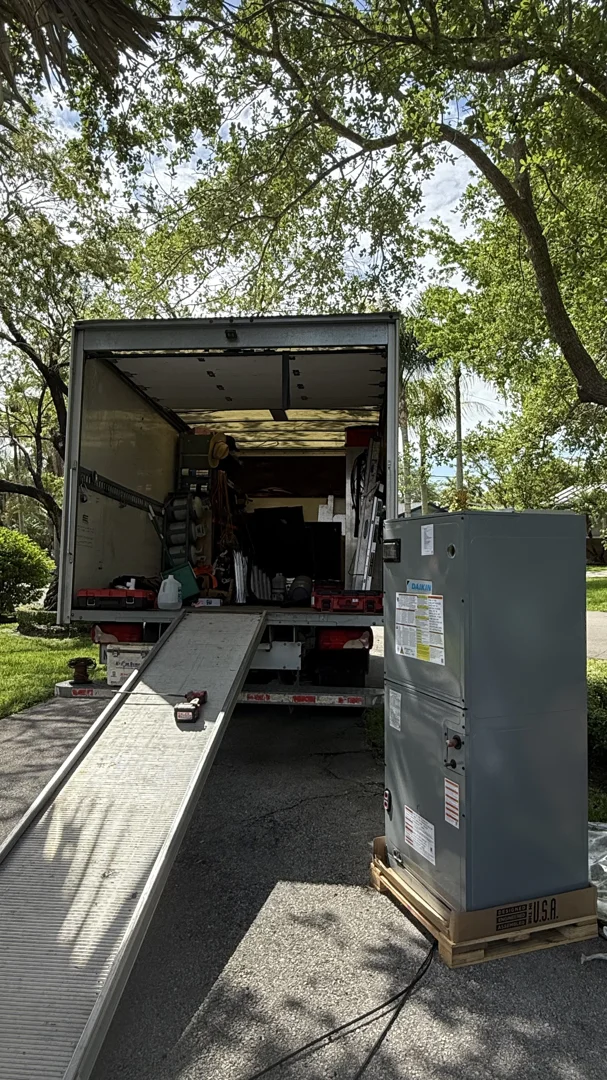
How AC refrigerant changes affect homeowners comes down to a few key points worth knowing before your next service call or system replacement:
• Your existing R-410A system is not illegal. You can keep using and servicing it.
• New AC systems installed after January 1, 2026 must use low-GWP refrigerants like R-454B or R-32.
• You cannot swap new refrigerants into an old system. They are not compatible.
• R-410A will remain available for repairs, but prices are rising as production is reduced.
• New systems are 10-15% more energy efficient and include built-in safety features.
If you own a home in South Florida — whether in Kendall, Coral Gables, or Homestead — your air conditioner runs hard. It has to. The heat here is relentless, and your cooling system is one of the most important appliances in your home.
So when word spreads that the HVAC industry is going through a major refrigerant change, it is completely natural to wonder what it means for you. Do you need a new system? Will repairs cost more? Is your current unit still safe to run?
The short answer: most homeowners do not need to do anything drastic right now. But understanding what is changing — and why — will help you make smarter decisions when the time comes to repair or replace your system.
As we move through May 2026, the transition away from R-410A is no longer a "future" event—it is our current reality. The primary driver behind this shift is the Environmental Protection Agency (EPA) and the American Innovation and Manufacturing (AIM) Act. The goal is to phase down the production and consumption of hydrofluorocarbons (HFCs), which are potent greenhouse gases.
R-410A has been the industry standard for nearly two decades. However, it has a high Global Warming Potential (GWP) of 2,088. To put that in perspective, the new refrigerants we are seeing in 2026 have GWPs below 700. By making this switch, the EPA expects to avoid approximately 1.6 million skin cancer deaths in the United States among individuals born between 1890 and 2100 by protecting the stratospheric ozone layer and reducing climate impact.
For a deeper dive into the basics, check out our guide on 3 Things You Should Know About Refrigerant.
This is the number one question we hear from homeowners in Pinecrest and Palmetto Bay. The answer is a resounding no. Your current air conditioner does not become illegal to own or operate just because the manufacturing of new R-410A units has stopped.
Regulations typically target the manufacturing of new equipment, not the use of existing equipment. If your system is cooling your home perfectly fine today, you can continue to use it for the rest of its natural lifespan. We can still perform maintenance, fix leaks, and replace parts. The only thing that changes is the source of the refrigerant used for repairs; as virgin R-410A production drops, the industry relies more heavily on reclaimed refrigerant—refrigerant that has been recovered, cleaned, and tested to meet purity standards.
To learn more about the specifics of these regulations, visit our post Answering Refrigerant FAQs What You Need to Know.
In South Florida, our air conditioners don't just provide comfort; they provide safety. From the humid afternoons in Homestead to the coastal breezes in Cutler Bay, a cooling failure in July is a major emergency.
Because our systems run almost year-round, they experience more wear and tear than units in the north. This makes the refrigerant transition particularly relevant for us. If your older R-410A system develops a major leak, the cost of the refrigerant itself is now significantly higher than it was just a few years ago. Supply is tightening, and while reclaimed gas is available, the market prices reflect that scarcity.
Furthermore, a leak isn't just a cooling issue; it's an efficiency issue. A system low on charge works twice as hard to do half the job, which can lead to premature compressor failure. You can read more about why Leaky Refrigerant Is a Bigger Problem Than You Might Think.
When we talk about how ac refrigerant changes affect homeowners, we have to look at both the technology and the logistics of keeping a home cool in places like Coconut Grove and Kendale Lakes.
The biggest change for 2026 is the introduction of A2L refrigerants. These are a new class of refrigerants that are much better for the environment but have different physical properties than the old R-410A. Because of these differences, the equipment itself has been redesigned.
You might hear the term "A2L" and see it described as "mildly flammable." While that sounds a bit intimidating, the reality is that these systems are incredibly safe for home use. In fact, many household items, like hairspray or certain cleaning supplies, are more flammable than A2L refrigerants.
To ensure total safety, the new systems installed in 2026 are built to the UL 60335-2-40 standard. This means they include:
• Leak Detection Sensors: These are often located near the indoor evaporator coil. If they detect a refrigerant leak, they automatically shut down the compressor and turn on the indoor blower fan to dissipate the gas.
• Mitigation Boards: These are specialized control boards that manage the safety sensors and ensure the system reacts instantly if a problem is detected.
• Enhanced Ventilation: The goal is to prevent the refrigerant from ever reaching a concentration where it could ignite, even if a total system leak occurred.
If you are living in an older home in Palmetto Bay or Country Walk, you might even have a system that predates R-410A. These units use R-22 (often called Freon). R-22 has been fully phased out for years, and it is now extremely expensive to service.
The lesson from the R-22 phase-out is what we are seeing today with R-410A: as the supply of "virgin" gas disappears, we rely on the 140 million pounds of refrigerant reclaimed by professionals over the last two decades. If your system is over 12 years old and starts blowing warm air, you should ask yourself if a recharge is worth the investment.
If you find yourself constantly needing a "top-off," you should read Do You Need to Get Your Refrigerant Supply Refilled. Spoiler alert: a healthy AC system should never actually "run out" of refrigerant because it is a closed loop!
The two primary replacements for R-410A in 2026 are R-454B and R-32. Both are A2L refrigerants, but they have slight differences.
• R-32: This is a single-component refrigerant. It has been used globally for years (especially by brands like Daikin) and is known for its excellent heat transfer properties. It has a GWP of 675.
• R-454B: This is a blend of refrigerants (R-32 and R-1234yf). It has an even lower GWP of 466, which is a 78% reduction compared to R-410A.
Both options are non-toxic and provide a much smaller carbon footprint for your home. For a more detailed breakdown, see A Brief Guide on Air Conditioner Refrigerant and what it means for your cooling capacity.
Yes! This is the "silver lining" of the 2026 changes. Because A2L refrigerants are more efficient at carrying heat, manufacturers have been able to re-engineer systems to be 10–15% more efficient than their R-410A predecessors.
In communities like Lakes By The Bay, where the AC might run 18 hours a day, a 15% jump in efficiency can lead to significant savings on your monthly FPL bill. Many of these new systems also meet the latest SEER2 (Seasonal Energy Efficiency Ratio) standards, ensuring you get the most cooling for every watt of electricity used.
We get this question a lot: "Can you just drain my R-410A and put in the new R-454B?"
The answer is a firm no. You cannot retrofit an old system to use the new A2L refrigerants. The operating pressures are different, the lubricants (oils) used in the compressor are incompatible, and—most importantly—older systems lack the mandatory safety sensors and mitigation boards required for A2L gases.
Attempting to mix refrigerants or "drop in" a new gas into an old unit can lead to catastrophic system failure, voided warranties, and safety hazards. Your AC System Should Not Run Out of Refrigerant, so if it’s empty, it needs a repair or a replacement, not a different type of gas.
Choosing whether to fix an old R-410A unit or upgrade to a new A2L system is the biggest decision how ac refrigerant changes affect homeowners in 2026. Here is a simple way to look at it:
• Availability — R-410A Systems (Legacy): Phasing down; becoming scarcer — A2L Systems (R-454B / R-32): Current standard; widely available
• GWP (Climate Impact) — R-410A Systems (Legacy): 2,088 (High) — A2L Systems (R-454B / R-32): 466 - 675 (Low)
• Efficiency — R-410A Systems (Legacy): Standard SEER2 — A2L Systems (R-454B / R-32): 10-15% Higher Efficiency
• Safety Tech — R-410A Systems (Legacy): Standard pressure switches — A2L Systems (R-454B / R-32): Leak sensors & mitigation boards
• Repair Cost — R-410A Systems (Legacy): Rising (due to gas prices) — A2L Systems (R-454B / R-32): Standard for new equipment
If your system is less than 8 years old and has a minor issue, a repair is likely the way to go. However, if you are dealing with a "low refrigerant" diagnosis on a unit that is 10-12 years old, you are at a crossroads. For help with that specific issue, read about Resolving Low Refrigerant Issues.
Yes, for now. As of May 2026, we still have access to R-410A for our customers in Kendale Lakes and the surrounding Miami area. However, the EPA has mandated an 85% reduction in HFC production by 2036. We are currently in the middle of that "step-down" process.
This means that while the gas is available, it is no longer the "budget" option. We always recommend that homeowners prioritize fixing leaks rather than just "topping off" a system. With the current price of R-410A, a "top-off" is often a waste of money that could have gone toward a permanent fix or a new, efficient system.
The good news is that the government and utility companies want you to upgrade to these newer, greener systems. Because new A2L units are so efficient, many qualify for:
• Federal Tax Credits: Under the Inflation Reduction Act, homeowners can often claim significant tax credits for installing ENERGY STAR certified equipment.
• Utility Rebates: Local South Florida utility providers often offer instant rebates for high-efficiency cooling upgrades.
• Long-term Savings: Replacing old equipment with ENERGY STAR certified units can cut annual energy bills by more than $160—and in the Miami heat, that number is often much higher.
No. There is no law requiring you to replace a working air conditioner. You only need to consider a replacement if your current unit is broken, inefficient, or if the cost of an R-410A repair has become too high for your budget.
No. As mentioned earlier, the systems are technically incompatible. The new refrigerants require different pressures, different oils, and specific safety electronics that your old unit simply doesn't have.
The refrigerants themselves are designed for environmental safety, but the systems are arguably safer because of the mandatory leak detection technology. If a leak occurs in an old system, it just keeps trying to run until it breaks. In a new A2L system, the unit will sense the leak, shut itself down, and alert you, preventing further damage.
Navigating how ac refrigerant changes affect homeowners doesn't have to be stressful. While the industry is moving toward a greener, more efficient future with R-454B and R-32, your comfort remains our top priority.
At Air On Demand, we specialize in Daikin products, which are at the forefront of this refrigerant transition. Whether you are in Coral Gables, Kendall, or Homestead, we offer seamless HVAC solutions designed for the Florida climate. When you choose a new system through us, you benefit from industry-leading protections like the 12-year parts warranty and the Comfort Promise.
If your AC is struggling to keep up with the May heat, or if you’re worried about the rising cost of R-410A repairs, don't wait for a total breakdown. Our team provides fast service, real-time updates, and convenient online booking to keep your home cool and your mind at ease.
Ready to see how a modern, efficient system can change your home comfort? Explore our Air Conditioning Services today or give us a call to schedule a professional system evaluation. We are proud to serve Coconut Grove, Country Walk, Cutler Bay, Lakes By The Bay, Pinecrest, and the entire Miami area!