
Salt Spray Corrosion on Cutler Bay Coastal AC Condensers
August 17, 2026
Your AC is running nonstop, but the house still feels warm, and that strange humming noise from the outdoor unit isn't going away on its own. Dealing with salt spray corrosion on Cutler Bay coastal AC condensers is a frustrating reality for many homeowners, especially when late-summer heat pushes equipment to its absolute limit. When August arrives and temperatures peak, systems that have been silently deteriorating all year finally begin to show their underlying weaknesses, leaving families uncomfortable and searching for immediate answers.
Most homeowners assume that a struggling air conditioner is simply suffering from standard wear and tear. However, if you walk outside and inspect your condenser, you might notice visual signs of severe degradation. Flaking fins that crumble at the touch, a heavily rusted outer casing, and chalky white oxidation covering the copper refrigerant lines are not normal aging. These are the hallmarks of a specific environmental attack that compromises the structural integrity of your cooling system long before its expected expiration date.
Because coastal environments introduce unique stressors, catching the early warning signs of degradation can mean the difference between a minor intervention and a catastrophic failure. Here is what to look for when inspecting your outdoor unit:
• Chalky white powder: This is aluminum oxide, the first sign that the delicate fins surrounding your condenser coils are beginning to break down.
• Brittle or missing fins: As corrosion advances, the thin metal fins will literally dissolve and blow away in the wind, leaving the copper tubing exposed.
• Rust on the cabinet: While the painted outer shell is more resilient, scratches or dents can quickly become breeding grounds for deep, spreading rust.
• Unusual compressor noise: When the fins degrade, the compressor has to work much harder to reject heat, leading to louder operational cycles and a noticeable strain on the motor.
Addressing this level of structural damage requires specialized air conditioning services rather than standard, run-of-the-mill fixes. A technician who understands the local climate must evaluate whether the system's heat transfer capabilities have been permanently compromised or if proactive measures can still salvage the equipment.
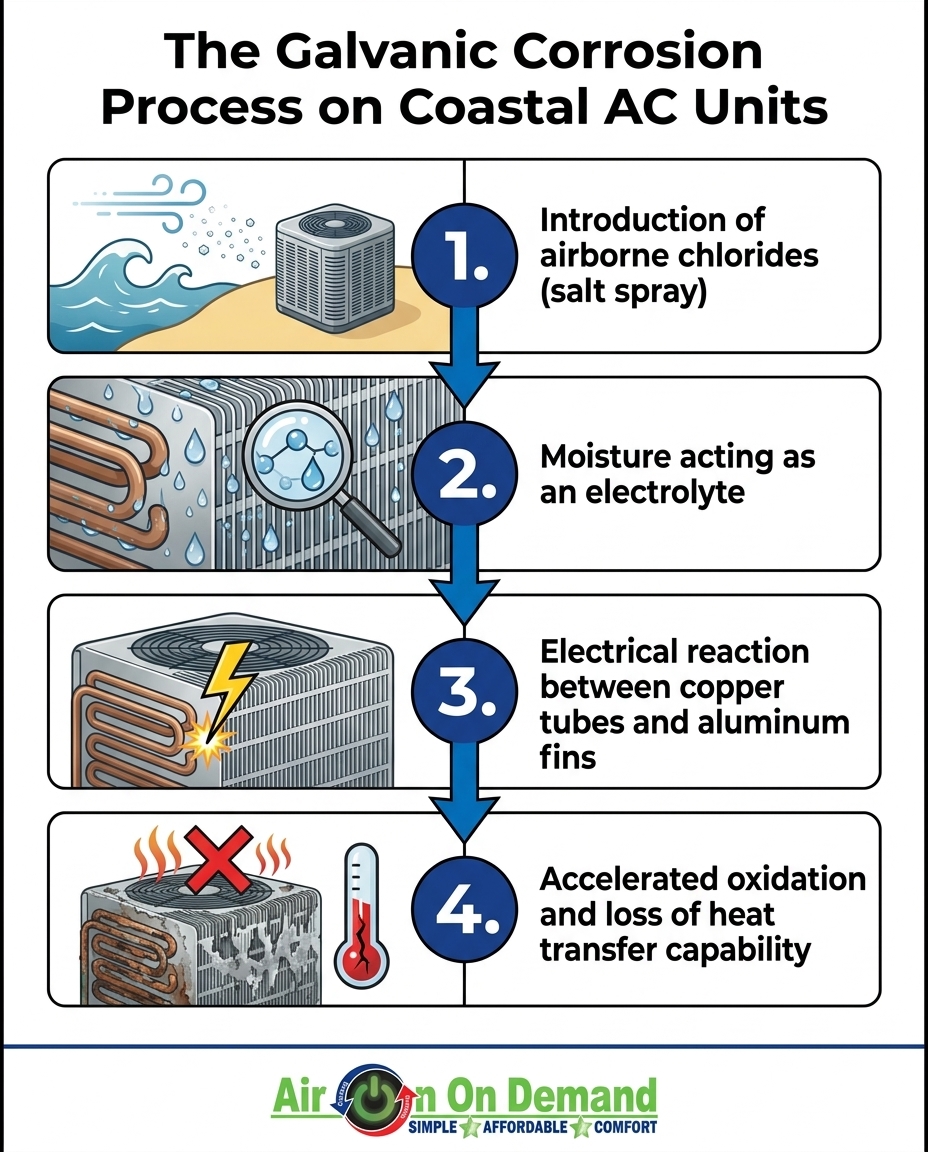
To understand why outdoor cooling equipment degrades so rapidly in Cutler Bay coastal zones, it is essential to look at the localized science of galvanic corrosion. Galvanic corrosion is an electrochemical process that occurs whenever two dissimilar metals are in physical contact and exposed to an electrolyte. In the case of a standard air conditioning condenser, the manufacturer uses copper for the refrigerant tubes and aluminum for the surrounding heat-transfer fins. Under perfectly dry conditions, these metals coexist without issue.
However, Cutler Bay's immediate proximity to Biscayne Bay changes the equation dramatically. The continuous easterly sea breezes carry airborne chlorides—microscopic salt particles—directly into the condenser's intake. When combined with the region's notoriously high humidity, the moisture on the coils turns into a highly conductive electrolyte solution. This salt-laden moisture bridges the gap between the copper and the aluminum, essentially turning your AC coil into a weak, short-circuiting battery. The aluminum acts as the anode, sacrificing itself and corroding away to protect the copper cathode.
This rapid oxidation is vastly different from the slower, more predictable wear seen in non-coastal environments. Inland systems might face dust, pollen, and rain, but they do not endure the relentless chemical assault of airborne salt. The combination of intense heat, high humidity, and salt-laden winds creates the perfect storm for metal degradation.
• Airborne Particulates — Inland Miami Impact: Dust, pollen, and standard urban pollution. — Cutler Bay Coastal Impact: Heavy concentration of airborne chlorides (salt spray).
• Moisture Type — Inland Miami Impact: Freshwater rain and standard high humidity. — Cutler Bay Coastal Impact: Highly conductive, salt-saturated moisture acting as an electrolyte.
• Corrosion Rate — Inland Miami Impact: Slow surface oxidation over 10 to 15 years. — Cutler Bay Coastal Impact: Rapid galvanic corrosion, often visible within the first 24 months.
• Primary Failure Mode — Inland Miami Impact: Electrical components or standard mechanical wear. — Cutler Bay Coastal Impact: Structural collapse of aluminum condenser fins and heat transfer failure.
Because the condenser fan constantly pulls this salty air through the unit to cool the refrigerant, the system is actively ingesting the very elements that destroy it. Without a barrier to stop the electrochemical reaction, the degradation is continuous and inevitable.
When homeowners invest in a new air conditioning system, they typically expect it to last well over a decade. However, authoritative data from the Department of Energy (DOE) and ASHRAE guidelines regarding standard outdoor AC condenser lifespans in coastal zones paint a very different picture. Out-of-the-box, unprotected units installed directly in the path of ocean breezes often fail in just 5 to 7 years due to severe structural degradation.
The timeline of this degradation is remarkably consistent in coastal environments. During the first two years, the unit may operate normally, though chalky white oxidation will begin to appear on the fins. By years three and four, the galvanic corrosion accelerates, causing the fins to become brittle and flake away during heavy storms or even routine cleaning. By years five through seven, the loss of aluminum fins drastically reduces the unit's ability to transfer heat. The copper tubes are left bare, and the system can no longer efficiently cool the hot refrigerant gas coming from inside the house.
When the fins disappear, the entire thermodynamic balance of the system collapses. The compressor, which is the heart of the air conditioner, relies on those fins to dissipate heat. Without them, the compressor runs hotter, works longer cycles, and consumes significantly more electricity to achieve the same indoor temperature. This chronic overheating eventually leads to premature compressor burnout.
Dealing with a severely compromised unit at the 6-year mark is incredibly frustrating, especially when homeowners discover the complications of replacing a condenser out of warranty. Many standard manufacturer warranties contain clauses that exclude damage caused by corrosive coastal environments unless specific, approved protective measures were taken at the time of installation. This leaves homeowners bearing the full cost of replacing a system that feels like it should still be relatively new.
It is no coincidence that severely corroded units tend to suffer catastrophic failure right when you need them most. In Cutler Bay, August brings peak temperatures and maximum AC runtimes, causing severely corroded and restricted condenser coils to overheat and fail under the late-summer stress. The structural damage of galvanic corrosion and the operational demands of peak heat create an unsustainable burden on the equipment.
As we discussed earlier, missing or deteriorating fins force the compressor to work harder to reject heat. When the outside temperature climbs into the upper 90s, the thermal load on the house increases dramatically. The system attempts to run continuously to meet the demand of the thermostat. However, because the bare copper coils cannot shed heat into the already sweltering outdoor air, the internal pressures and temperatures of the refrigerant skyrocket. The compressor's internal thermal overload switch may trip repeatedly, causing the unit to shut down abruptly to prevent an electrical fire.
If your system is suffering from advanced salt spray corrosion, it will usually give you several warning signs before it completely shuts down. Recognizing these symptoms can help you call for help before you are left entirely without cooling:
• Constantly running cycles: The system never seems to shut off, yet the indoor temperature barely drops.
• Spiking utility bills: Because the system is running inefficiently and continuously, your energy consumption will surge dramatically compared to previous summers.
• Insufficient indoor cooling: The air coming from the vents feels lukewarm rather than crisp and cold.
• Tripped circuit breakers: An overheating compressor will draw excess amperage, frequently tripping the dedicated breaker in your electrical panel.
When your system can no longer handle the thermal load due to severe fin loss, DIY troubleshooting is no longer an option. This level of mechanical distress highlights the absolute necessity of calling for professional AC repair service to safely diagnose the extent of the damage and prevent further electrical hazards.
The most effective preventative measure against salt spray corrosion is not found in reactive repairs, but in proactive defense. For homes in Cutler Bay coastal zones, defending your equipment requires the application of coastal-grade anti-corrosion coatings. These specialized chemical treatments are designed to insulate dissimilar metals from each other, effectively blocking the electrolyte (saltwater) from bridging the gap between the copper and aluminum.
What most homeowners do not realize is that standard factory finishes are insufficient for homes directly in the path of sea breezes. A standard painted cabinet might resist rust for a while, but the internal coils are typically left bare to maximize heat transfer in normal environments. Coastal-grade coatings, such as specialized epoxies or polyurethanes, are engineered to be incredibly thin—often just a few microns thick. This allows them to provide a robust chemical barrier against airborne chlorides without significantly insulating the coil and trapping heat.
It is crucial to understand that these specialized coatings must be specified and applied before or during a new installation, not as an afterthought. Trying to coat a coil that has already begun to oxidize is largely ineffective, as the corrosion process is already trapped beneath the surface.
The right way to protect a new system:
1. Factory-applied dips: The most durable coatings are applied at the factory, where the entire coil assembly is dipped into a chemical bath, ensuring 100% coverage of every microscopic crevice before the unit is ever assembled.
2. Professional OEM sprays: If a factory-dipped coil is unavailable, certified professionals can apply high-grade aerosol coatings to a brand-new, perfectly clean coil prior to installation.
Air On Demand's deep local expertise in Cutler Bay's microclimate means they understand exactly what it takes to survive here. They have the ability to source and install coastal-grade units specifically designed to withstand severe salt exposure, ensuring your investment is protected from day one. While these coated units represent a slightly higher initial investment, the long-term ROI of doubling the viable lifespan of your condenser in a harsh environment makes it the only logical choice for coastal homeowners.
Even with the best coastal-grade coatings applied, your outdoor unit still requires specific, tailored upkeep to mitigate salt buildup. Airborne chlorides will inevitably accumulate on the cabinet and the coils. If left unchecked, this heavy layer of salt can eventually wear down protective barriers and begin the corrosion process. The goal of coastal maintenance is to consistently remove this corrosive blanket without damaging the delicate components underneath.
The most important thing a homeowner can do is perform regular, gentle fresh-water washdowns of the outdoor cabinet to rinse away accumulated salt deposits. Taking a standard garden hose with a gentle spray nozzle and lightly rinsing the exterior of the unit once a month can significantly reduce the concentration of salt sitting on the metal.
While rinsing is highly recommended, it is vital to avoid aggressive cleaning methods that can instantly ruin your equipment. We strongly warn against using high-pressure washers or harsh, acidic chemical cleaners on your outdoor unit. A pressure washer will effortlessly bend and flatten the delicate aluminum fins, blocking airflow entirely and ruining the coil. Similarly, off-the-shelf chemical degreasers can strip away factory paint and protective coatings, leaving the metal completely vulnerable to the sea air.
Beyond gentle rinsing, a tailored coastal preventative AC maintenance schedule is critical. Professional coil cleaning and inspection play an essential role in catching early signs of oxidation. A trained technician uses specialized, non-acidic foaming cleaners that safely push dirt and salt out from deep within the coil bed. They also check the integrity of the electrical connections, which are equally susceptible to salt-induced corrosion. By adhering to a strict coastal upkeep schedule, you can easily extend the viable life of your equipment and keep it running efficiently through the hottest months of the year.
When late summer arrives and a heavily corroded system finally stops cooling, homeowners are faced with a difficult decision: attempt to repair the severely rusted outdoor unit or opt for a fresh start. Guiding the homeowner through this decision-making process requires an honest evaluation of the equipment's current structural integrity and its realistic remaining lifespan.
There are severe limitations to repairing heavily oxidized coils. If galvanic corrosion has eaten through the copper tubing and caused a refrigerant leak, simply brazing (welding) the hole is rarely a permanent fix. Because the entire coil bed has been weakened by the salt air, patching one leak often leads to a new blowout just a few inches away within a matter of weeks. You end up chasing leaks and paying for expensive, environmentally damaging refrigerant recharges over and over again.
How do you know when a unit is truly beyond saving? Here are the critical criteria that indicate a replacement is the only financially responsible path forward:
• Extensive fin loss: If more than 20% of the aluminum fins have crumbled away or flattened, the system can no longer reject heat efficiently.
• Multiple refrigerant leaks: A history of recurring leaks indicates systemic thinning of the copper lines.
• Severe compressor strain: If the compressor is pulling high amps, overheating, or has already failed due to thermal overload, the heart of the system is compromised.
• Age of the unit: If an unprotected unit in Cutler Bay is past the 5-to-7 year mark and showing deep rust on the base pan and casing, its structural integrity is gone.
Choosing to upgrade rather than endlessly repair brings immediate efficiency gains and profound peace of mind. Modern systems built specifically for the coastal environment operate much more quietly, consume far less electricity, and are backed by warranties that actually account for the local climate. If you are tired of crossing your fingers every time the thermostat clicks on, it is time to set the stage for consulting with a local expert regarding an AC replacement in Cutler Bay to properly assess the damage and explore your coastal-grade options.
Salt air introduces airborne chlorides to the metal components of the outdoor unit, creating a highly conductive environment. When this salt mixes with humidity, it acts as an electrolyte that triggers galvanic corrosion between the copper tubes and aluminum fins. This electrochemical reaction rapidly dissolves the aluminum, destroying the unit's ability to transfer heat and eventually leading to system failure.
The short answer is no; once an AC coil has severely rusted and begun to lose its fins, it cannot be structurally repaired. While a technician can sometimes patch a small, isolated refrigerant leak, heavy oxidation means the metal is fundamentally weakened. Attempting to repair a deeply corroded coil usually results in new leaks forming shortly after, making replacement the only viable long-term solution.
Coastal-grade AC units are specialized systems designed specifically to withstand harsh, salt-heavy environments. They feature heavy-duty protective coatings—often applied at the factory—that insulate the dissimilar metals and block the chemical reaction that causes galvanic corrosion. These units also typically include more robust, rust-resistant exterior cabinets and weather-sealed electrical components to ensure longevity near the ocean.
Standard, unprotected air conditioners in coastal environments often fail in just 5 to 7 years due to accelerated salt spray corrosion. However, if a unit is properly equipped with coastal-grade protective coatings and receives meticulous, specialized maintenance, its lifespan can be extended to 10 to 12 years or more. The key factor is how well the system is defended against airborne chlorides from day one.
Yes, gently washing your outdoor AC unit with fresh water is one of the most effective ways a homeowner can slow down salt corrosion. Lightly rinsing the exterior cabinet once a month removes the accumulated salt deposits before they have time to deeply penetrate and degrade the metal. Just be sure to use a gentle hose spray, as high-pressure washers will bend the delicate fins and cause permanent damage.
Cutler Bay units rust faster because of their immediate proximity to the continuous, easterly sea breezes coming off Biscayne Bay. These winds carry a heavy concentration of airborne salt directly into the condenser's intake, a localized environmental stressor that inland Miami neighborhoods simply do not experience. This constant exposure to salt spray exponentially accelerates the galvanic corrosion process compared to standard urban environments.
Dealing with a failing air conditioner in the peak of late summer is stressful, but understanding exactly why your unit rusted so fast gives you the power to make a better investment next time. By demanding proper coastal-grade protective coatings and adhering to a tailored upkeep schedule, you can ensure your next HVAC system survives the Biscayne Bay winds and keeps your home comfortable for years to come.