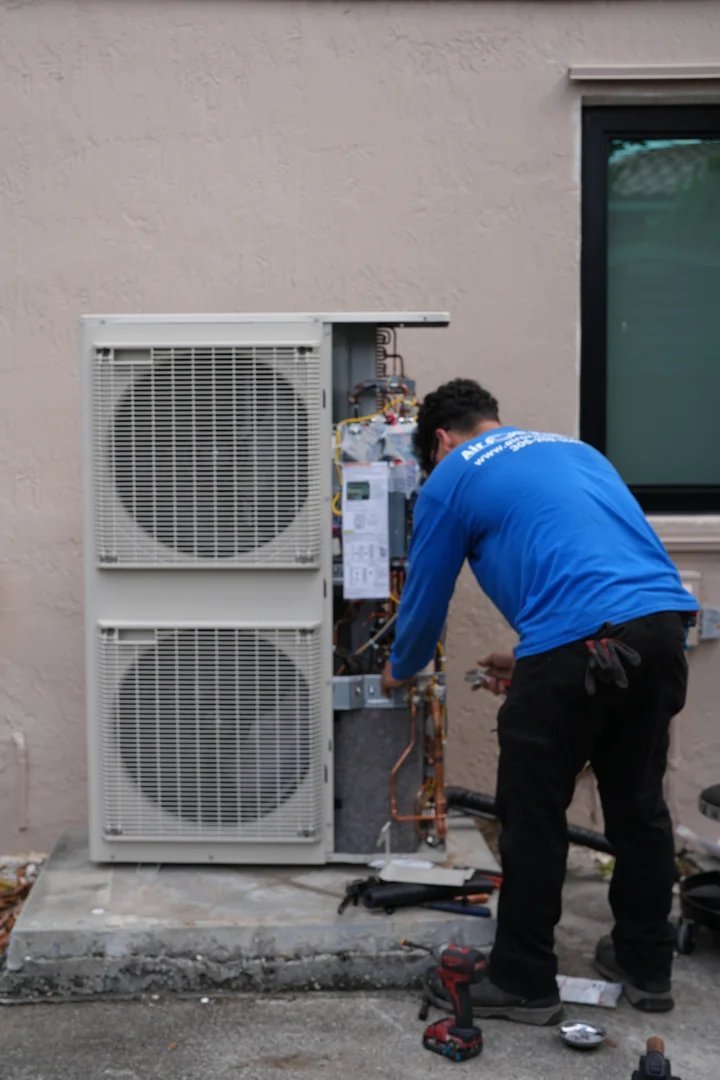
How to Diagnose AC Humidity Issues Fast
July 16, 2026
If you've noticed signs your ac is struggling with tropical humidity, you're not alone — this is one of the most common complaints from homeowners across Miami-Dade, from Coral Gables to Pinecrest.
Here's a quick look at the most common warning signs:
South Florida's climate is relentless. Outdoor humidity regularly sits between 70% and 90% from late spring through early fall, and your AC is fighting that moisture every single hour it runs. Unlike drier climates where an air conditioner mainly cools the air, here it has to do double duty — pulling heat and heavy moisture out of every cubic foot of air that passes through your home.
The problem is that most systems aren't getting the support they need to handle that workload. When maintenance slips, equipment is sized wrong, or components start to wear, humidity wins. Your home ends up feeling like a damp basement even when the thermostat says 74°F.
For South Florida homeowners, understanding these warning signs early is the difference between a simple service call and a major repair — or worse, a mold problem that spreads through your ductwork before you ever notice it.
For more on how humidity and your AC interact in this climate, see Humidity and Air Conditioning in Miami FL.
To understand why your air conditioner struggles in places like Cutler Bay or Country Walk, we have to look at the physics of air conditioning. Your AC does not actually "create" cold air; instead, it removes heat and moisture from the warm indoor air and dumps it outside.
This process is split into two distinct thermodynamic workloads:
In a dry climate, almost 100% of an AC's capacity goes toward sensible cooling. But in our tropical South Florida climate, high humidity can cause an air conditioner to use up to 30% of its total BTU capacity for dehumidification alone, leaving far less energy for actual sensible cooling.
When warm, humid air passes over the cold evaporator coil, the air temperature drops below its dew point. This causes the gaseous water vapor to liquefy and collect on the coil, much like condensation forms on a cold glass of sweet tea on a hot afternoon. If the air is too humid, the thermodynamic load on the system sky-rockets. The system has to run much longer just to squeeze the water out of the air before you ever feel a noticeable drop in temperature.
| Feature | Sensible Cooling | Latent Cooling |
|---|---|---|
| Primary Target | Air Temperature | Water Vapor (Relative Humidity) |
| Measurement Tool | Standard Thermometer | Hygrometer |
| Physical Process | Heat transfer from indoor air to refrigerant | Condensation of moisture on the cold evaporator coil |
| Impact of High Humidity | Remains steady, but feels warmer due to lack of evaporation | Consumes up to 30% of total system cooling capacity |
If your system cannot balance these two loads, you get what technicians call the "meat locker" effect: the air is technically cold, but it remains damp, sticky, and incredibly uncomfortable. For a deeper look at this process, read How Your Air Conditioner Helps to Control the Humidity.
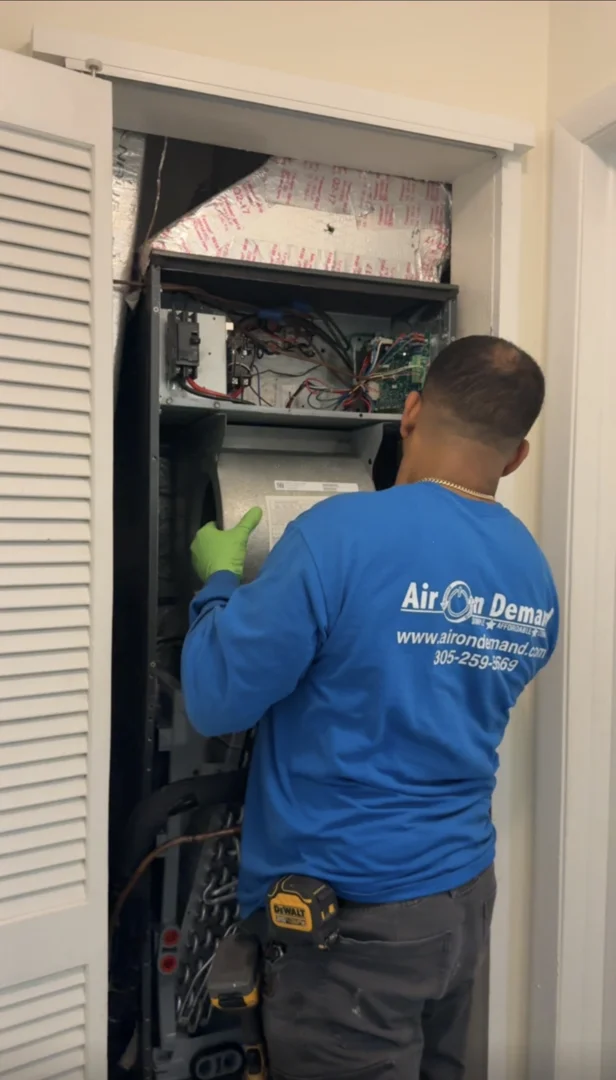
When the tropical moisture levels climb in South Florida, your AC is put to the ultimate test. It is easy to ignore minor changes in comfort, but your system will drop clear hints when it is losing the battle against high humidity. Ignoring these signs can lead to major system strain, increased energy consumption, and musty odors that ruin your indoor air quality.
To protect your home and keep your family comfortable, watch out for these five undeniable warning signs of a struggling system. If you notice any of these occurring in your home, it is a clear indicator that your system needs professional attention before a complete breakdown occurs. For more common issues, check out Common Summer AC Problems and explore Why Isn't My AC Cooling Like It Used To.
The most obvious sign of a struggling air conditioner is a home that constantly feels sticky or clammy. Ideally, your indoor relative humidity should sit comfortably between 45% and 55% during the cooling season. If you use a digital hygrometer to measure your indoor air and see readings consistently above 60% for more than a day or two with the AC running, you have a real moisture problem.
When humidity stays high, sweat cannot evaporate from your skin. This makes a 74°F room feel like 80°F, prompting many homeowners to repeatedly lower the thermostat. This only wastes energy and increases system wear without solving the root moisture issue.
You may also notice physical signs of excess humidity around the house, such as:
If your air conditioner turns on, runs for five to seven minutes, shuts off, and then turns back on a few minutes later, it is "short-cycling." While it might seem like the system is just doing its job quickly, short-cycling is actually a major problem for humidity control.
An AC coil needs at least 10 to 15 minutes of continuous run time to reach its optimal cold operating temperature and begin pulling moisture out of the air. If the system shuts off too quickly, the air is cooled, but the moisture is never removed.
An oversized AC unit is the second most common cause of humidity issues, accounting for approximately 25% of cases where the system cools the air but fails to dehumidify properly. Many contractors install oversized units to avoid "insufficient cooling" complaints, but in South Florida, a bigger unit often leads to a damp, short-cycling home. This rapid cycling also causes massive compressor wear, leading to premature system failure.
To learn more about how proper sizing prevents these issues, read The Importance of HVAC System Sizing Avoiding Common Mistakes.
It sounds counterintuitive, but a frozen evaporator coil is a very common side effect of high indoor humidity, especially when combined with restricted airflow. Your indoor evaporator coil is designed to stay cold, but if the airflow across it is restricted, the condensation on the coil can quickly turn to ice.
The most common culprit behind this is a dirty air filter. When a filter is clogged with dust and pet dander, it restricts the warm indoor air from passing over the coil. Without that warm air to transfer heat, the refrigerant inside the coil drops below freezing, turning the collected moisture into a solid block of ice.
A dirty evaporator coil itself is the single most common cause of humidity problems, accounting for approximately 40% of cases where an AC cools but does not remove humidity effectively. Dust and dirt act as an insulating blanket on the coil, preventing the refrigerant from absorbing heat and moisture from the air. Once ice begins to form, it completely blocks airflow, and your system will stop cooling your home altogether.
Operating an air conditioner in South Florida is vastly different than operating one in a dry, moderate climate. The constant, heavy moisture levels in places like Lakes By the Bay and Kendale Lakes force your system to run longer, harder, and more frequently. This constant operational strain translates directly to accelerated wear and tear on critical mechanical parts.
In moderate climates, a well-maintained AC system can easily last 12 to 15 years. However, in South Florida’s relentless humidity, that lifespan is often cut short due to constant moisture exposure and physical strain.
The components that pay the highest price for this heavy workload include:
To understand why your system runs so frequently and how to protect it, read Why Your AC Runs Constantly in South Florida and What Shortens Your AC Lifespan in Heat, Humidity and Salt Air.
Because your AC acts as a giant dehumidifier, it pulls gallons of water out of your indoor air every single day. All of this water collects in a drain pan beneath the evaporator coil and flows out of your home through a condensate drain line.
However, high humidity combined with warm indoor temperatures creates the perfect breeding ground for algae, mold, and slime inside that drain line. Over time, this biological growth builds up and completely clogs the line.
When a clog occurs, the water has nowhere to go. It will quickly overflow the drain pan, leading to water damage on your ceilings, walls, or floors. Fortunately, most modern systems are equipped with a safety float switch. When water rises in the pan, the float switch activates and automatically shuts down the system to prevent flooding. If your AC suddenly shuts off and refuses to turn back on, a clogged condensate drain is a highly likely culprit.
For homeowners living in coastal communities like Palmetto Bay, Homestead, and Coconut Grove, humidity carries another hidden danger: salt air. The moisture in our coastal breeze is loaded with microscopic salt particles, which are highly corrosive to metal.
When this salty moisture constantly passes through your outdoor condenser coil and indoor evaporator coil, it triggers a process called pitting corrosion. This corrosion slowly eats away at the copper tubing and aluminum fins of your coils.
Over time, pitting corrosion creates microscopic holes in the coils, leading to refrigerant leaks. Because refrigerant is the lifeblood of your cooling system, even a tiny leak will lower your system's pressure, drastically reducing its ability to cool and dehumidify your home. Once coils are heavily corroded, they must be replaced, which is a major and complex repair.
While South Florida’s climate is tough, you don't have to let the humidity destroy your air conditioner. By adopting smart homeowner habits and investing in the right technology, you can drastically reduce the strain on your system, lower your monthly energy usage, and keep your indoor air clean and dry.
If you suspect your system has been struggling for a while, it may also be time to inspect your ductwork. Leaky ducts can pull humid air from your attic directly into your living spaces. To see if this is affecting your home, check out the Signs It's Time for Duct Cleaning.
Taking care of your AC doesn't always require a technician. There are several simple, highly effective habits you can practice at home to keep your system running smoothly:
While daily habits help, the ultimate defense against tropical humidity is professional maintenance and modern HVAC technology. Scheduling professional tune-ups twice a year — once in the spring and once in the fall — ensures that your coils are clean, your refrigerant levels are correct, and your condensate lines are completely clear of algae.
If your current system is over 10 to 12 years old and constantly struggling, it may be time to consider an upgrade. Modern variable-speed systems, such as the Daikin FIT, are specifically designed to conquer high-humidity climates. Unlike traditional single-stage systems that blast on and off at 100% capacity, variable-speed systems run continuously at lower, highly efficient speeds. This allows for longer, gentler cooling cycles that pull up to 30% to 50% more moisture out of the air per kilowatt-hour of electricity used.
Additionally, installing a whole-home dehumidifier directly into your existing ductwork can take the entire latent load off your AC. This allows your air conditioner to focus solely on sensible cooling, resulting in shorter run times, less mechanical wear, and a much longer system lifespan.
Managing indoor comfort in a tropical climate can be confusing. Here are answers to some of the most common questions South Florida homeowners ask about keeping their homes dry and comfortable.
The ideal indoor relative humidity range for a home in South Florida is between 45% and 55%. Keeping your humidity within this range ensures optimal comfort, as it allows your body’s natural cooling mechanism (sweat evaporation) to work efficiently.
Maintaining humidity below 55% is also critical for mold prevention. Mold spores thrive and begin to multiply rapidly on drywall, wood, and carpet when relative humidity levels stay above 60% for more than 48 hours.
If your home feels sticky despite the AC running constantly, several issues could be at play:
Yes, a dirty air filter is a major contributor to high indoor humidity. When a filter is clogged, it restricts the volume of air passing over the evaporator coil. This lack of airflow prevents the system from pulling moisture out of the air efficiently and can cause the coil to freeze, completely halting the dehumidification process.
Living in South Florida means dealing with beautiful beaches, warm sunshine, and some of the most intense humidity in the country. When your air conditioner begins to struggle under the weight of this tropical moisture, it is crucial to act quickly before minor issues turn into major breakdowns or indoor mold hazards.
At Air On Demand, we specialize in helping homeowners across Coconut Grove, Coral Gables, Country Walk, Cutler Bay, Homestead, Kendale Lakes, Kendall, Lakes By the Bay, Palmetto Bay, and Pinecrest stay cool and dry. As local indoor comfort experts, we specialize in high-efficiency Daikin products, offering seamless HVAC solutions tailored to our unique coastal climate.
When you partner with us, you enjoy the peace of mind that comes with convenient online booking, fast service, real-time updates, and the industry-leading Daikin Comfort Promise, backed by outstanding 12-year parts warranties.
Don't let the sticky summer air ruin your indoor comfort. Contact us today to schedule your professional system evaluation and keep your home dry all year long. Visit our Air Conditioning Services page to book your appointment online fast!