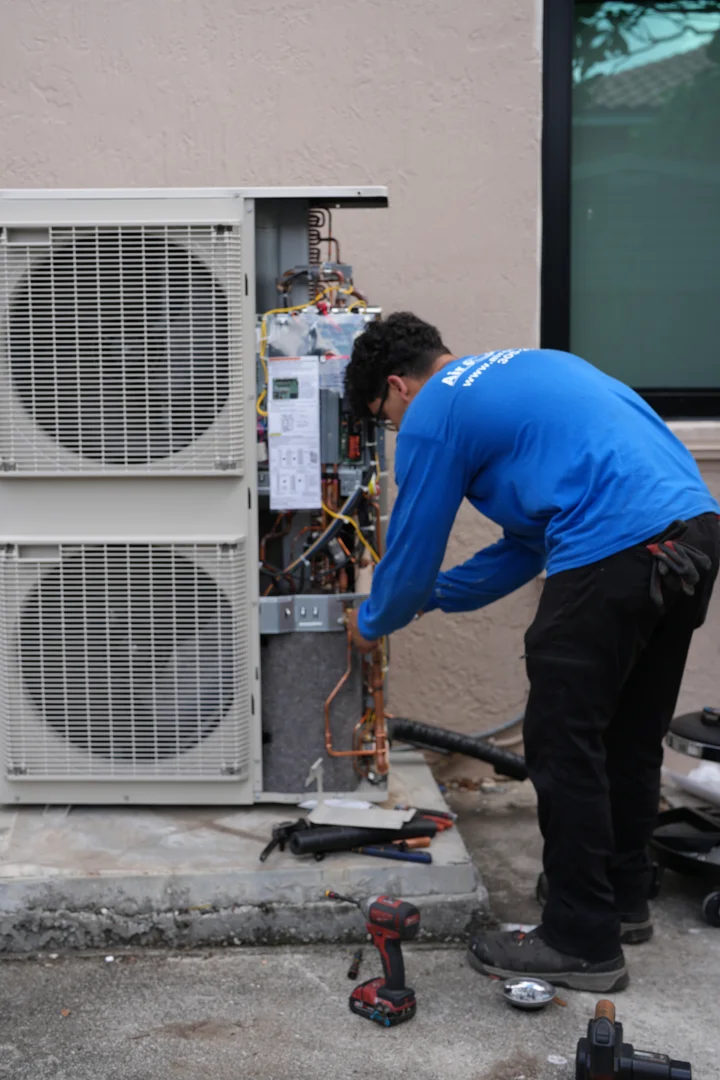
What to Check on Your AC After a Hurricane to Avoid Costly Repairs
August 17, 2026
Post storm ac inspection what to look for starts with these key checks before you restart your system:
• Outdoor unit: Look for debris, bent fins, dents, displaced panels, mud lines, or standing water
• Electrical: Check if the circuit breaker tripped; never restart if water is present near wiring
• Indoor components: Inspect air filters, ductwork, and the air handler for moisture or damage
• Performance: After a safe restart, listen for unusual noises and watch for weak airflow or burning smells
• Documentation: Photograph all visible damage before cleaning anything up
South Florida storms move fast and hit hard. One hour of hurricane-force winds or heavy flooding can leave your AC system in rough shape — even if it looks fine from the outside. For homeowners in Kendall, Coral Gables, Coconut Grove, and surrounding Miami-area communities, the aftermath of a major storm is stressful enough without discovering your AC is damaged on the first sweltering day after the clouds clear.
The tricky part? Some storm damage is obvious. A tree branch through the condenser unit is hard to miss. But many post-storm AC problems — corroded electrical contacts, weakened capacitors, moisture inside the air handler — are completely invisible until they cause a breakdown at the worst possible moment.
That's why a careful, step-by-step inspection matters before you flip that switch back on.
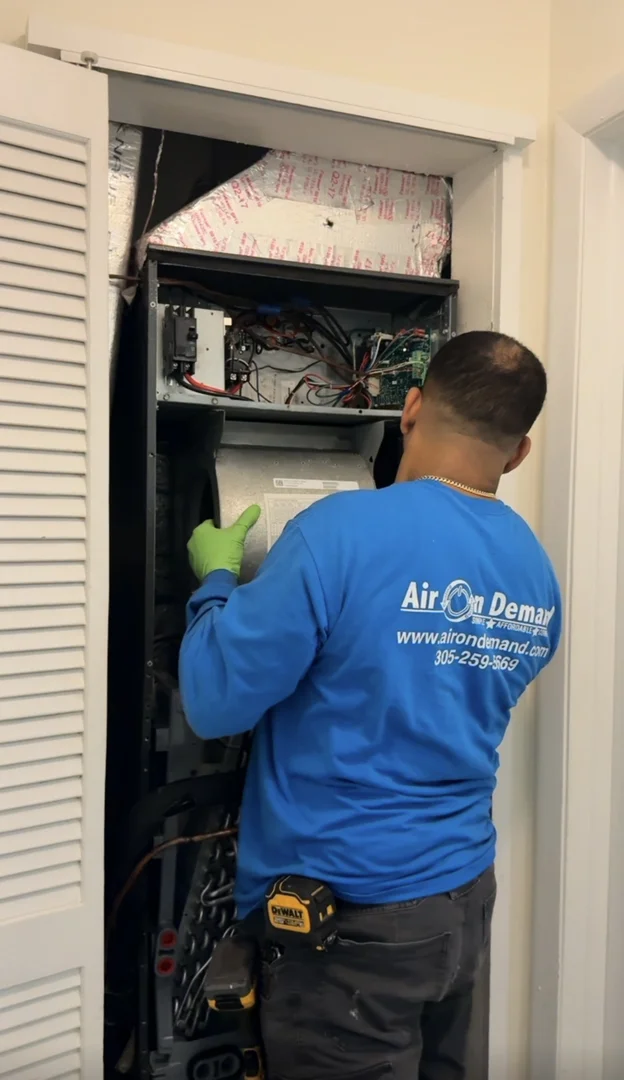
Before you even think about checking the thermostat, your absolute priority is safety. It’s April 2026, and while we are better prepared for storms than ever, the combination of water and electricity remains deadly. If you are stepping outside to inspect your unit in areas like Kendall or Palmetto Bay, ensure you are wearing protective gear, including thick gloves and closed-toe shoes.
If the power went out during the storm, or even if it didn't, we recommend turning the AC system off at the thermostat and the circuit breaker. This prevents the system from trying to kick on while you are inspecting it or if the grid is experiencing unstable power surges.
Storms can fray wires or cause internal shorts. If you see any sparks, scorch marks, or smell something "electrical" burning, stay away. These are major Warning Signs Of Fire Hazards. If your outdoor unit is sitting in standing water, do not touch it. Water conducts electricity, and a submerged unit can be energized.
While we focus on AC, remember to stay alert for the smell of gas if you have gas-powered appliances. Also, look up! Before walking near your outdoor condenser, check for hanging tree limbs or loose roof tiles that could fall.
Your outdoor condenser is the frontline soldier in the battle against Miami heat, and it takes the brunt of the storm. Whether you're in Pinecrest or Homestead, the outdoor unit is vulnerable to high winds and rising water. It is vital to Protect Your Air Conditioner When It S Rainy by performing a thorough visual check.
Hurricane-force winds (often exceeding 100-km/h) can turn patio furniture or roof shingles into projectiles. This kind of force can easily shatter window glass and dent the heavy metal casing of your AC.
• Dents and Cracks: Check the metal cabinet for large dents. While a small ding might be cosmetic, a major dent can compress the coils or interfere with the fan blades.
• Bent Fins: The thin aluminum "fins" on your coils are essential for heat exchange. If they are flattened by wind or debris, your unit will struggle to cool. You can sometimes use a "fin comb" for minor repairs, but if more than 30% are crushed, you need a professional.
• Unit Stability: Check if the concrete pad has shifted or tilted. A tilted unit can cause refrigerant leaks or put stress on the lines.
• Flying Debris: It’s common for Can Severe Weather In Miami Disrupt My Air Condi through physical impact. Look inside the top of the unit for sticks, leaves, or even mud that could jam the fan motor.
In South Florida, flooding is a major concern. The July 2024 flooding event in Union County showed how quickly 6 inches of rain can submerge equipment, and Miami is no stranger to flash floods.
• The Mud Line: Look for a "silt line" or mud stains on the side of your unit. This tells you how high the water rose.
• Saltwater Corrosion: If you live near the coast in Lakes By the Bay or Cutler Bay, storm surges can bring saltwater. Salt is incredibly corrosive to copper and aluminum. If your unit was touched by saltwater, it needs an immediate professional cleaning.
• Electrical Shorts: Water inside the electrical compartment can lead to Ac Problems That Need Emergency Repair. If the water reached the level of the compressor or the control board, do not turn it on.
The storm doesn't just happen outside. Pressure changes and wind-driven rain can affect the indoor portion of your HVAC system. Homeowners in Cutler Bay and Kendale Lakes should pay close attention to the air handler and the air quality inside the home.
Check the area around your indoor air handler. Is there water on the floor? Is the insulation inside the cabinet soaked? Wet insulation is a breeding ground for mold. Also, replace your air filter immediately. Storms stir up an incredible amount of dust and allergens, which can clog a filter in hours.
High winds can actually shift ductwork in your attic. If you notice a sudden drop in cooling, you might have 4 Signs You Have Duct Issues. Look for:
• Disconnections: Use a flashlight in the attic to see if any ducts have pulled apart.
• Water Stains: Damp spots on your ceiling are often Signs You Need Duct Repair due to water entering through roof vents and running down the ducts.
• Wet Insulation: If your duct insulation is wet, it must be replaced. It cannot be effectively dried or disinfected once contaminated by storm water.
Once you are 100% sure the unit is dry and clear of debris, you can attempt a restart. However, stay by the unit and the thermostat for the first 15 minutes.
• Unusual Noises: Screeching, banging, or loud rattling are Signs That Your Ac Is In Trouble. This could mean a damaged fan blade or a failing compressor.
• Odors: A musty smell indicates mold or standing water in the drain pan. A burning smell indicates an electrical short.
• Weak Airflow: If the air coming out of the vents is weak or warm, the storm may have caused a refrigerant leak.
• Thermostat Issues: If the screen is blank or the settings have reset, a power surge may have fried the low-voltage wiring.
You Know What Can Withstand A Hurricane Your Duc can sometimes be damaged by the pressure, so don't ignore "hot spots" in your home.
If you find damage, your first instinct might be to start cleaning. Stop. Before you move a single branch or wipe away mud, document everything. Miami-Dade insurance claims for hurricane damage require clear evidence.
1. Photo and Video: Take wide shots of the entire unit and close-ups of specific damage (bent fins, water lines, debris).
2. Serial Numbers: Locate the manufacturer's plate on your unit and take a clear photo of the model and serial number.
3. Maintenance Records: Having proof of a recent Hvac System Check shows the insurance company that the unit was in good working order before the storm.
4. Professional Assessment: Insurance adjusters often require a formal Ac Inspection report from a licensed technician to verify that the damage was storm-related and not due to wear and tear.
If there was no flooding and the unit looks clear, wait at least 30 minutes after the power is restored to the grid. This allows the electrical tension on the lines to stabilize. However, if the unit was submerged or you see physical damage, do not turn it on until a professional inspects it.
Yes, a gentle rinse with a garden hose is actually a good idea to remove salt, silt, and mud from the exterior fins. However, never use a pressure washer. The high pressure will crush the delicate aluminum fins and can force water into the electrical compartments.
Generally, yes. Most policies cover "sudden and accidental" damage from wind, lightning, and falling objects. However, damage from rising floodwaters often requires a separate flood insurance policy. This is why documenting the "mud line" is so important for your claim.
A hurricane is a major event for your home, and your AC is often the most expensive appliance you own. Taking the time to perform a post storm ac inspection what to look for can be the difference between a simple cleaning and a total system replacement.
At Air On Demand, we specialize in high-quality HVAC solutions tailored for the Miami climate. As Daikin specialists, we take pride in offering the legendary Daikin 12-year parts warranty and the Comfort Promise, giving you peace of mind even when the clouds turn grey. Whether you are in Coral Gables, Palmetto Bay, or Country Walk, our team is ready to provide fast, reliable service to get your home comfortable again.
Don't risk your safety or your warranty by guessing. Schedule your post-storm AC service in Miami today! and let our experts ensure your system is safe and efficient.