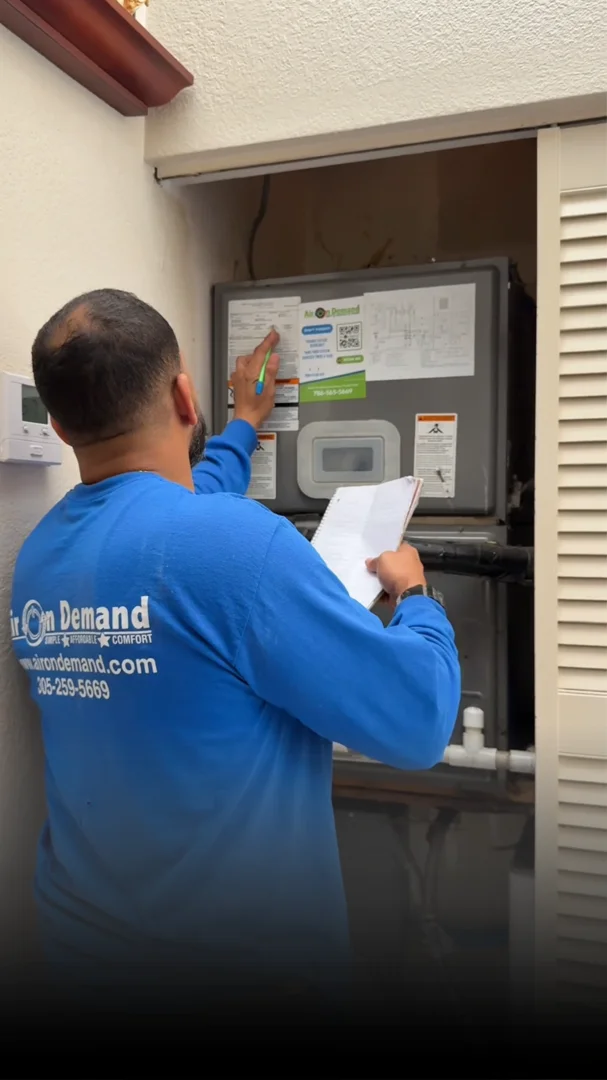
How to Troubleshoot AC Issues Safely Before Calling a Pro
August 17, 2026
Here are the most important ac troubleshooting tips before calling a professional you can safely try at home:
1. Check the thermostat — confirm it's set to COOL and the temperature is set below the current room temperature
2. Replace the air filter — hold it up to light; if you can't see through it, swap it out
3. Reset the circuit breaker — switch it fully OFF, wait 30 seconds, then switch it back ON
4. Check the outdoor unit — make sure it's running and free of leaves, dirt, or debris
5. Inspect your vents — ensure all supply and return grilles are open and unblocked
6. Turn the system OFF — if you notice ice on the lines, a burning smell, water leaking, or loud banging noises, shut it down and call a professional
It's a frustrating moment every South Florida homeowner knows too well — the AC goes quiet on a sweltering afternoon, and the house starts warming up fast. In Miami's heat and humidity, that's not just uncomfortable. It can become a real problem within the hour.
Before you call for a technician, though, there's good news. Many common AC complaints trace back to simple issues — a clogged filter, a tripped breaker, a thermostat set to the wrong mode — that you can check and fix yourself in under 30 minutes. Knowing what to look for can save you time and a lot of unnecessary stress.
That said, there's a clear line between safe DIY checks and issues that require a licensed professional. Electrical faults, refrigerant leaks, and frozen coils are not problems to push through on your own. This guide will walk you through exactly where that line is.
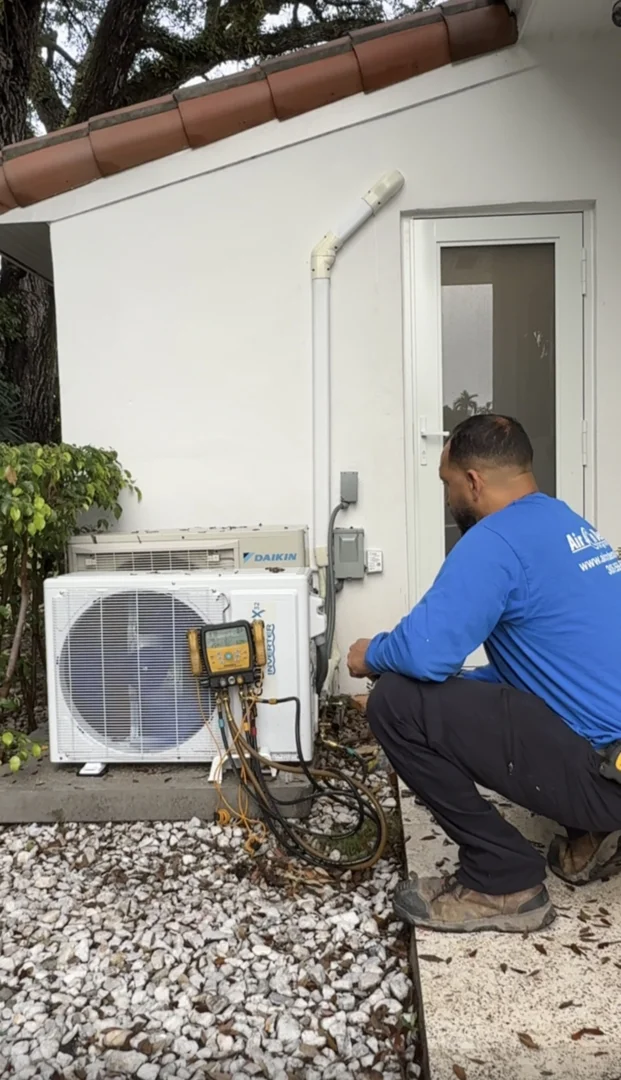
In the peak of May 2026, the Miami heat doesn't take breaks. When your cooling system falters, your first instinct might be to reach for the phone. However, performing a few basic checks can often resolve the issue without a service call. We recommend spending about 30 minutes on these DIY steps before concluding that a professional repair is necessary.
The first place to look is your thermostat. It sounds simple, but you’d be surprised how often a system "failure" is actually just a setting that got bumped or a battery that died. Ensure the system is set to "COOL" rather than "HEAT" or "AUTO." If the display is blank or dim, it’s likely time for fresh batteries. For a deeper dive into these initial steps, check out our guide on DIY Thermostat Troubleshooting: Try This First.
Your air conditioner relies on two separate power sources: one for the indoor air handler and one for the outdoor condenser unit. If one trips while the other stays on, the system won't cool properly.
• Check the Breaker Panel: Look for switches labeled "AC" or "HVAC." If a breaker is in the middle position, it has tripped. Switch it fully to "OFF" and then back to "ON."
• The Outdoor Disconnect: Near your outdoor unit, there is a small metal box containing a disconnect switch or pull-out fuse. Ensure this hasn't been accidentally flipped during yard work.
• The 5-Minute Reset: Sometimes the electronics just need a "reboot." Turn the system off at the thermostat, wait five minutes to allow pressures to equalize, and then turn it back on.
If you find yourself constantly resetting the breaker, stop. A breaker that trips repeatedly is a safety warning of an electrical fault. You can learn more about these control issues in our Air Conditioning Repair FAQ: Is It the Thermostat?.
A dirty air filter is the single most common cause of poor AC performance. When the filter is clogged with dust, pet dander, and Miami humidity, it restricts airflow. This forces the blower motor to work harder and can eventually cause the evaporator coil to freeze into a block of ice.
We suggest the "light test": hold your filter up to a bright light or the sun. If you can't see light passing through the fibers, the filter is too dirty to do its job. While you're at it, walk through your home and check your return grilles and supply vents. Ensure that furniture, curtains, or rugs aren't blocking the airflow. Even in a large home in Pinecrest or Palmetto Bay, blocking just a few vents can disrupt the pressure balance of the entire system. Don't Forget to Check Your Air Filter regularly to prevent these avoidable breakdowns.
Air conditioning isn't actually about "adding" cold air to your home; it’s about removing heat. This heat is released through the outdoor condenser unit. If that unit is buried under overgrown hedges or clogged with grass clippings, the heat has nowhere to go. According to the Department of Energy, poor airflow and duct leaks can cause a system to lose up to 30% of its efficiency.
If your system is running but the house feels humid and warm, the outdoor unit might be struggling to breathe. You can find more details on this specific issue in our article: AC Not Cooling Properly: What to Check.
When airflow is restricted indoors, the refrigerant in your evaporator coils gets too cold. This leads to ice formation on the copper lines. If you see frost, your system is literally suffocating. Airflow isn't just about the filter; it's about the health of the blower fan and the integrity of your ducts. In areas like Kendall, where homes may have older ductwork, leaks can prevent cooled air from ever reaching your living spaces. If the air coming out of your vents feels weak, it’s a sign that the "push" behind your cooling is failing. Explore the root causes here: Why Is My Air Conditioner Not Cooling Properly.
South Florida's lush landscape is beautiful, but it's tough on AC units. We recommend maintaining at least a two-foot clearance around all sides of your outdoor unit and at least five feet of clear space above it.
• Cleaning the Coils: You can gently use a garden hose to rinse away dust and salt spray from the condenser fins. Never use a pressure washer, as the high pressure will bend the delicate aluminum fins and block airflow.
• Landscaping Hazards: Be careful with weed whackers near the unit. It is incredibly common for homeowners to accidentally clip the thin thermostat wires that lead to the outdoor unit, which will cause the system to stop immediately.
If the outdoor fan isn't spinning even though the thermostat is calling for cooling, you may have a failed capacitor or motor. Check out our guide on AC Fan Not Spinning for more insight.
While we want to empower you to handle basic maintenance, safety is our priority. There are moments when you must step away from the unit and call in a licensed specialist. If you smell something burning (like ozone or burning plastic), see sparks, or hear loud metal-on-metal grinding, turn the power off at the breaker immediately. These are signs of mechanical or electrical failure that can lead to a fire or total system destruction. For a list of sounds that mean trouble, visit Noises That Signal a Need for Air Conditioning Repair.
Modern AC systems are complex. They contain high-voltage circuits and capacitors that can store a lethal electrical charge even after the power is turned off. Furthermore, handling refrigerant is strictly regulated by the EPA.
If you notice an oily residue on the copper lines or near the valves, this is a tell-tale sign of a refrigerant leak. Refrigerant doesn't "wear out" or "get used up"—if it's low, there is a hole in your system. Only a technician with EPA 608 certification can safely find, seal, and recharge these leaks. Attempting to fix this yourself is not only dangerous but illegal. Learn how to spot these professional-grade issues in our Signs AC Repair Guide.
In the humidity of Coral Gables or Coconut Grove, your AC pulls gallons of water out of the air every day. This water should flow down a drain line to the outside. If that line clogs with algae or debris, the water backs up into a drain pan. Most modern systems have a "float switch" that will automatically shut the AC off if it detects standing water to prevent your ceiling from collapsing.
If you see water pooling around your indoor unit, or if you see ice on the refrigerant lines:
1. Turn the AC OFF at the thermostat.
2. Turn the Fan to ON (not Auto). This helps circulate warm air over the coils to melt the ice safely.
3. Wait. It can take several hours for a system to thaw.
Do not try to chip the ice away with a screwdriver or knife; you will likely puncture the coils, turning a simple fix into a major replacement. For more help, see Troubleshooting AC Water Leaks.
As we move through 2026, many homeowners in Kendall and Homestead are facing the reality of aging systems. While ac troubleshooting tips before calling a professional can extend the life of your unit, eventually, replacement becomes the more practical choice.
• Typical Tasks — DIY Maintenance: Filter changes, debris clearing, battery swaps — Professional Repair: Capacitor replacement, leak sealing, motor repair — System Replacement: New system installation with warranty
• System Age — DIY Maintenance: Any age — Professional Repair: 1-10 years — System Replacement: 12-15+ years
• Frequency — DIY Maintenance: Monthly/Quarterly — Professional Repair: Rare (once a year or less) — System Replacement: Once every 15 years
• Efficiency — DIY Maintenance: Maintains current SEER — Professional Repair: Restores factory performance — System Replacement: Significant improvement in energy efficiency
Most experts agree the lifespan of an AC in Florida's harsh climate is 10-15 years. If your system is over 12 years old and you're calling for service more than once a season, you’re likely continuing to repair a failing asset. Modern systems are significantly more efficient and come with industry-leading 12-year parts warranties. If you're unsure where your system stands, read What to Check Before Calling for Air Conditioning Repair.
The most common reasons for warm air include a thermostat set to "HEAT" by mistake, a tripped breaker for the outdoor unit (meaning the indoor fan is blowing, but the compressor isn't cooling), or a heavily soiled outdoor condenser coil. If those check out, you likely have a refrigerant leak or a failed compressor.
Yes, immediately. Ice acts as an insulator, preventing the system from cooling your home and putting immense strain on the compressor. Turn the cooling off but keep the fan running to melt the ice. Check your filter once the ice is gone; a clogged filter is the #1 cause of freezing.
In high-traffic areas like Pinecrest or Coral Gables, we recommend checking your filter every 30 days. If you have pets or suffer from allergies, you may need to replace it monthly. At a minimum, never let a filter go longer than 90 days.
At Air On Demand, we pride ourselves on being specialists who understand the unique demands of the South Florida climate. Whether you're in Coconut Grove, Coral Gables, or Homestead, we are here to provide fast, reliable service when your DIY efforts reach their limit. By following these ac troubleshooting tips before calling a professional, you can often solve minor issues yourself. But when the job requires expert hands, our team is ready with real-time updates and our service promise.
Don't let a small issue turn into a total system failure. Schedule your professional AC maintenance today and keep your home a cool sanctuary all year long.