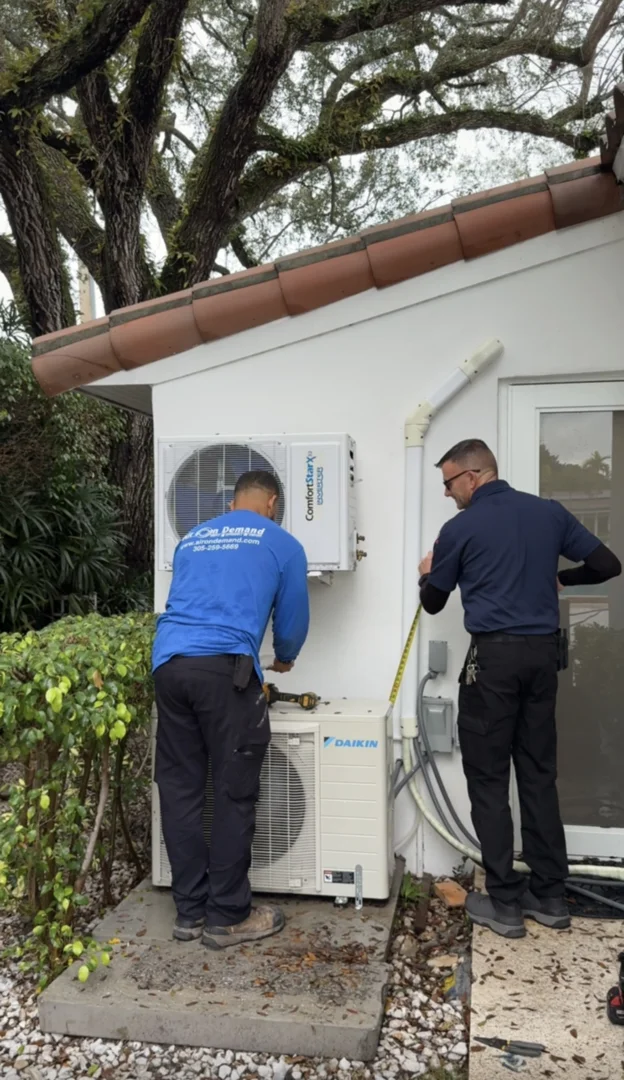
How Variable Speed Technology Saves Energy
July 18, 2026
How variable speed technology saves energy comes down to one core idea: instead of running at full blast or shutting off completely, a variable speed system adjusts its output to match exactly what your home needs at any given moment.
Here is a quick breakdown of how it works:
• Matches output to demand - the motor speeds up or slows down based on real-time conditions, rather than cycling on and off
• Eliminates energy waste from on/off cycling - each startup draws a surge of electricity; fewer startups means less wasted power
• Runs longer at lower speeds - this is far more efficient than short, high-intensity bursts
• Reduces mechanical losses - no throttling valves or dampers restricting airflow while the motor still runs at full power
• Typical savings of 15–40% on energy compared to fixed-speed systems, with some applications saving even more
In South Florida's brutal heat and humidity, your AC runs almost year-round. That makes the difference between a fixed-speed and a variable speed system far more significant than it would be in a milder climate. A system that wastes energy even a little, every single day, adds up fast on your electricity bill — and puts extra wear on equipment that already works hard just to keep up with Miami-Dade summers.
To truly grasp how variable speed technology saves energy, we first have to look at how traditional "fixed-speed" motors operate. Imagine driving a car where the accelerator only has two settings: floor it or stop. To maintain 30 mph, you’d have to constantly stomp on the gas and then slam on the brakes. It sounds exhausting (and expensive), right? That is exactly how a traditional AC unit works. It kicks on at 100% capacity, cools the room, and then shuts off completely.
Variable speed technology, often referred to as inverter technology, changes the game. It uses a Variable Speed Drive (VSD) or frequency inverter to control the motor. Instead of a binary "on/off" state, the inverter adjusts the frequency and voltage supplied to the motor. This allows the compressor and fan to run at any speed—from 10% to 100%—depending on the cooling load.
When we look at Which Air Conditioner is the Most Efficient, we see that the ability to match the load is the primary driver of efficiency. During a mild morning in Coral Gables, your system might only need to run at 30% capacity to keep you comfortable. A fixed-speed unit would still blast at 100%, wasting 70% of its effort.
This precision is reflected in modern efficiency standards. As of May 2026, we pay close attention to SEER2 (Seasonal Energy Efficiency Ratio 2) ratings. These ratings are higher for variable speed systems because they account for the massive efficiency gains found during part-load operation. If you are wondering What is SEER2 and Why It Impacts Your Next AC Replacement, it is essentially a measure of how well your system performs across an entire season, and variable speed units consistently top the charts.
There is a bit of "magic" in the physics of fluids (like air and water) that explains why slowing down a motor saves so much more energy than you might expect. This is governed by the Affinity Laws, specifically the "Cube Law."
The Cube Law states that the power consumed by a centrifugal load (like your AC’s fan or compressor) is proportional to the cube of its speed. This leads to some staggering statistics:
• A 10% reduction in speed can lead to a 25% reduction in power consumption.
• A 20% reduction in speed can lead to a 50% reduction in energy use.
Think about that for a second. By slowing down your fan just a little bit, you aren't just saving a little bit of power—you are cutting it in half. This is why variable speed motors are so much more effective than traditional flow control methods. In older systems, if you wanted less airflow, you might use dampers or valves to restrict the path. That is like keeping your foot on the gas while pressing the brake. The motor is still working at full power; you’re just wasting that energy as heat and friction.
Understanding 4 Things You Should Know About Energy Efficiency helps us realize that reducing mechanical wear is a side benefit of this physics lesson. When a motor runs at a lower speed, there is less vibration and less heat, which means the components inside your unit in Palmetto Bay or Cutler Bay last significantly longer.
One of the most "violent" things an electrical motor does is start up. When a fixed-speed motor kicks on, it experiences something called "inrush current." This is a massive surge of electricity—sometimes 5 to 6 times the normal operating current—required to get the motor spinning from a dead stop.
Variable speed drives act as "soft starters." They gradually ramp the motor up to speed, eliminating those massive voltage spikes. This saves energy in two ways:
1. It avoids the wasted power of the startup surge.
2. It allows the system to stay in its "sweet spot" of efficiency for longer periods.
Beyond the bill, this soft-starting capability protects your home’s electrical system and the motor itself. Frequent on/off cycling creates thermal stress—the constant heating and cooling of motor windings—which is the leading cause of motor failure. When you Save Big When You Upgrade to a Daikin Fit, you are investing in a system that avoids this stress by staying on at a low, steady hum.
In places like Pinecrest and Kendale Lakes, we don't just fight the heat; we fight the humidity. This is where variable speed technology truly shines for Florida homeowners.
A traditional AC unit cycles on, blasts the air with cold, and then shuts off. Because it cools the air so quickly, it doesn't run long enough to actually remove the moisture from the air. This leads to a "cold and clammy" feeling. To fix this, many people lower their thermostats even further, which wastes even more energy.
Variable speed systems run for longer cycles at lower speeds. This keeps the evaporator coil at a consistent temperature, allowing it to pull significantly more moisture out of the air. When the humidity is lower, you feel cooler at a higher temperature. If you can set your thermostat to 75°F instead of 72°F because the air is drier, you are discovering How to Lower AC Bills During Summer in the most effective way possible.
While the primary question is how variable speed technology saves energy, the benefits to your lifestyle are just as important.
• Quiet Operation: Because the system rarely needs to run at 100% capacity, you won't hear that loud "clunk" and roar every time the AC kicks on. Most of the time, it operates at a whisper-quiet level that you’ll barely notice.
• Precise Temperature Control: Fixed-speed systems result in "temperature swings"—you’re too cold when the AC is on and too warm when it’s off. Variable speed units maintain a steady temperature within a fraction of a degree.
• Improved Indoor Air Quality: Because the fan runs more consistently at lower speeds, your air is being filtered more often. This is a huge plus for families in Homestead or Country Walk who suffer from seasonal allergies.
• Sustainability: On a global scale, electric motors use about half of the world's electricity. By switching to variable speed, we contribute to a massive reduction in greenhouse gas emissions. In fact, global electrical consumption could drop by 8% if VSDs were used in every suitable application.
Following Year-Round HVAC Efficiency Tips is easier when your equipment is designed to be smart. Many of these systems come with sensors that adapt to the weather outside and the occupancy inside, ensuring not a single watt of power is wasted.
Installing a variable speed system is a giant leap forward, but to ensure you are getting the full energy-saving potential, the rest of your home needs to be in sync. In South Florida, your ductwork is often the "weak link." If you have leaks in your ducts in Coconut Grove or Kendall, that perfectly cooled, efficiently produced air is ending up in your attic.
We always recommend pairing a high-efficiency installation with a thorough duct inspection and cleaning. Additionally, regular maintenance is non-negotiable. A variable speed compressor is a sophisticated piece of machinery; keeping the coils clean ensures it doesn't have to work harder than necessary.
Adopting 5 Efficiency Boosting Habits to Adopt can complement your new technology. Simple things like keeping blinds closed during the hottest part of the day in Lakes By the Bay can reduce the load on your system, allowing it to stay in its ultra-efficient low-speed mode for longer.
When considering a new system, pay attention to the AC Installation Tip: Efficiency Ratings. While the initial investment for a variable speed unit might be higher, the combination of lower monthly bills, reduced maintenance, and extended equipment life often results in a payback period of just a few years.
Typically, homeowners see energy savings between 15% and 40%. However, in specific applications like centrifugal fans and pumps, reducing the speed by just 20% can cut energy use by 50%. In South Florida, where systems run frequently, these savings are often on the higher end of the spectrum.
Variable speed systems run for longer durations at a lower capacity. This constant airflow over the cooling coils allows for much better dehumidification than the "short-burst" cycles of a traditional fixed-speed unit. Lower humidity makes your home feel cooler at higher temperatures, allowing you to save even more by adjusting your thermostat.
Yes. By eliminating the harsh "inrush current" and the mechanical stress of constant on/off cycling, the internal components experience less wear and tear. The "soft start" capability of variable speed drives is one of the best ways to protect the longevity of your compressor.
At Air On Demand, we have seen how the right technology can transform a home’s comfort and its owner’s bank account. Serving our neighbors from Coral Gables to Homestead, we specialize in residential AC solutions that stand up to the unique challenges of the Miami-Dade climate.
How variable speed technology saves energy is no longer a secret—it is the gold standard for modern home cooling. When you choose a high-efficiency system, you aren't just buying an air conditioner; you are investing in a smarter, quieter, and more sustainable way to live. With our local expertise, 12-year parts warranty, and our Comfort Promise, we ensure your transition to high-efficiency cooling is seamless.
Ready to stop wasting energy and start feeling the difference? Schedule your variable speed AC installation today and let us help you find the perfect fit for your home.