Is That Hissing Sound a Refrigerant Leak or a Stuck Reversing Valve?
July 29, 2026
Is your heat pump making a sudden, aggressive hissing noise that has you worried about a catastrophic failure? When you are standing next to your outdoor unit during a July peak summer cooling load, hearing a loud swoosh or continuous hiss can cause immediate panic. You rely on your system to keep your home comfortable, and any strange noise feels like a ticking clock toward a complete breakdown. The immediate challenge is determining whether that sound is a normal, brief pressure equalization or a critical escaping gas leak that requires emergency intervention.
Making the right call quickly can save your system from severe damage. Fortunately, careful listening is the first and most effective step in diagnosing the issue before you reach for the phone. By paying attention to the duration, tone, and timing of the sound, you can confidently determine your next move.
If you need immediate assistance with your air conditioning systems, reaching out for professional AC repair in Miami is the safest next step.
The easiest way to differentiate between a harmless mechanical shift and a dangerous chemical leak is by analyzing the acoustic signature of the noise. Because these two events originate from entirely different physical processes, they sound distinctly different if you know what to listen for.
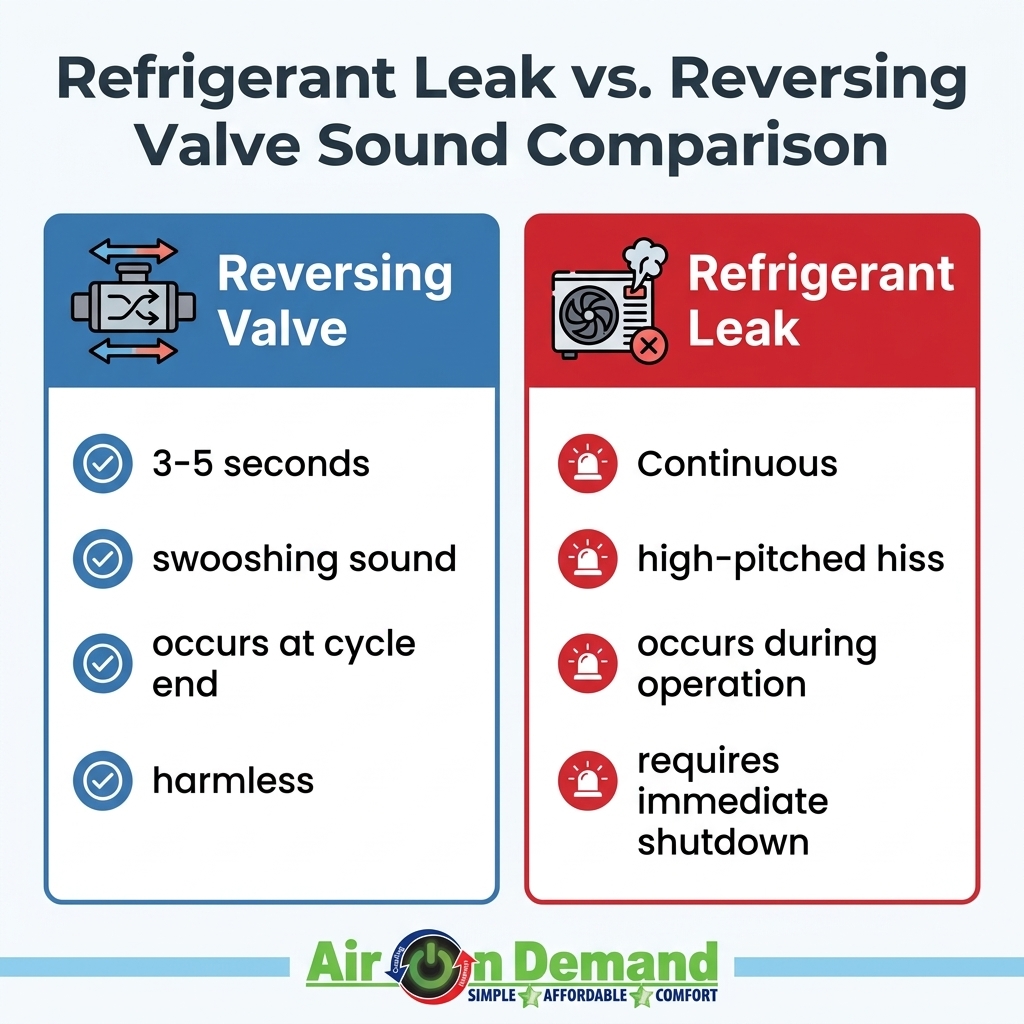
• Duration — Normal Reversing Valve Swoosh: Brief; lasts only 3 to 5 seconds before fading out completely. — Refrigerant Leak Hiss: Continuous and unrelenting; persists as long as there is pressure in the system.
• Tone — Normal Reversing Valve Swoosh: A sudden, deep release of air, similar to a heavy sigh or a pneumatic burst. — Refrigerant Leak Hiss: High-pitched, sharp hissing or bubbling, similar to a punctured tire.
• Timing — Normal Reversing Valve Swoosh: Typically occurs at the very end of a cooling cycle or when modes shift. — Refrigerant Leak Hiss: Occurs while the compressor is actively running and often continues after it shuts off.
• System Impact — Normal Reversing Valve Swoosh: None. The system will resume normal operation or power down smoothly. — Refrigerant Leak Hiss: Immediate and noticeable drop in cooling power and dehumidification capability.
The core difference comes down to a brief pressure equalization versus a continuous escape of gas. A reversing valve is simply moving pressure from one side of the system to the other within a closed loop. A leak, on the other hand, is a breach in that closed loop, allowing high-pressure gas to vent into the atmosphere until the system is entirely empty.
To understand why your system occasionally sounds like it is releasing a massive burst of air, it helps to understand the role of the reversing valve. In R-410A heat pump systems, the reversing valve is the crucial component that dictates the direction of refrigerant flow. By shifting an internal slide, this valve changes the system from heating to cooling, or vice versa.
Even if you are strictly using the cooling mode during the summer months, the reversing valve can still generate a swooshing sound. This typically happens when the system completes a cooling cycle and the compressor shuts down. The high-pressure and low-pressure sides of the system need to equalize, and the valve facilitates this rapid transfer of pressure.
When the compressor turns off, the refrigerant is no longer being actively pumped through the lines. However, the pressure difference between the indoor coil and the outdoor coil is still immense. As the system rests, that pressure naturally seeks balance. The reversing valve allows this high-pressure gas to bleed over to the low-pressure side.
Because modern refrigerants operate under significant force, moving that volume of gas through a narrow internal valve creates a distinct acoustic effect. It sounds exactly like a large volume of air being quickly released from a compressor tank. The key takeaway for homeowners is that this sound is a sign of the system resetting properly, not a malfunction. The noise is brief, entirely contained within the copper lines, and the system will resume normal operation shortly after.
While a 5-second swoosh is normal, a continuous, unrelenting hiss is a massive red flag. Modern HVAC equipment operates at significantly higher pressures than older units. When a copper line, evaporator coil, or condenser coil develops a crack or pinhole leak, the escaping gas is forced out under immense pressure, making leaks noticeably louder than they were in older generations of equipment.
If you hear a high-pitched hissing or bubbling sound that does not stop after a few seconds, you are likely listening to a breached line. This sound indicates that the chemical compound responsible for moving heat out of your home is actively venting into the atmosphere. The noise will persist whether the system is running or not, only stopping once the pressure drops so low that the system is completely empty.
When diagnosing high-pressure hissing sounds, safety must be your top priority. Escaping refrigerant is not just compressed air; it is a specialized chemical compound that transitions rapidly between a liquid and a gas.
Never attempt to touch the area where the hissing is coming from, and do not try to place tape or a rag over the leak. As the refrigerant escapes and depressurizes, it drops to sub-zero temperatures almost instantly. Exposing your skin to this rapidly expanding gas can cause severe chemical burns and instant frostbite. Furthermore, inhaling the concentrated gas in an enclosed space displaces oxygen and poses serious health risks. If you identify this continuous sound, back away from the unit and prepare to shut the system down at the thermostat.
A continuous hiss is rarely the only sign of a breached system. Because the entire cooling process relies on a precise volume of refrigerant, losing even a small amount immediately throws the system's thermodynamics out of balance. If you hear a hissing noise and notice any of the following secondary symptoms, you can confidently confirm a leak.
1. Loss of latent heat removal capacity: In Miami FL, managing coastal humidity is just as important as lowering the temperature. Optimal refrigerant charge is critical for managing the latent heat load. A leak drastically reduces the evaporator coil's ability to pull moisture from the air, causing your indoor environment to feel sticky, heavy, and uncomfortably humid almost immediately.
2. Continuous system operation: As the refrigerant level drops, the system loses its ability to absorb heat effectively. The thermostat recognizes that the target temperature is not being met, forcing the compressor to run continuously in a futile attempt to cool the house.
3. Ice formation on the coils or lines: It may seem counterintuitive for ice to form during a sweltering summer day, but a leak causes a drastic drop in pressure within the evaporator coil. This pressure drop forces the remaining refrigerant to run far below freezing. The ambient humidity in the air then freezes on contact with the coil, creating a thick block of ice that further chokes off airflow.
4. Unusually high energy bills: Because the system is running non-stop without actually satisfying the thermostat, your electrical consumption will skyrocket. The compressor is pulling maximum amperage for hours on end, resulting in an immediate spike in your monthly utility costs.
Addressing a continuous hiss is not something that can wait until the weekend. During a July peak summer cooling load, your heat pump is already operating near its maximum capacity. The ambient outdoor temperatures put immense strain on the compressor, and the system relies entirely on the returning flow of cool refrigerant gas to keep its internal motor from overheating.
When an undercharged system is forced to run continuously during high ambient temperatures, that critical cooling flow is lost. The compressor motor begins to run hotter and hotter, eventually breaking down the internal lubricating oils. Operating a system without adequate refrigerant is the fastest way to destroy the most expensive component in your entire HVAC setup.
The difference between a manageable repair bill and a total system replacement often comes down to how quickly you react to the hissing sound. Fixing a leak involves locating the breach, repairing the copper, pressure-testing the system, and recharging the refrigerant. While highly technical, it is a standard procedure for a licensed professional.
However, if you allow the system to run while hissing until the compressor seizes from thermal overload, you are no longer just fixing a leak—you are replacing the heart of the system. Turning the system off immediately prevents a minor repair from becoming a catastrophic failure. If you suspect your compressor is overheating due to a leak, scheduling emergency AC repair is the only way to protect your equipment.
When you hear a suspicious noise coming from your heat pump, having a clear, safe action plan prevents unnecessary damage and keeps your family safe. Follow these immediate steps based on your acoustic diagnosis:
• Monitor the 5-second swoosh: If the sound is a brief, deep release of air that stops completely after a few seconds, do not panic. Leave the thermostat alone and monitor the indoor vents to ensure the system is still blowing cold air.
• Switch the thermostat to OFF for a continuous hiss: If the sound is high-pitched, continuous, and accompanied by warm air blowing from your indoor vents, immediately walk to your thermostat and switch the system to the "OFF" position. Do not simply raise the temperature; shut the system down completely.
• Do not attempt DIY patches: Never try to patch the leak with epoxy, tape, or sealants. The internal pressure of the system will immediately blow out any surface-level patch, and you risk severe frostbite by putting your hands near escaping gas.
• Do not dismantle the outdoor unit: Keep the exterior panels secured. Removing panels to get a better look exposes you to high-voltage electrical components and moving fan blades.
• Contact a licensed professional: Call a certified HVAC technician to perform a nitrogen pressure test. This is the only safe and accurate way to locate the exact source of the leak and determine the necessary repair protocol.
A reversing valve sounds like a brief, 3 to 5-second swooshing or a sudden release of compressed air. You will usually hear this deep, pneumatic sigh when the system finishes a cycle or transitions between heating and cooling modes. It is a completely normal sound that indicates the internal system pressures are equalizing, and it should stop entirely after a few seconds.
The easiest way to tell the difference is by timing the sound. Equalizing pressure is brief, lasting only a few seconds before stopping completely, and the system continues to cool normally. A refrigerant leak creates a continuous hiss that persists as long as there is pressure in the lines, and it is almost always accompanied by a sudden drop in cooling performance and warm air blowing from your vents.
Yes, a heat pump can hiss in cooling mode, but a continuous hiss is never a good sign. While you might hear a brief swoosh at the end of a cooling cycle, a continuous hiss in cooling mode almost always indicates a refrigerant leak or a severe internal valve malfunction that requires immediate professional diagnostics.
Common causes for a hissing sound include active refrigerant leaks, excessively high internal compressor pressure, or leaky ductwork pulling in unconditioned air. The duration and exact location of the sound dictate the cause. A hiss at the outdoor unit points to refrigerant or compressor issues, while a hiss near your indoor vents usually points to a ductwork breach.
A continuously hissing air conditioner is dangerous to both your physical safety and the health of the equipment. Escaping refrigerant poses environmental risks and physical dangers, including severe frostbite or chemical exposure if touched. Mechanically, it is highly dangerous to the health of the compressor, which will likely overheat and fail if left running without proper refrigerant levels.
Depending on the size and location of the leak, cooling performance can drop within a matter of hours. A large high-pressure leak will vent the entire refrigerant charge rapidly, leading to a completely warm and humid house by the end of the day. Even a small pinhole leak will cause the system to struggle, run continuously, and eventually freeze over within a few days.
While listening closely to the duration and tone of the sound can guide your initial reaction, only a professional diagnostic can confirm the exact issue and safely restore your system. Guessing whether your heat pump is safe to run during the hottest part of the year is a risk you do not need to take. Prioritize your system's safety and your family's comfort by shutting down a continuously hissing unit and scheduling a prompt, thorough inspection.
As a homeowner, you deserve a clear path to turning a moment of panic into a controlled, professional solution. Rely on Air On Demand's expertise in accurate diagnostics and rapid emergency repair services for Miami homeowners. We have the specialized tools and training required to pinpoint high-pressure leaks, repair the damage, and recharge your system safely, ensuring your home stays perfectly cooled all summer long.