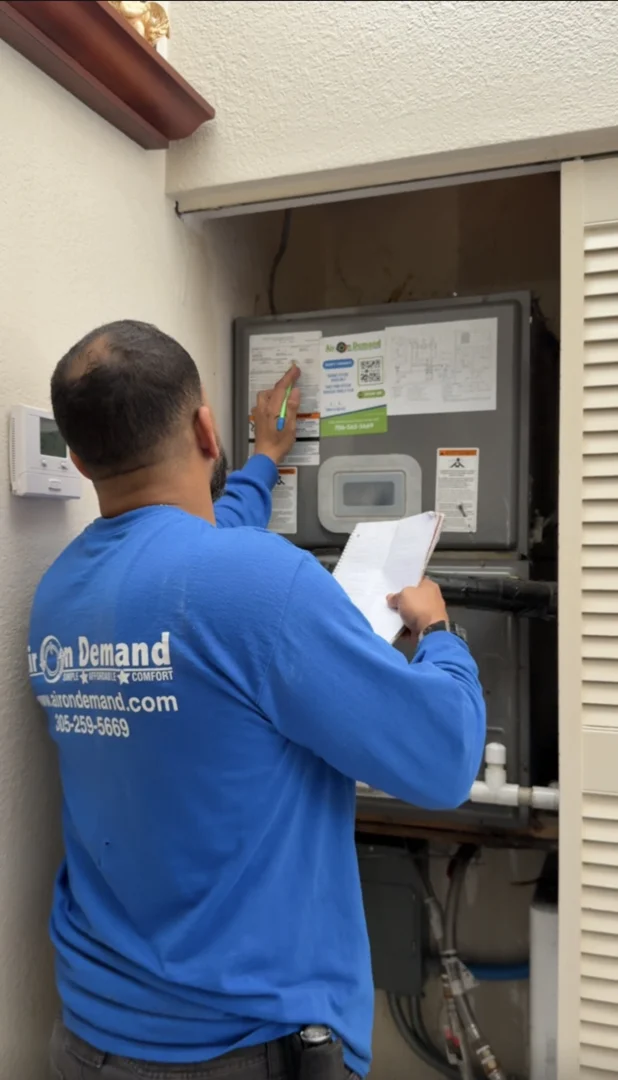
The Magic Number for HVAC Maintenance Frequency
August 17, 2026
How often should you service your HVAC is one of the most important questions you can ask as a homeowner — and the answer directly affects your comfort, your energy bills, and how long your system lasts.
Here's the quick answer:
• Central AC (standard use) — Recommended Service Frequency: Once a year, ideally in spring
• Gas furnace — Recommended Service Frequency: Once a year, ideally in fall
• Heat pump (year-round use) — Recommended Service Frequency: Twice a year — spring and fall
• Older system (10+ years) — Recommended Service Frequency: Twice a year minimum
• Miami/South Florida AC — Recommended Service Frequency: Twice a year due to year-round operation
For most South Florida homeowners, twice a year is the gold standard — once before the intense summer cooling season and once heading into the milder winter months. Because Miami's heat, humidity, and salt air push AC systems to work harder and longer than almost anywhere else in the country, skipping even one service visit can quietly snowball into poor efficiency, unexpected repairs, and a system that wears out years too soon.
Think of it like skipping oil changes on your car. Everything seems fine — until it isn't.
In this guide, you'll find everything you need to build a smart, simple maintenance schedule that keeps your home comfortable and your system running strong all year long. For a deeper dive into the specifics, check out our Complete AC Maintenance Guide.
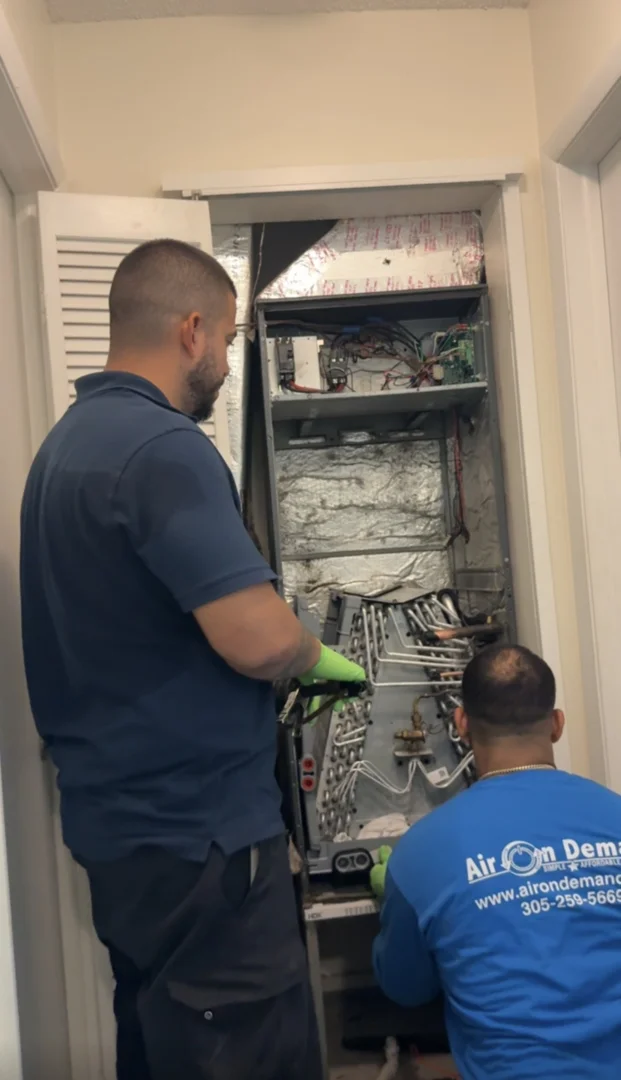
When we talk about maintenance, we aren't just talking about a quick "look-over." A professional tune-up is a comprehensive diagnostic and cleaning process. While the general industry rule of thumb is "once a year per component," the reality of living in a place like Coral Gables or Palmetto Bay changes the math.
For those of us living in South Florida in April 2026, the question of how often should you service your HVAC is answered by the calendar and the age of your unit. A biannual schedule — servicing the air conditioner in the spring and the furnace in the fall — ensures that the specific parts of your system are ready for the extreme demands of the coming season.
System age is a massive factor here. If your unit is between 0 and 5 years old, you might get away with a rigorous annual check-up to keep your warranty valid. However, once a system hits that "mid-life" mark (6 to 10 years), mechanical wear starts to accelerate. For systems older than 10 years, we often recommend quarterly inspections. Older units are more prone to small leaks and electrical fatigue; catching these issues early can be the difference between a simple part replacement and a total system failure. You can learn more about local requirements in our HVAC Maintenance Miami Guide.
Miami isn't just a city; it's a high-performance endurance test for air conditioners. Our climate presents unique challenges that homeowners in cooler states don't have to worry about.
1. Year-Round Operation: In many parts of the country, the AC takes a "nap" during the winter. In Miami, our systems often run 300+ days a year. This constant operation means your unit accumulates "mileage" much faster.
2. Salt Air Corrosion: If you live in Cutler Bay or Lakes By the Bay, you know the salt air is real. Salt is incredibly corrosive to aluminum fins and copper coils. Without regular cleaning, the salt air can literally eat away at your system's efficiency.
3. Humidity and Pollen: High humidity levels can lead to moisture buildup in the drain lines, which is a recipe for algae and clogs. Furthermore, our year-round growing season means pollen and dust are constantly being pulled into your filtration system.
Because of these factors, the Miami Air Conditioning FAQ - Why Get Fall AC Maintenance emphasizes that even during our "cooler" months, the system needs attention to recover from the brutal summer humidity.
Timing is everything. You don't want to realize your AC is struggling on the first 95-degree day in May.
• Spring (March–May): This is the "sweet spot" for AC maintenance. Scheduling your tune-up now ensures your coils are clean and your refrigerant levels are topped off before the summer peak.
• Fall (September–November): This is the time to check your heating components. Even though we don't use our furnaces as much as they do up north, a furnace that hasn't been turned on in months can have dust buildup on the burners or cracked heat exchangers, which can be a safety hazard.
By scheduling during these "shoulder seasons," you avoid the long wait times that happen during heat waves. Plus, many providers offer preseason specials that make maintenance even more accessible. For more on the advantages of early scheduling, read about the Benefits of a Spring AC Tune-Up.
Many homeowners view HVAC service as an "optional" expense, but the data tells a different story. Regular maintenance isn't just a cost; it’s a strategy for saving money. Research shows that a well-tuned HVAC system can use 10% to 30% less energy than a neglected one. When you consider the high electricity bills we face in South Florida, that 30% adds up quickly.
Proper care also significantly extends the life of your equipment. A neglected unit might gasp its last breath after just 10 years, while a well-maintained Daikin system can easily last 15 to 20 years. This effectively doubles your return on investment. For a deeper look at the financial side, see Why AC Maintenance is an Investment That Pays You Back.
• Lifespan — Maintained System: 15–20 Years — Neglected System: 10 Years or less
• Energy Usage — Maintained System: 10–30% Lower — Neglected System: 25% Higher
• Breakdown Risk — Maintained System: 70–80% Lower — Neglected System: High (85% of repairs are due to neglect)
• Air Quality — Maintained System: Clean and Filtered — Neglected System: High Dust and Allergen Levels
The risk of skipping service is high. Statistics show that 85% of HVAC repairs are directly related to a lack of proper maintenance. By spending a little time on a tune-up now, you prevent the "unexpected" $1,000 emergency repair fee later.
This is the part many homeowners miss: your warranty probably requires maintenance. Most major manufacturers, including Daikin, state in their fine print that the warranty is only valid if the system receives regular professional service.
If a major component like a compressor fails in year seven, the manufacturer may ask for documented proof of annual or biannual maintenance. If you can't provide those service records, they might deny your claim, leaving you to foot the bill for a very expensive part. At Air On Demand, we help our customers in Kendall and Pinecrest keep their records straight so their 12-year parts warranty remains ironclad. As we like to say, Don't Skip Your Tune-Up—it’s your best insurance policy.
When an Air On Demand technician arrives at your home in Homestead or Coconut Grove, they aren't just there to change a filter. A professional visit is a deep dive into the "health" of your machine.
One of the most critical tasks is cleaning the coils. A dirty evaporator coil can reduce your cooling efficiency by up to 40%. When dust blankets those coils, the refrigerant can’t absorb heat from your home effectively, forcing the system to run longer and harder to reach your desired temperature.
A typical professional visit includes:
• Checking Refrigerant Levels: Low refrigerant reduces efficiency by 10-20% and can eventually damage the compressor.
• Tightening Electrical Connections: Heat and vibration can loosen wires, which leads to short circuits or component failure.
• Clearing the Condensate Drain: In Miami, algae loves to grow in your drain lines. We clear these to prevent water damage and mold.
• Lubricating Moving Parts: Reducing friction lowers the energy needed to run the motors and extends their life.
To get the full picture of what our team does, check out our guide on What Really Happens During an AC Maintenance Visit.
Airflow is the lifeblood of your HVAC system. If the air can't move, the system can't cool. During a maintenance visit, we look closely at your ductwork and filtration.
Did you know that fixing duct leaks can improve your system's efficiency by about 20%? In many Miami homes, cooled air escapes into the attic before it ever reaches your living room. We also check for clogged filters; a dirty filter can reduce airflow by over 50% and raise your energy bills by 5-15%. Ensuring your system can "breathe" is a top priority for our HVAC Tune-Up Service.
While the heavy lifting should be left to the pros, there are several things you can do between visits to keep things running smoothly.
1. Change Your Filters Monthly: In the South Florida heat, your AC is working overtime. Check your filter every 30 days. if it looks gray or "fuzzy," swap it out. This is the single easiest way to How to Prevent Major Air Conditioning Repair.
2. Maintain Clearance: Your outdoor condenser unit needs to "exhale" heat. Ensure there is at least a 2-foot clearance around the unit. Trim back any hibiscus or palm fronds that might be encroaching.
3. Keep it Clean: Gently hose off the outdoor unit to remove salt spray and dust (just don't use a high-pressure power washer, which can bend the delicate fins).
Sometimes your system will tell you it needs help before your scheduled visit. If you notice any of the following, it’s time to call in the experts:
• Weak Airflow: If the air coming out of the vents feels like a faint whisper, you might have a blower issue or a major duct leak.
• Strange Noises: Squealing, banging, or grinding noises are never "normal." They usually indicate a belt or motor that is about to fail.
• Rising Bills: If your usage hasn't changed but your bill is 20% higher than last year, your system is losing efficiency.
• Short Cycling: If the AC turns on and off every few minutes, it’s struggling to complete a cooling cycle.
• Unpleasant Odors: Musty smells often point to biological growth in the drain pan or coils.
If you encounter these, you may be facing What Qualifies as HVAC Emergency, and it's better to act fast than to wait for a total shutdown.
Is once a year enough for my AC?In mild climates, yes. In Miami, twice a year is better. Because our systems run almost year-round, they accumulate twice the wear and tear of a system in a northern state.
Does maintenance affect my warranty?Absolutely. Most manufacturers require annual professional maintenance to keep the warranty active. Without proof of service, you may have to pay for expensive parts out of pocket.
When is the best time to schedule?Spring (March-May) for cooling and Fall (September-November) for heating. This ensures your system is ready for the peak demands of summer and winter.
Understanding how often should you service your HVAC is the key to a stress-free home. By committing to a biannual schedule, you aren't just "fixing" things; you're investing in your home's comfort and your family's health.
At Air On Demand, we are proud to serve our neighbors in Coconut Grove, Coral Gables, Country Walk, Cutler Bay, Homestead, Kendale Lakes, Kendall, Lakes By the Bay, Palmetto Bay, and Pinecrest. As Daikin Comfort Pros, we offer the best in energy efficiency and reliability, backed by our "Comfort Promise" and industry-leading warranties.
Don't wait for the heat to become unbearable. Whether you need a quick tune-up or a comprehensive AC Maintenance plan, our team is ready to provide the fast, professional service you deserve. Schedule your visit today and experience the peace of mind that comes with a perfectly maintained HVAC system.