A Complete Guide to Single vs Two-Stage vs Variable Speed AC
August 17, 2026
Two stage and variable speed ac benefits are worth understanding before you replace your AC — especially in South Florida, where your system runs hard for most of the year.
Here's a quick snapshot of what each system brings to the table:
• Capacity settings — Single-Stage: 100% only — Two-Stage: 100% or ~70% — Variable-Speed: 25%–100% continuously
• Energy savings vs. single-stage — Single-Stage: Baseline — Two-Stage: 10–20% less — Variable-Speed: 25–40% less
• SEER2 rating range — Single-Stage: 14–15 — Two-Stage: 17–18 — Variable-Speed: 20+
• Humidity control — Single-Stage: Basic — Two-Stage: Better — Variable-Speed: Best
• Temperature precision — Single-Stage: ±4–6°F — Two-Stage: Improved — Variable-Speed: Within ±0.5°F
• Noise level — Single-Stage: Loudest — Two-Stage: Quieter — Variable-Speed: Quietest
If your home feels stuffy, humid, or unevenly cooled — or if your energy bills seem too high for what you're getting — the type of compressor in your AC system is likely a big part of the reason.
Most homes in the Miami area are still running single-stage systems. These units blast on at full power, cool the air quickly, then shut off — only to repeat the cycle all over again. The result? Temperature swings, excess humidity, and unnecessary wear on your equipment.
Two-stage and variable-speed systems solve these problems in different ways, at different price points, and with different long-term payoffs. This guide breaks down exactly how each one works, what the real benefits are, and how to figure out which makes sense for your home.
When we talk about "stages" in an air conditioner, we are really talking about the compressor — the heart of your outdoor unit. Think of the compressor as the engine that moves refrigerant through your system to remove heat from your home.
For decades, the single-stage AC was the only option available for most folks in places like Country Walk or Kendall. A single-stage system is like a light switch: it is either 100% on or 100% off. When your thermostat detects the temperature has risen above your set point (say, 75°F), the compressor kicks on at full blast. Once the house hits 74°F, it shuts down completely.
This "all-or-nothing" approach leads to a few common frustrations:
1. Temperature Swings: Because the system only runs at full power, it often overshoots the target temperature, leading to a home that feels freezing one minute and stuffy the next.
2. Short Cycling: In milder weather, a single-stage unit cools the home so fast that it turns off before it has a chance to remove humidity.
3. High Energy Spikes: Every time a motor starts up from a dead stop, it uses a massive surge of electricity. Since single-stage units turn on and off frequently, those surges add up on your monthly bill.
When you're looking at What to Look for in a New Air Conditioning System, the choice of staging is perhaps the most significant factor in your long-term satisfaction. Understanding AC Installation Tip: Efficiency Ratings is the first step toward moving away from basic on-off cycling and toward a more sophisticated way of staying cool.
If a single-stage system is like a light switch, a two-stage system is like a fan with two settings: "High" and "Low."
Most of the time — roughly 80% of the year in Florida — your home doesn't actually need 100% of your AC's cooling power. A two-stage system recognizes this. It typically operates at a "low" stage, which is about 60% to 70% of its total capacity.
When it’s a relatively mild morning in Cutler Bay, the system stays in that low stage. It runs for longer periods but uses much less electricity. This steady, gentle airflow does a far better job of filtering the air and pulling out moisture. However, when the Miami sun hits its peak in the afternoon and the indoor temperature starts to climb, the system automatically shifts into the "high" stage (100% capacity) to keep up with the heat.
There are Two-Stage Air Conditioners: 3 Things to Know About that make them a "sweet spot" for many homeowners. They offer a significant upgrade in comfort over single-stage units without the higher upfront investment of a full variable-speed system.
Variable-speed technology (often called "inverter" technology) is the gold standard for residential cooling in April 2026. Instead of having one or two fixed speeds, these systems can operate at almost any capacity between 25% and 100%.
Imagine driving a car where you could only go 0 mph or 60 mph. That would be a single-stage AC. Now imagine a car that can go 0, 40, or 60 mph. That’s a two-stage AC. A variable-speed AC is like a modern car with a gas pedal — you can cruise at 25, 32, 47, or 60 mph, adjusting perfectly to the flow of traffic.
By using an inverter-driven compressor, these systems can make tiny adjustments in real-time. If your home needs just a tiny bit of cooling to stay at 72°F, the system might run at only 30% capacity. This allows the unit to run almost continuously, which sounds like it would use more energy, but it actually uses much less because it avoids those expensive "startup" power surges.
When homeowners ask Which Air Conditioner is the Most Efficient, the answer is almost always a variable-speed model. These units can achieve SEER2 ratings of 20 or higher, providing the most precise temperature control available — often staying within half a degree of your thermostat setting.
Choosing between these systems isn't just about the technology; it's about the tangible two stage and variable speed ac benefits you'll experience every day.
The most obvious benefit is the impact on your wallet. Because two-stage and variable-speed systems spend most of their time running at lower, more efficient speeds, they consume significantly less electricity.
• Two-stage systems can save you roughly 10% to 20% on cooling costs compared to a standard 14 SEER single-stage unit.
• Variable-speed systems are even more impressive, often slashing energy usage by 25% to 40%. In some cases, upgrading from an old, inefficient 8 SEER system to a modern 22 SEER variable-speed unit can result in up to 65% annual energy savings.
It’s a common misconception that an AC running "all the time" will wear out faster. In reality, the most stressful part of an air conditioner's life is the startup. The surge of electricity and the sudden mechanical strain of going from zero to 100% is what leads to most component failures.
By running longer cycles at lower speeds, two-stage and variable-speed units experience fewer "hard starts." This reduces wear and tear on the compressor and the fan motor, often leading to a longer overall lifespan for the equipment. When you combine this with the What the Energy Star Means for Air Conditioning certification found on many of these units, you’re looking at a system built for the long haul.
If you live in Palmetto Bay or Homestead, you know that heat is only half the battle; the humidity is the real villain. A traditional single-stage AC is actually quite bad at dehumidification. Because it cools the air so quickly, it often satisfies the thermostat and shuts off before it has pulled enough moisture out of the air. This leaves you with that "cold and clammy" feeling.
This is where the two stage and variable speed ac benefits for humidity control really shine.
• Longer Run Times: Because these systems run for longer periods at lower speeds, the air is constantly passing over the cold evaporator coil. This gives the system more time to condense moisture out of the air and send it down the drain.
• Consistent Airflow: Constant movement prevents "pockets" of humid air from lingering in corners or upstairs rooms.
• Latent Heat Removal: These systems are designed to prioritize "latent heat" (humidity) removal, which is essential for Which Air Conditioner is Best for Warm Climates like ours.
In a variable-speed system, the humidity control is so precise that you might find yourself comfortable at 75°F because the air is so dry, whereas you used to need the thermostat set at 71°F just to stop feeling sticky. This allows you to set your thermostat higher, saving even more money without sacrificing comfort.
Have you ever been sitting on your patio in Pinecrest, enjoying a quiet evening, only to have your AC kick on with a loud clunk and a roar? That is the hallmark of a single-stage system.
One of the most underrated two stage and variable speed ac benefits is the reduction in noise.
1. Soft-Start Technology: Variable-speed systems ramp up their speed gradually. You won't hear that jarring "thump" when the cooling cycle begins.
2. Lower Fan Speeds: When the system is running at 40% capacity, the outdoor fan and the indoor blower motor are spinning much slower. This makes the system whisper-quiet.
3. Sound Blankets: Many high-efficiency units come standard with factory-installed sound blankets around the compressor to further muffle any mechanical noise.
A variable-speed unit can operate at sound levels as low as 57 decibels — about the same as a quiet conversation. This is a massive improvement over older units that can sound like a jet engine taking off in your side yard.
As of April 2026, the way we measure AC efficiency has become more rigorous. You have likely seen the term SEER2. This stands for Seasonal Energy Efficiency Ratio 2. It’s an updated version of the old SEER rating that more accurately reflects how a system performs under real-world conditions, including the static pressure of your home's ductwork.
Understanding What is SEER2 and Why it Impacts Your Next AC Replacement is critical because the minimum standards in Florida have increased.
• Single-Stage units typically hover around 14 to 15 SEER2.
• Two-Stage units usually land in the 17 to 18 SEER2 range.
• Variable-Speed units are the champions, often reaching 20, 22, or even 24 SEER2.
Why does this matter for your Miami home? Because Miami Air Conditioning Installation Tip: Why SEER Ratings Matter isn't just about being "green" — it's about the Return on Investment (ROI). While a variable-speed system has a higher upfront cost, the monthly savings on your FPL bill can help the system pay for itself over time. Plus, many of these high-efficiency systems qualify for federal tax credits or local utility rebates, which can help offset that initial investment.
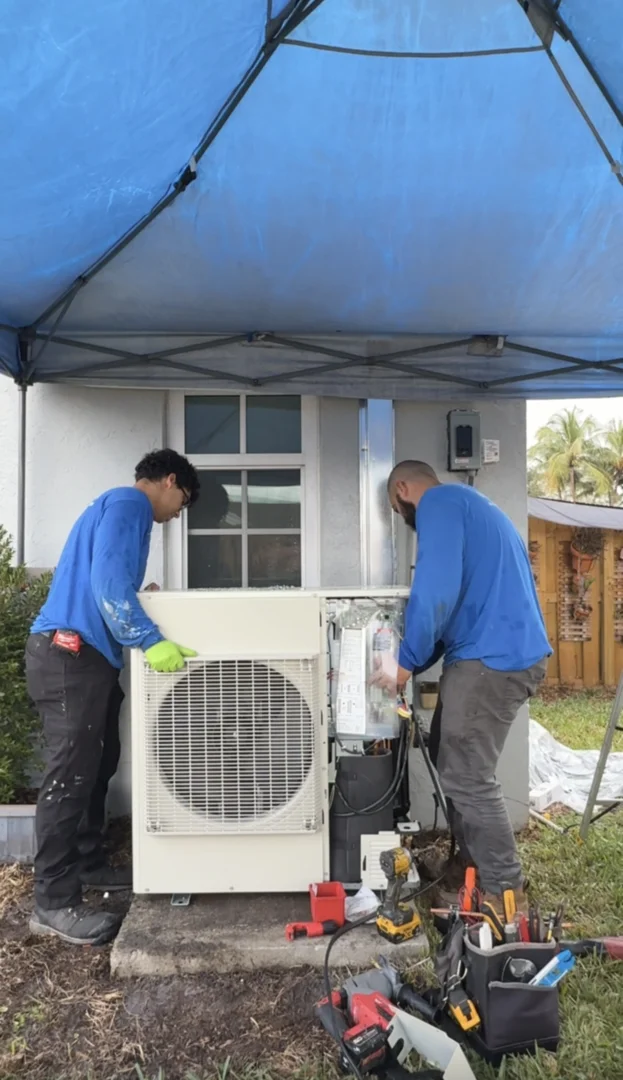
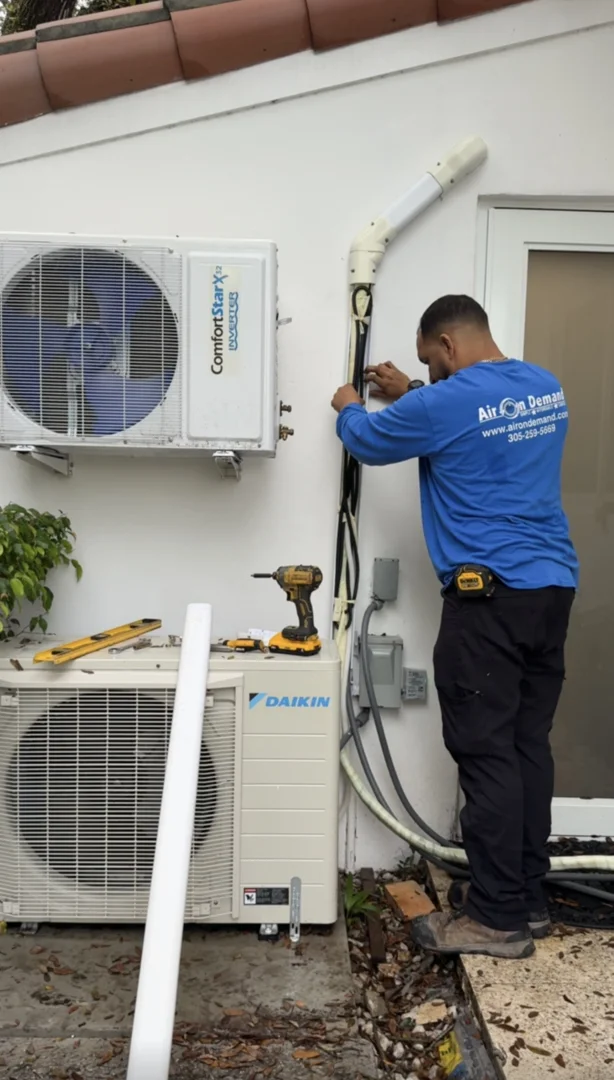
You could buy the most advanced variable-speed AC in the world, but if it’s installed incorrectly, it will perform like a budget unit. At Air On Demand, we emphasize that the "installation is just as important as the equipment."
We don't just guess what size AC you need based on your square footage. A "Manual J" load calculation takes into account your home's insulation, the number of windows, ceiling height, and even which direction your house faces in Coral Gables.
If a variable-speed system is oversized, it won't be able to modulate down effectively, defeating the whole purpose of the technology. Proper sizing is the only way to ensure you get the full two stage and variable speed ac benefits.
To get the full benefit of a two-stage or variable-speed compressor, your indoor components must be compatible.
• The Blower Motor: You need a variable-speed indoor blower motor (ECM) to match the variable-speed outdoor compressor. If the outdoor unit slows down but the indoor fan stays at full blast, you’ll end up with cold drafts and poor humidity control.
• Communicating Thermostats: Most variable-speed systems require a "communicating" thermostat. Unlike a standard thermostat that just sends an "on" or "off" signal, a communicating thermostat acts like a computer brain, constantly talking to the AC to tell it exactly what percentage of power to use.
• Ductwork Integrity: In many older Miami homes, ductwork is undersized or leaky. High-efficiency systems move air differently, so we always inspect your ducts to ensure they can handle the precision of a new system.
Installation Essentials Checklist:
• Accurate Manual J load calculation.
• Compatible variable-speed indoor air handler.
• Smart, communicating thermostat (like the Daikin One+).
• Ductwork inspection and sealing.
• Proper refrigerant line sizing.
• Expert calibration of the inverter settings.
The main difference is the level of flexibility. A two-stage AC has two fixed settings: high (100%) and low (usually around 70%). It’s like having a car with two gears. A variable-speed AC can adjust its output to any percentage between roughly 25% and 100% in tiny increments. This allows the variable-speed system to be much more precise, quieter, and more efficient than a two-stage unit.
Absolutely. In fact, Miami is the perfect place for variable-speed technology. Because humidity is so high here, the ability of a variable-speed system to run for long, low-power cycles is a game-changer. It removes significantly more moisture than a single-stage or even a two-stage unit. This not only makes your home feel more comfortable but also protects your home from mold and mildew growth.
Yes, in most cases. While some two-stage systems can work with a high-end standard thermostat, almost all variable-speed systems require a proprietary "communicating" thermostat. These thermostats are designed to speak the same digital language as the AC unit, allowing for the micro-adjustments that make the system so efficient. At Air On Demand, we often pair our Daikin variable-speed installations with the Daikin One+ smart thermostat for total control.
Investing in a new air conditioner is a big decision, especially with the advanced options available in 2026. While a single-stage system might have the lowest price tag today, the two stage and variable speed ac benefits in terms of comfort, humidity control, and monthly savings are hard to ignore.
At Air On Demand, we are proud to be Daikin specialists. Whether you are in Coconut Grove, Kendall, or Homestead, we can help you navigate these choices to find the system that fits your home and your budget. With our Comfort Promise and Daikin’s industry-leading 12-year parts and compressor limited warranty, you can rest easy knowing your investment is protected.
Don't settle for a home that's "sort of" cool and "mostly" humid. Experience the precision and peace of mind that comes with a professionally installed multi-stage system.
Schedule your professional AC installation or replacement today and let our team of experts bring true comfort back to your Florida home.