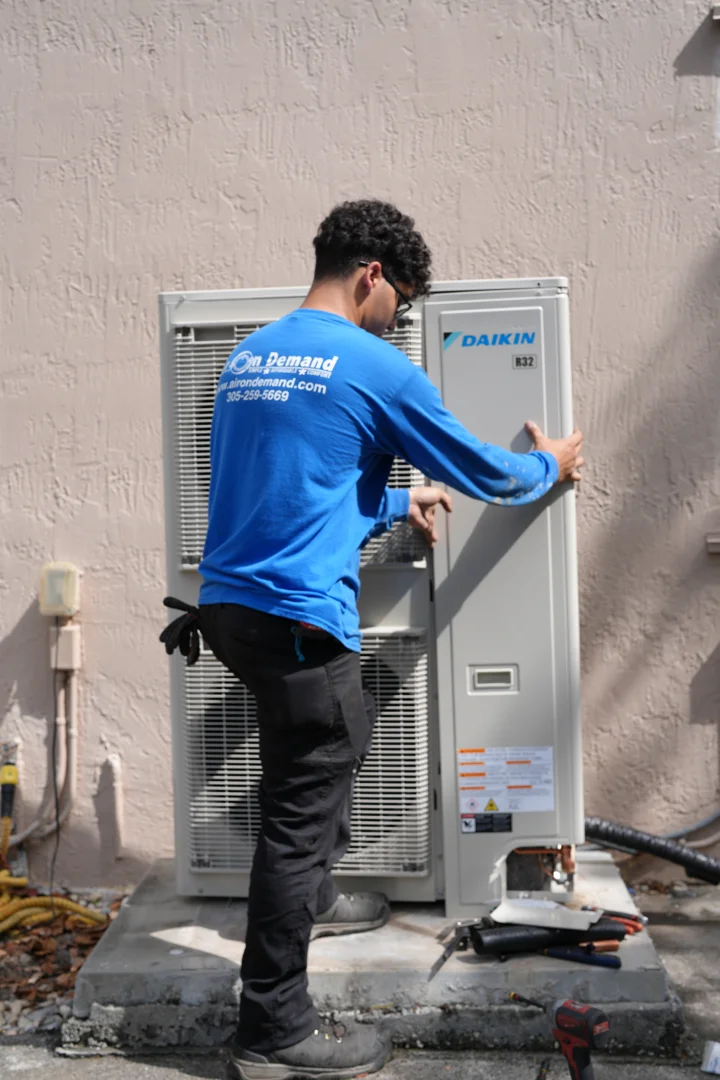
How the Refrigeration Cycle Cools Your Home One Degree at a Time
August 17, 2026
How the refrigeration cycle cools your home comes down to one core idea: your AC doesn't create cold air — it moves heat out of your home and dumps it outside.
Here's the quick version of how it works:
1. Warm indoor air passes over a cold evaporator coil inside your home.
2. Refrigerant inside that coil absorbs the heat and evaporates into a gas.
3. The compressor pressurizes that gas, raising its temperature.
4. The condenser coil outside releases that heat into the outdoor air.
5. The expansion valve drops the pressure, cooling the refrigerant back down.
6. The cycle repeats — continuously pulling heat out, one degree at a time.
If you live in Kendall, Palmetto Bay, Coral Gables, or anywhere else in South Florida, your AC runs hard. Understanding how this cycle works helps you spot problems early, make smarter maintenance decisions, and avoid costly breakdowns in the middle of a Miami summer.
In the sections below, we'll walk through each step in detail — from the physics behind refrigerant to the specific components inside your system — so you know exactly what's happening every time your AC kicks on.
To understand Air Conditioning Basics, we first have to look at the Second Law of Thermodynamics. This law states that heat naturally flows from a warmer area to a cooler area. If you place a hot cup of coffee in a room in Pinecrest, it eventually cools down because the heat moves into the cooler air.
Your air conditioner essentially "cheats" this law by using mechanical work and a special fluid called refrigerant to force heat to move from your cool living room to the hot outdoors. How the refrigeration cycle cools your home is by manipulating the pressure and temperature of this refrigerant.
Understanding Refrigerant is key to the whole process. Modern systems often use R-410A, a chemical engineered to have a very low boiling point. While water boils at 212°F at sea level, R-410A boils at roughly -60°F at atmospheric pressure. This means it can turn into a vapor even when it’s touching "cool" indoor air.
In South Florida, we don't just deal with heat; we deal with humidity. The refrigeration cycle handles two types of thermal energy:
• Sensible Heat: This is the heat you can feel and measure with a thermometer. When the AC lowers the room temperature from 80°F to 75°F, it is removing sensible heat.
• Latent Heat: This is "hidden" heat. As warm, moist air from a Homestead afternoon hits the cold evaporator coil, water vapor condenses into liquid. This phase change removes moisture from the air, making the home feel much more comfortable even before the temperature drops.
Your air conditioner is a closed-loop system. The refrigerant never leaves the copper lines (unless there's a leak), but it constantly changes its state. There are four main players in this game, and each has a specific job in A Brief Guide on Air Conditioner Refrigerant flow.
1. The Compressor: The "heart" of the system.
2. The Condenser Coil: The heat-exchanger located in your outdoor unit.
3. The Expansion Valve (or Metering Device): The regulator that controls flow.
4. The Evaporator Coil: The heat-absorber located in your indoor unit.
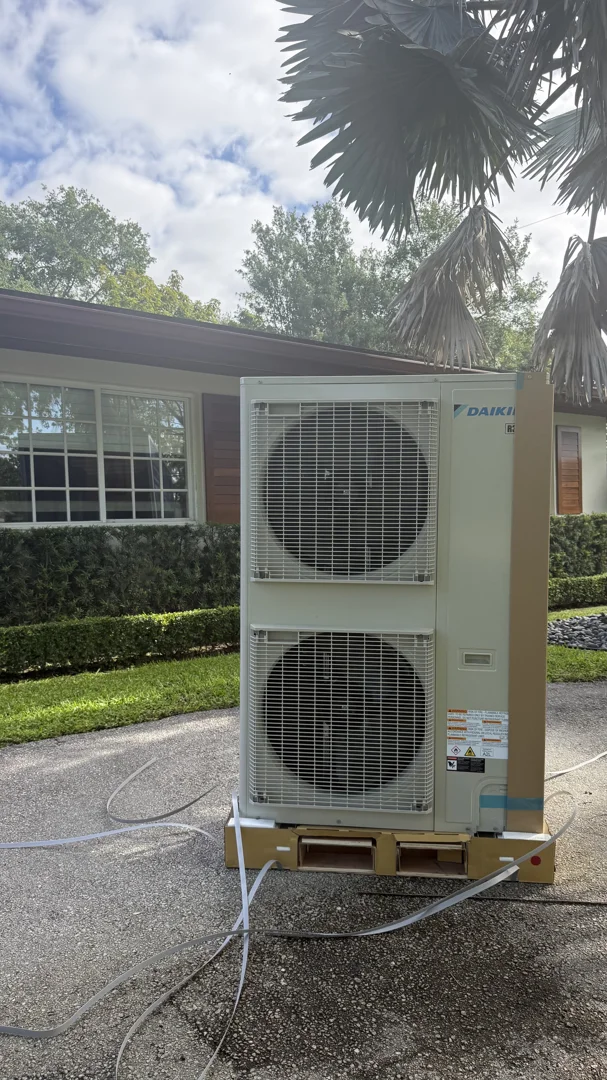
The cycle usually starts at the compressor, located in that big metal box in your yard in Coral Gables. The compressor takes in low-pressure, cool refrigerant vapor and squeezes it. Think of it like a bicycle pump—when you compress air quickly, the pump gets hot. The compressor turns the refrigerant into a high-pressure, super-hot gas.
This hot gas then flows into the condenser coil. Because the refrigerant is now much hotter than the outside air (even on a 95°F day in Cutler Bay), the heat naturally dissipates. A large fan pulls outdoor air across the condenser fins, shedding the heat gathered from inside your home. As the refrigerant loses heat, it condenses back into a high-pressure liquid. Answering Refrigerant FAQs often involves explaining that this is why the air blowing out of your outdoor unit feels like a furnace—it's literally the heat from your living room being dumped outside!
Now we have a high-pressure liquid, but it's still too warm to cool your house. It travels back indoors to the expansion valve. This device acts like the nozzle on an aerosol can. It restricts the flow and then suddenly lets the refrigerant expand into a low-pressure area.
This rapid drop in pressure causes "flash evaporation," where the temperature of the refrigerant plummets instantly. If you’ve ever used a can of compressed air to clean a keyboard, you’ve felt the can get freezing cold—that’s exactly what’s happening here.
The freezing-cold, low-pressure refrigerant then enters the evaporator coil. Your indoor blower fan pushes warm house air over these cold coils. The refrigerant absorbs the heat from the air and begins to boil, turning back into a vapor. This is also where How a Ductless Mini-Split System Works—the process is the same, just scaled for individual rooms without the need for large ducts.
To really see how the refrigeration cycle cools your home, we have to look at the pressure-temperature relationship. In physics, when you increase the pressure of a gas, its temperature goes up. When you decrease the pressure, the temperature goes down.
In April 2026, residential systems are more efficient than ever, but they still rely on this fundamental boiling point manipulation. By controlling the pressure, we can make the refrigerant boil at 40°F inside your home (to absorb heat) and condense at 120°F outside (to reject heat). It is vital to remember that Your AC System Should Not Run Out of Refrigerant. It isn't "fuel" that gets used up; it's a tool that stays in the system forever—unless a leak occurs.
Let’s look at a typical cycle in a home in Kendale Lakes:
1. Vaporization (Indoor): Low-pressure liquid refrigerant enters the indoor evaporator. As it absorbs heat from your 80°F living room, it boils into a vapor.
2. Compression (Outdoor): The vapor travels to the outdoor compressor. It is squeezed into a high-pressure, high-temperature gas (often reaching 140°F or more).
3. Condensation (Outdoor): The hot gas enters the condenser coils. The outdoor fan blows 90°F air over it. Since the gas is hotter than the air, the heat moves out, and the refrigerant turns back into a liquid.
4. Expansion (Indoor): The high-pressure liquid passes through the expansion valve, drops in pressure, and becomes a frigid, low-pressure mist, ready to start over.
During this process, technicians look for Subcooling (ensuring the liquid is cooled enough before the expansion valve) and Superheat (ensuring the vapor is heated enough before the compressor so no liquid "slugs" the motor).
When the refrigeration cycle is disrupted, your comfort disappears. In locations like Country Walk or Lakes By the Bay, a failing AC isn't just an inconvenience—it's an emergency.
Common disruptions include:
• Dirty Coils: If the outdoor condenser is covered in dirt or grass clippings, it can't release heat. If the indoor evaporator is dusty, it can't absorb heat.
• Airflow Restrictions: A clogged filter prevents the "heat exchange" from happening efficiently, often leading to frozen coils.
• Refrigerant Issues: If there are Signs of Low Refrigerant Levels, the system can't move enough thermal energy, and the cycle breaks down.
Modern systems use SEER2 (Seasonal Energy Efficiency Ratio) ratings to measure efficiency. A higher SEER2 means the system is better at moving heat while using less electricity. However, even a high-efficiency Daikin system will struggle if the refrigeration cycle is compromised.
Are You Leaking Refrigerant? If so, your compressor has to work twice as hard to achieve the same cooling effect. This leads to higher bills and a shorter system lifespan. Resolving Low Refrigerant Issues isn't just about "topping it off"—it's about finding the leak, sealing it, and ensuring the delicate pressure-temperature balance is restored.
These are technical measurements used to ensure the system is running safely. Superheat is the temperature of the refrigerant vapor above its boiling point. It ensures that 100% vapor enters the compressor, as liquid can destroy the compressor's internal valves. Subcooling is the temperature of the liquid refrigerant below its saturation point. This ensures a solid column of liquid reaches the expansion valve, maximizing the "flash evaporation" effect.
In a climate like Palmetto Bay, a well-maintained system should typically cycle two or three times per hour. Each run should last about 15 to 20 minutes. If your system is "short-cycling" (turning on and off every 5 minutes), it could indicate a thermostat issue, an oversized unit, or a disruption in the refrigeration cycle.
The Problem with a Refrigerant Leak is multifaceted. First, the evaporator coil temperature can drop too low, causing moisture to freeze into a block of ice. Second, the compressor—which relies on cool refrigerant vapor to keep itself from overheating—can burn out. If you notice your AC is running constantly but your Pinecrest home is still warm, you likely have a leak.
At Air On Demand, we’ve seen it all—from the salt-air corrosion in Cutler Bay to the high-demand summers in Homestead. Understanding how the refrigeration cycle cools your home is the first step in being a proactive homeowner. When your system is running efficiently, it uses less energy, provides better dehumidification, and lasts much longer.
As a Daikin Comfort Pro, we specialize in ensuring these complex cycles run perfectly. Whether you need a routine tune-up in Coral Gables or a complex repair in Kendall, our team provides fast service and real-time updates to keep your home comfortable. We don't just fix ACs; we optimize the science of your home's comfort.
If you suspect your refrigeration cycle isn't performing at its peak—perhaps you've noticed higher bills or longer run times—don't wait for a total breakdown. More info about air conditioning services is just a click away. Let us help you keep your cool, one degree at a time.