
Miami Homeowners: What to Know About Residential Heater Repair
August 17, 2026

Residential heater repair in miami, fl becomes essential when occasional cold fronts push temperatures into the 50s or below, making a reliable heating system crucial for your family's comfort. While Miami's average January temperature hovers around 68 degrees Fahrenheit, those unexpected chilly nights can reveal problems with heating systems that sit idle most of the year.
If you need residential heater repair in Miami, FL right now, here are the most common signs:
• Blowing cool or lukewarm air instead of warm air
• Making unusual noises like banging, rattling, or squealing
• Strange odors that persist beyond initial startup
• Rising energy bills without increased usage
• Thermostat not responding or showing incorrect temperatures
• Yellow pilot light instead of blue (safety concern)
• Short cycling or constantly running without reaching temperature
Miami's subtropical climate creates unique challenges for heating systems. High humidity, saltwater air, and less frequent use mean your heater faces different wear patterns than systems in colder regions. When problems arise, getting professional help quickly protects your investment and keeps your home comfortable during those rare but memorable cold snaps.
For comprehensive solutions beyond heating issues, explore our HVAC services in Miami, FL. When you're ready to schedule service, contact our expert team for fast, reliable residential heater repair in Miami, FL.
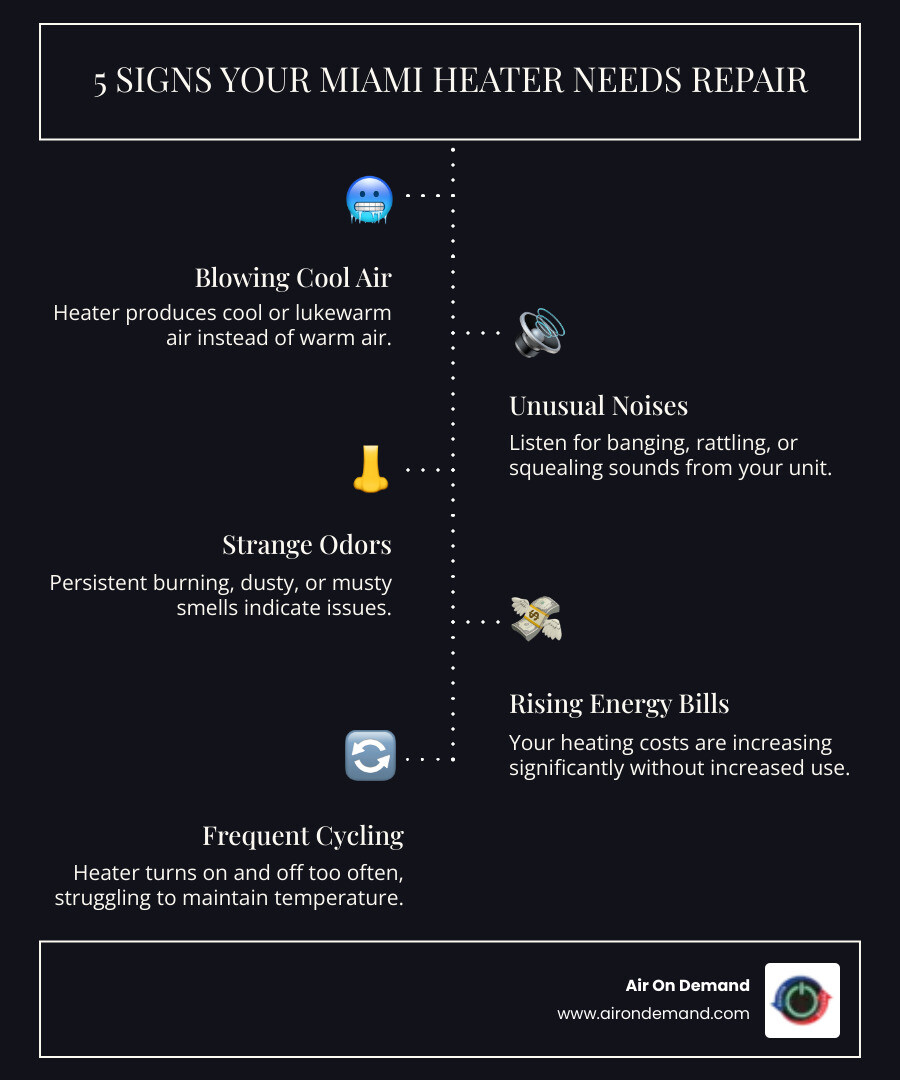
Even in sunny Miami, a malfunctioning heater can quickly turn a cool evening into an uncomfortable one. Since our heating systems don't work as hard or as often as those in colder climates, it's easy to overlook subtle signs of trouble. However, ignoring these warnings can lead to bigger, more expensive problems down the line. We want our Miami neighbors in areas like Coral Gables, Homestead, and Kendale Lakes to be aware of the common indicators that it’s time for professional residential heater repair in Miami, FL.
Here are the seven telltale signs we often see:
1. Inadequate Heating or Blowing Cool Air: This is perhaps the most obvious sign. If your heater is running but your home isn't getting warm, or if it's blowing cool or lukewarm air through the vents, something is definitely wrong. This could point to issues like a faulty thermostat, a problem with the heating elements, or even a refrigerant leak if you have a heat pump. Your home should reach the temperature you set on your thermostat in a reasonable amount of time. If it’s taking an unusually long time, or never quite getting there, that’s a clear signal for repair.
2. Unusual Noises: Your heating system should operate relatively quietly. If you start hearing banging, rattling, squealing, grinding, or a persistent loud hum, it's time for an inspection. Banging can indicate loose parts or an issue with the blower motor. Rattling might suggest a loose panel or debris. A squealing sound often means a worn-out belt or a problem with the motor bearings. These noises aren't just annoying; they're often symptoms of mechanical failures that need immediate attention. If your heater sounds like it's hosting a tiny rock concert, give us a call.
3. Strange Odors: When you first turn on your heater for the season, a slight burning smell (like dust burning off the heating elements) is often normal and should dissipate quickly. However, if you notice persistent odors, or smells like burning plastic, electrical components, or a musty odor, it’s a serious concern. A musty smell can indicate mold or mildew buildup within the system or ductwork, especially prevalent in Miami’s humid climate. A burning smell that persists or smells acrid could signal an electrical issue or overheating, while a gas smell, especially a "rotten egg" odor, demands immediate attention and evacuation.
4. Rising Energy Bills: Have your utility bills suddenly spiked without a noticeable increase in usage? An inefficient heating system is a common culprit. When your heater struggles to maintain the desired temperature, it has to work harder and run longer, consuming more energy in the process. This could be due to a clogged filter, a faulty component, or general wear and tear, all of which reduce efficiency and drive up your costs.
5. Thermostat Problems: Your thermostat is the brain of your heating system. If it's displaying inaccurate temperatures, failing to turn the heater on or off, or requiring frequent adjustments to maintain comfort, it might be faulty. In Miami's humid environment, sometimes humidity itself can affect thermostat readings, but often, it's an internal thermostat issue or a communication problem with the heating unit.
6. Frequent Cycling (Short Cycling) or Constantly Running: Your heater should complete a heating cycle, turn off, and then restart when the temperature drops again. If it's turning on and off rapidly (short cycling) or running continuously for extended periods without reaching the set temperature, it’s a sign of a problem. Short cycling can be caused by an oversized heater, a clogged filter, or a faulty sensor, and it significantly reduces efficiency and puts stress on the system. Conversely, a heater that never seems to turn off might indicate a thermostat issue or a system struggling to overcome heat loss.
7. Yellow Pilot Light (for gas heaters): If you have a gas furnace, the pilot light should burn blue. A yellow or flickering pilot light is a critical warning sign. This indicates incomplete combustion, which can produce carbon monoxide, a dangerous, odorless gas. If you see a yellow pilot light, shut off your gas supply and call for professional help immediately.
Beyond the obvious signs, certain issues with your heating system can pose serious safety risks or significantly impact your home's comfort and your wallet. For homes in Coconut Grove, Cutler Bay, and Palmetto Bay, being proactive about these concerns is key.
A yellow pilot light is more than just a repair issue; it’s a safety emergency. As mentioned, it indicates gas imbalances and possible ventilation problems, dramatically increasing the carbon monoxide risks. Carbon monoxide is a silent killer, and we strongly recommend installing a carbon monoxide detector in your home, especially if you have combustion heaters. If your detector ever goes off, evacuate immediately and call emergency services.
Poor indoor air quality (IAQ) is another significant concern, particularly in Miami's humid climate. A malfunctioning heater, especially one with dirty filters or neglected ductwork, can circulate dust, allergens, mold spores, and other pollutants throughout your home. This can exacerbate respiratory issues and allergies. Regular maintenance plays a crucial role in maintaining good IAQ by ensuring filters are clean and systems are free of contaminants.
Ductwork leaks are sneaky culprits that lead to both poor heating performance and wasted energy. If your ducts have cracks or disconnections, heated air can escape into unconditioned spaces like attics or wall cavities, leading to cold drafts in your living areas and forcing your heater to work harder. This directly contributes to system inefficiency and higher utility bills. Our expert technicians can identify and seal these leaks, restoring your system's performance and saving you energy.
Neglecting these signs can lead to a less comfortable home, higher energy costs, and potentially dangerous situations. When you notice any of these issues, don't hesitate to contact us for expert residential heater repair in Miami, FL.
Miami's tropical climate is famous for its warmth and sunshine, but it also presents unique challenges for residential heating systems. Unlike regions with harsh winters where heaters run constantly, our systems here in places like Kendall and Lakes By the Bay experience less frequent use. This difference, combined with our specific environmental factors, significantly impacts their performance and lifespan.
Our primary concerns are:
• High Humidity: Miami experiences a wet, hot season from May to October, with average dew point temperatures often above 70 degrees Fahrenheit. This contributes to consistently high humidity, which can affect HVAC systems in several ways. High humidity forces your HVAC system, including heat pumps, to work harder to maintain comfort, increasing wear and tear. It can also lead to inaccurate thermostat readings and, more critically, promote mold growth within the system and ductwork. Mold not only degrades air quality but can also cause damage to system components.
• Saltwater Air Corrosion: Living near the coast, as many do in Miami Beach or Coconut Grove, means your outdoor HVAC unit is constantly exposed to saltwater air corrosion. The salt particles in the air can slowly degrade metal components, wiring, and coils, leading to premature failure if not properly maintained. We've seen units succumb to rust and corrosion much faster than those further inland, highlighting the need for specialized maintenance in our coastal environment.
• Increased System Strain (from humidity and heat): While heaters aren't used daily, the overall HVAC system (which often includes the heating function in a heat pump) is under constant strain from cooling demands and humidity removal for most of the year. This continuous operation, even if the heating function is dormant, contributes to general wear and tear that can affect the entire unit when it's finally called upon to heat.
Florida is also known for its dramatic thunderstorms, particularly during the wet season. These storms often bring lightning and sudden power fluctuations, which pose a direct threat to sensitive electronic equipment, including your HVAC unit.
• Florida Thunderstorms and Power Surge Risks: Power surges can damage control boards, motors, and other vital electrical components within your heating and cooling system. We strongly advise homeowners in Miami to consider surge protectors for their HVAC units. A simple precaution like shutting off your HVAC unit when a major thunderstorm rolls through our region can also help protect it from potential damage. We often see units that require repair after a particularly intense storm, underscoring the importance of these preventative measures.
When it comes to heating systems themselves, Miami homes typically rely on a few common types:
• Heat Pumps: These are by far the most common heating systems in South Florida. Why? Because they're incredibly efficient for our climate. A heat pump doesn't generate heat; instead, it moves heat from one place to another. In winter, it extracts heat from the outside air (even cool air contains some heat) and transfers it indoors. In summer, it reverses the process, acting as an air conditioner. Their dual heating and cooling capabilities make them ideal for Miami's mild winters and long, hot summers.
• Electric Resistance Heating (Heat Strips): Many HVAC systems in Miami include supplemental electric resistance heating, often referred to as "heat strips." These are essentially large electric coils that generate heat. While they can provide quick warmth, they are significantly less energy-efficient than heat pumps and are typically designed for supplementary use during very cold snaps or to quickly raise the temperature. If your heat strips are constantly engaged, your energy bill will reflect it.
• Ductless Mini-Splits: These systems are gaining popularity in Miami, especially for additions, smaller homes, or zoned comfort. Ductless mini-splits offer both heating and cooling without the need for extensive ductwork. They provide excellent energy efficiency and allow for individual temperature control in different areas of your home.
Understanding these climate impacts and the type of heating system you have is the first step toward effective residential heater repair in Miami, FL. Our team is well-versed in addressing the specific issues that arise in our unique environment, ensuring your system performs optimally when you need it most.
When your heating system starts acting up, one of the most significant questions you'll face is whether to pursue residential heater repair in Miami, FL or invest in a full replacement. This decision isn't always straightforward, especially given Miami's less frequent heating demands. We help homeowners in areas like Country Walk, Homestead, and Pinecrest weigh their options based on several key factors.
• System Age — Heater Repair: Ideal for newer systems (under 10 years old) — Heater Replacement: Best for older systems (10-15+ years old)
• Repair Cost — Heater Repair: Generally lower upfront cost for minor fixes — Heater Replacement: Higher upfront investment
• Efficiency — Heater Repair: Restores current efficiency, no improvement — Heater Replacement: Significantly improves energy efficiency
• Reliability — Heater Repair: Extends life for a limited period — Heater Replacement: Provides long-term reliability and peace of mind
• Warranty — Heater Repair: Often maintains existing warranty — Heater Replacement: Comes with new, comprehensive warranties
• Technology — Heater Repair: Keeps existing technology — Heater Replacement: Access to latest energy-saving features & smart tech
• Lifespan — Heater Repair: Extends current lifespan for a few more years — Heater Replacement: Provides a completely new, extended lifespan
Choosing to repair your residential heater often makes the most sense in specific situations:
• Newer Systems: If your heating system is relatively new (typically under 10 years old), a repair is usually the most cost-effective solution. Newer systems often have many years of life left, and a single component failure doesn't necessarily mean the entire unit is compromised. We believe in providing a reliable repair when it will genuinely solve the problem.
• Minor Component Issues: When the problem is isolated to a single, relatively inexpensive component – such as a faulty sensor, a minor electrical issue, or a clogged drain line (in the case of heat pumps) – repair is usually the way to go. These fixes can often restore your system to full functionality without a major investment.
• Cost-Effective Fixes: If the repair cost is less than 50% of the cost of a new system, and your system is still within a reasonable age range, repairing is generally the more financially prudent choice. We'll always provide transparent assessments to help you make this calculation.
• Maintaining Warranty: If your system is still under warranty, especially a strong parts warranty, repairing it is often covered, saving you significant out-of-pocket expenses. Our Daikin products, for example, often come with excellent warranties, including a 12-year parts warranty.
While repairs can extend the life of your unit, there comes a point when a full heater replacement becomes the more sensible and economically advantageous decision. Patching up an old system is sometimes like putting a band-aid on a broken bone – it just won't cut it for long-term comfort and savings.
• Systems Over 10-15 Years Old: The average lifespan of a heating system can vary, but for units in Miami, due to less frequent heating use, they can potentially last longer than in colder regions. However, if your system is approaching or exceeding 10-15 years, it's generally nearing the end of its reliable service life. At this age, components are more likely to fail, and efficiency naturally declines.
• Major Failures or Frequent Breakdowns: If your heater experiences a major component failure (e.g., a compressor failure in a heat pump) or requires frequent, costly repairs, it might be a "money pit." The cumulative cost of repairs can quickly approach or even exceed the cost of a new unit.
• Improving Energy Efficiency: Older heating systems are simply not as energy-efficient as newer models. Modern heat pumps, for example, boast significantly higher Seasonal Energy Efficiency Ratio (SEER) ratings. If your energy bills are consistently high, replacing an old, inefficient unit can lead to substantial long-term savings on your utility costs. New, energy-efficient systems can also sometimes qualify for federal tax credits.
• Desire for Improved Comfort and Features: A new system offers the latest in HVAC technology, including quieter operation, better humidity control (crucial for Miami), smart thermostat compatibility, and superior indoor air quality features. If you're looking for a significant upgrade in your home comfort, replacement is the clear path.
We are committed to helping our customers in areas like Kendale Lakes and Homestead make the best decision for their homes and budgets. We’ll provide an honest assessment of your system's condition and discuss all your options for residential heater repair in Miami, FL, or replacement.
Even though our winters are mild, neglecting your heating system can lead to discomfort, higher energy bills, and potential safety hazards during those unexpected cold snaps. Professional residential heater repair in Miami, FL isn't just about fixing what's broken; it's about ensuring your system's reliability, efficiency, and longevity, especially for homeowners in areas like Lakes By the Bay and Palmetto Bay.
Regular maintenance and timely repairs offer numerous benefits:
• Benefits of Regular Maintenance: Proactive maintenance is your best defense against unexpected breakdowns. Regular tune-ups, ideally once in the fall for heating and once in the spring for cooling, allow our technicians to catch minor issues before they escalate into major problems. This includes cleaning components, checking electrical connections, lubricating moving parts, and inspecting for wear and tear. This preventative care extends your system's lifespan, maintains its energy efficiency, and ensures it's ready when you need it.
• Preparing for Cold Snaps: Miami's average January temperature is around 68 degrees Fahrenheit, but occasional cold fronts can send temperatures plummeting to 50 degrees or even below. When these cold snaps hit, you want your heater to work reliably. Annual maintenance ensures your system is primed and ready, so you’re not left shivering when the mercury drops.
• Ensuring System Reliability: A well-maintained and promptly repaired heating system is a reliable system. By addressing issues like strange noises or inefficient operation quickly, you prevent small problems from causing a complete system failure. This reliability provides peace of mind, knowing your home will remain comfortable regardless of the outside temperature.
• Maximizing Lifespan: While heating systems in Miami might last longer due to less frequent use compared to other regions, proper maintenance is still crucial for maximizing their lifespan. Regular care reduces stress on components, prevents premature wear, and ensures your investment lasts as long as possible. Neglecting our heating system can lead to bigger problems down the road.
When you need residential heater repair in Miami, FL, choosing the right service provider is paramount. You want a company that understands Miami's unique climate challenges and can offer reliable, professional service. Our commitment to our customers in areas like Coconut Grove, Coral Gables, and Cutler Bay means we embody these qualities.
Here's what homeowners should look for when selecting a reputable heater repair service:
• Licensed and Insured Technicians: Always verify that the company employs licensed and insured technicians. This ensures they have the necessary training and qualifications to work on your system safely and effectively, and that you're protected in case of any unforeseen incidents.
• 24/7 Emergency Service: Heating issues don't always happen during business hours. A reputable company should offer 24/7 emergency heating repair services, providing peace of mind that help is available whenever a cold snap or system breakdown occurs. The advantage of a 24/7 emergency service is immediate response, quick comfort restoration, and handling unexpected breakdowns outside of standard business hours.
• Local Expertise: Miami's climate brings specific challenges, such as high humidity and saltwater air corrosion. Choose a service with local expertise that understands how these factors affect your heating system, particularly for common systems like heat pumps and ductless mini-splits.
• Strong Warranties: A company that stands behind its work will offer strong warranties on both parts and labor. This demonstrates their confidence in the quality of their repairs and provides you with added protection. We, for example, offer strong Daikin warranties, including a 12-year parts warranty and our Comfort Promise.
• Positive Customer Reviews: Check online reviews and testimonials. They offer valuable insights into a company's reputation, customer service, and the quality of their work. Look for consistent themes of punctuality, friendliness, knowledge, and problem-solving.
As one satisfied customer shared:“It has been 2 weeks since our HVAC wasn’t working and we called Air On Demand to do the job for us. The technician did a great job with our HVAC. He is very knowledgeable and knows what he’s doing.”
This kind of feedback highlights the importance of choosing a service provider you can trust, especially when it comes to something as vital as your home's comfort.
While Miami might not be known for its harsh winters, the importance of a reliable and efficient heating system cannot be overstated. Those occasional cold fronts, which can drop temperatures to 50 degrees Fahrenheit or below, remind us that even in our tropical paradise, a working heater is essential for our comfort and well-being.
By understanding the common signs of trouble, recognizing how Miami's unique climate impacts your system, and making informed decisions about repair versus replacement, you can ensure your home remains a sanctuary of warmth when you need it most. Proactive maintenance is the cornerstone of this approach, preventing costly breakdowns and maximizing your system's lifespan and efficiency.
Choosing a reputable service for residential heater repair in Miami, FL, means partnering with experts who understand the local conditions and are committed to your comfort and safety. With licensed technicians, 24/7 emergency service, and strong warranties, you gain the peace of mind that your home's heating needs are in capable hands.
Don't let a sudden cold snap catch you off guard. Stay warm and worry-free this winter by prioritizing your heating system's health. For expert service you can trust, learn more about our HVAC repair services in Miami, FL.