
Ductwork Air Leaks: When Hissing Comes from the Attic Instead of the Unit
September 18, 2026
Your air conditioning system kicks on to combat the afternoon heat, but instead of the quiet hum of airflow, a loud, rushing noise fills the ceiling above you. When dealing with Ductwork Air Leaks: When Hissing Comes from the Attic Instead of the Unit, the immediate reaction for most homeowners is a wave of panic. At Air On Demand, our team fields these panicked calls all the time. A sudden hissing noise that echoes through the drywall instantly triggers fears of a major mechanical breakdown, leading many to assume their system has suffered a dreaded, catastrophic refrigerant leak.
Need immediate assistance with your system? Learn more about our AC repair solutions, or book Miami AC repair services right now.
However, before you assume the worst about your compressor or evaporator coil, the physical location of the sound provides the biggest clue to the actual problem. If the hissing originates from above the ceiling rather than near the outdoor condenser cabinet or the indoor air handler unit, you are likely dealing with an entirely different issue. In our experience serving Miami homes with attic-run flexible ductwork, that aggressive hissing is usually not chemical refrigerant escaping into the atmosphere—it is your valuable, freshly cooled air blasting out of a torn duct and into the unconditioned roof space.
Understanding the difference between these two issues is the first step toward getting your home comfortable again. When you hear that deflating-tire sound overhead, you are experiencing a severe loss of static pressure. The system is working exactly as it should to cool the air, but the delivery mechanism has failed. To properly diagnose the situation, you need to know what to listen for, where to look, and why the harsh attic environment often causes these sudden ruptures in the first place.
To the untrained ear, a hiss is just a hiss. However, the auditory characteristics of a damaged HVAC system tell a highly specific story. Clearly differentiating between the high-pressure escape of chemical refrigerant and the rushing sound of a ductwork leak prevents misdiagnosing the problem and pursuing the wrong repairs. If you are researching a hissing sound: refrigerant leak or reversing valve issues, you will quickly find that those mechanical problems have very different signatures than a ductwork failure.
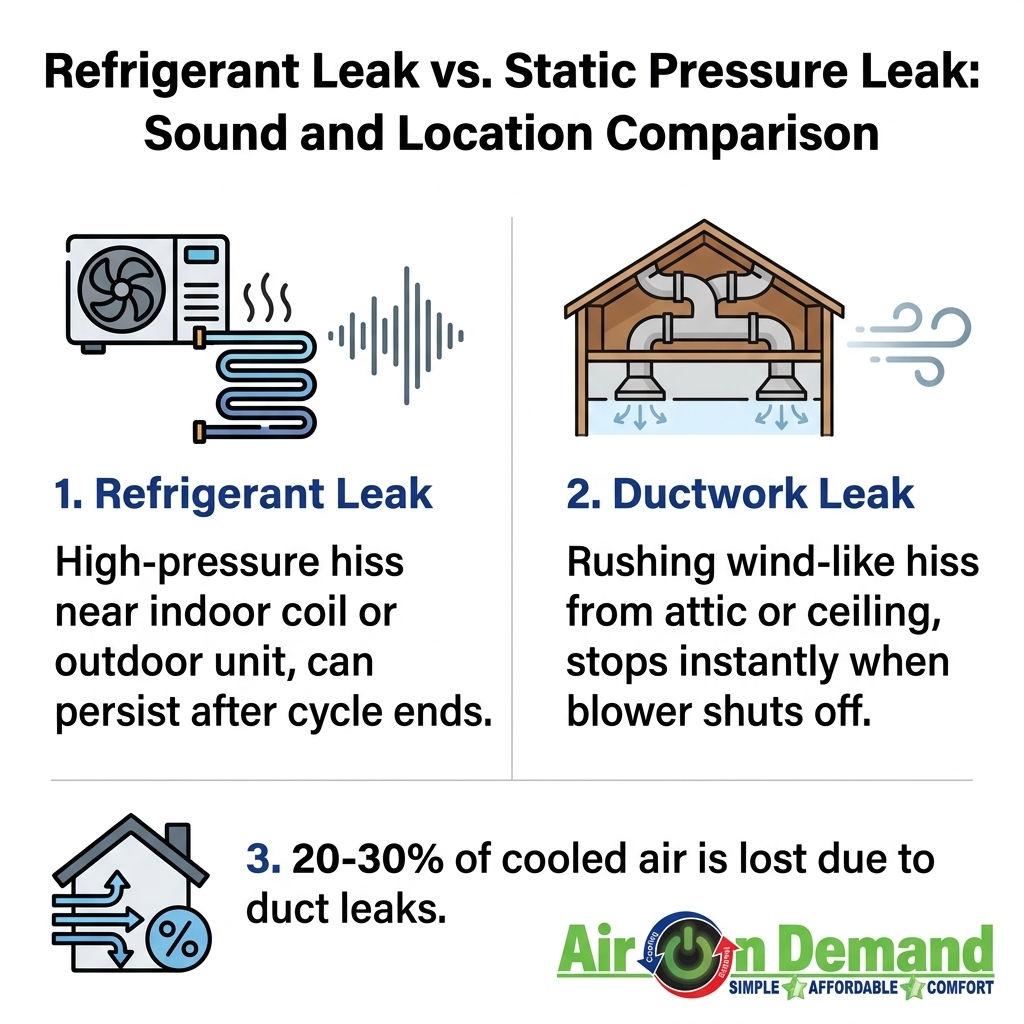
Refrigerant leaks generally occur directly at the evaporator coil inside the home or at the outdoor condenser unit. Because refrigerant operates under intense chemical pressure, a leak in the copper line set produces a sharp, high-pitched, and sometimes gurgling or bubbling hiss. It sounds somewhat like a tightly pinched aerosol can. In contrast, a ductwork leak produces a broader, rushing, wind-like hiss. This sound is caused by forced air escaping through a wide tear in the flexible plastic jacket, creating a loud whooshing noise that resonates through the attic floorboards and drywall.
• Sound Profile — Refrigerant Leak: Sharp, high-pitched, sometimes bubbling — Static Pressure (Duct) Leak: Broad, rushing, wind-like whoosh
• Location of Noise — Refrigerant Leak: At the indoor coil or outdoor compressor — Static Pressure (Duct) Leak: Overhead in the attic or ceiling space
• Airflow Temperature — Refrigerant Leak: Vents blow warm air constantly — Static Pressure (Duct) Leak: Vents blow cold air, but very weakly
• System Behavior — Refrigerant Leak: Coils may freeze over with solid ice — Static Pressure (Duct) Leak: System runs continuously to reach target temp
The most definitive way to tell the difference between these two issues is by paying close attention to the timing of the sound. Refrigerant hissing can persist shortly after the cooling system cycles off. Because the high and low pressure sides of the system take a few minutes to equalize after the compressor shuts down, the chemical hiss will often slowly fade out.
Conversely, ductwork hissing starts and stops exactly in sync with the blower motor. The moment the blower fan engages, the rushing noise begins. The exact second the fan powers down, the noise stops completely. This is because a static pressure leak only hisses when the blower motor is actively pushing air through the torn channel.
To understand why a duct suddenly bursts and creates that loud hissing sound, you have to look at the environment where the ductwork lives. In our years of repairing HVAC systems across Miami, we've seen exactly how our hot-humid subtropical climate and intense solar radiation affect building materials. Unconditioned attic spaces act as massive solar ovens. While the outside temperature might be 92 degrees, the radiant heat trapped beneath the roof decking can easily push attic temperatures to exceed ambient outdoor temperatures by 40 to 50 degrees.
By the time September rolls around and we begin focusing on fall preparation, your flexible ductwork has endured months of extreme thermal stress. Flexible ducts consist of an inner wire helix wrapped in plastic, surrounded by fiberglass insulation, and encased in an outer vapor barrier jacket. The connections between these runs, the trunk line, and the vent boots are sealed using specialized mastic paste and heavy-duty HVAC tape.
The Breakdown Process:
• Plastic embrittlement: The constant expansion and contraction from 140-degree afternoons to 80-degree nights causes the outer vapor barrier to lose its elasticity.
• Adhesive failure: The extreme heat bakes the mastic seals and HVAC tape, causing the chemical adhesives to dry out, become brittle, and crack.
• Structural separation: Once the adhesives fail, the heavy, insulated duct sags under its own weight, pulling away from the metal collars.
By early fall, this cumulative damage often results in sudden catastrophic tears. The moment the blower motor pressurizes the weakened line, the brittle tape gives way, the duct detaches, and you are left with a massive air leak venting directly into the roof space.
When HVAC professionals talk about airflow, we frequently reference "static pressure." In layman's terms, static pressure is the resistance to airflow within your duct system. HVAC systems rely on precise static pressure to push conditioned air evenly through the home, ensuring the furthest bedroom gets just as much cooling as the living room right next to the air handler. When a duct tears, the physics of your home's airflow completely changes.
Here is exactly what happens when a flexible duct fails and causes a loss of static pressure:
1. The System Pressurizes: The blower motor engages, pulling warm air from the return vents, pushing it across the cold evaporator coil, and forcing the newly cooled air into the main supply trunk line.
2. Air Seeks the Path of Least Resistance: Instead of traveling the full length of the ductwork to reach the vent registers in your rooms, the pressurized air finds the massive hole or disconnected collar in the attic.
3. The Hissing Vent is Created: Because the hole in the duct is often jagged or partially obstructed by the torn vapor barrier, the forced air squeezing through the gap creates a high-velocity rushing or hissing noise heard clearly through the ceiling.
4. Efficiency Plummets: According to Energy Star, 20 to 30 percent of air moving through duct systems is often lost to leaks, holes, and poor connections. In the case of a complete collar detachment, that localized loss can be nearly 100 percent for that specific branch.
This mechanical failure means the cooling you are paying for never reaches your living space, leaving rooms feeling stagnant and warm despite the system running constantly.
While the loud rushing noise is the symptom that usually prompts a service call, the secondary negative effects of a severe attic duct leak are far more damaging to your home and your equipment. When our team conducts pre-heating-season tune-ups, we often discover that a massive loss of static pressure overhead means homeowners are actively air conditioning the great outdoors.
Longer Run Times and Wasted Energy: Because escaping air means your system runs longer to reach the thermostat set point, your energy consumption skyrockets. The air conditioner will run continuously, trying to satisfy the thermostat, but since a large portion of the conditioned air is wasted cooling the attic space instead of the living areas, the house never quite reaches the target temperature.
Severe Indoor Air Quality Impacts: In Miami homes with attic-run flexible ductwork, a supply leak also creates a dangerous pressure imbalance. If you are blowing massive amounts of air into the attic, your home experiences negative pressure. To equalize, the house will pull air from wherever it can—often sucking dusty, unconditioned attic air, fiberglass particles, and humidity down through recessed lighting fixtures, wall cavities, and tiny gaps in the ceiling.
This influx of debris severely impacts indoor air quality and clogs filters prematurely. If you have noticed an unexplained increase in dust settling on your furniture alongside the hissing noise, the negative pressure from a duct leak is the likely culprit. Resolving this often requires targeted duct repair followed by professional air duct cleaning in Cutler Bay to remove the accumulated attic debris from your breathing air.
Because duct hissing mimics refrigerant hissing to the untrained ear, proper diagnostics are absolutely crucial. Guessing at the source of the noise can lead to expensive and unnecessary procedures. A thorough diagnostic process ensures you aren't paying for an unnecessary, labor-intensive refrigerant leak search when the ductwork is the real culprit.
Working with our highly trained technicians at Air On Demand means your system receives a comprehensive evaluation that pinpoints the exact source of hissing noises, saving you time and the frustration of a misdiagnosis. We do not just listen to the noise; we test the entire system's performance. By measuring the loss of static pressure using digital manometers, our technicians can map out exactly where the airflow is dropping off.
Why DIY Tape Fails: Attempting DIY duct tape repairs in a sweltering attic is highly ineffective and physically unsafe. Standard hardware store duct tape degrades rapidly in extreme heat. Proper duct repair requires specialized mastic sealant, tensioning tools to reconnect the inner wire helix to the metal collar, and professional-grade foil tape to ensure the vapor barrier is airtight. Scheduling a professional AC inspection ensures the torn line is rebuilt to withstand future heat waves, restoring proper static pressure to the entire system.
A loud hissing sound from the ceiling is a clear, undeniable sign that valuable cooled air is being wasted in your roof space. Identifying whether the issue is a simple duct tear or a more complex mechanical system leak is the very first step toward getting your home back to normal. Especially as we transition into early fall and focus on improving indoor air quality for the milder months ahead, duct failures are a common but highly solvable problem.
Addressing the ductwork issue before the system overworks itself into a secondary breakdown will restore your comfort and system efficiency. A clear explanation of the problem and targeted professional diagnostics can quickly resolve the noise, stop the massive energy waste, and ensure your system is blowing cold air into your living room instead of your attic. If you are tired of hearing that rushing wind overhead, it is time to bring in our experts for reliable Miami AC repair services.
Why is my AC making a hissing noise in the attic?
A hissing noise in the attic is typically caused by a tear or disconnection in your flexible ductwork. When the blower motor forces cold air through the ducts, the high-pressure air escaping through the hole creates a loud rushing or hissing sound that echoes through the ceiling. This means you are losing conditioned air into the unconditioned attic space.
Can leaking ductwork make a hissing sound?
Yes, leaking ductwork frequently produces a loud hissing or whooshing sound. This happens because the HVAC system operates under static pressure, and when that pressurized air finds a narrow escape route through a torn vapor barrier or broken mastic seal, it generates significant acoustic noise as it vents out.
What does a refrigerant leak sound like compared to an air leak?
A refrigerant leak produces a sharp, high-pitched, and sometimes bubbling hiss located near the indoor evaporator coil or the outdoor condenser unit. In contrast, an air leak in the ductwork sounds like a broader, rushing wind, is located in the attic or ceiling, and stops the exact second the blower fan turns off.
How do you find a ductwork leak in the attic?
Professionals find ductwork leaks by performing static pressure tests with digital manometers to identify zones with severe pressure drops. This is followed by a visual inspection of the attic trunk lines, branch runs, and collar connections to locate degraded tape, cracked mastic, or fully disconnected flexible ducts.
Is it safe to run my AC if the ductwork is hissing?
While running the AC with a duct leak is not an immediate electrical or chemical safety hazard, it is highly detrimental to your system and indoor air quality. It forces the equipment to run continuously, driving up energy consumption, and can pull dusty, contaminated attic air into your home through negative pressure imbalances.