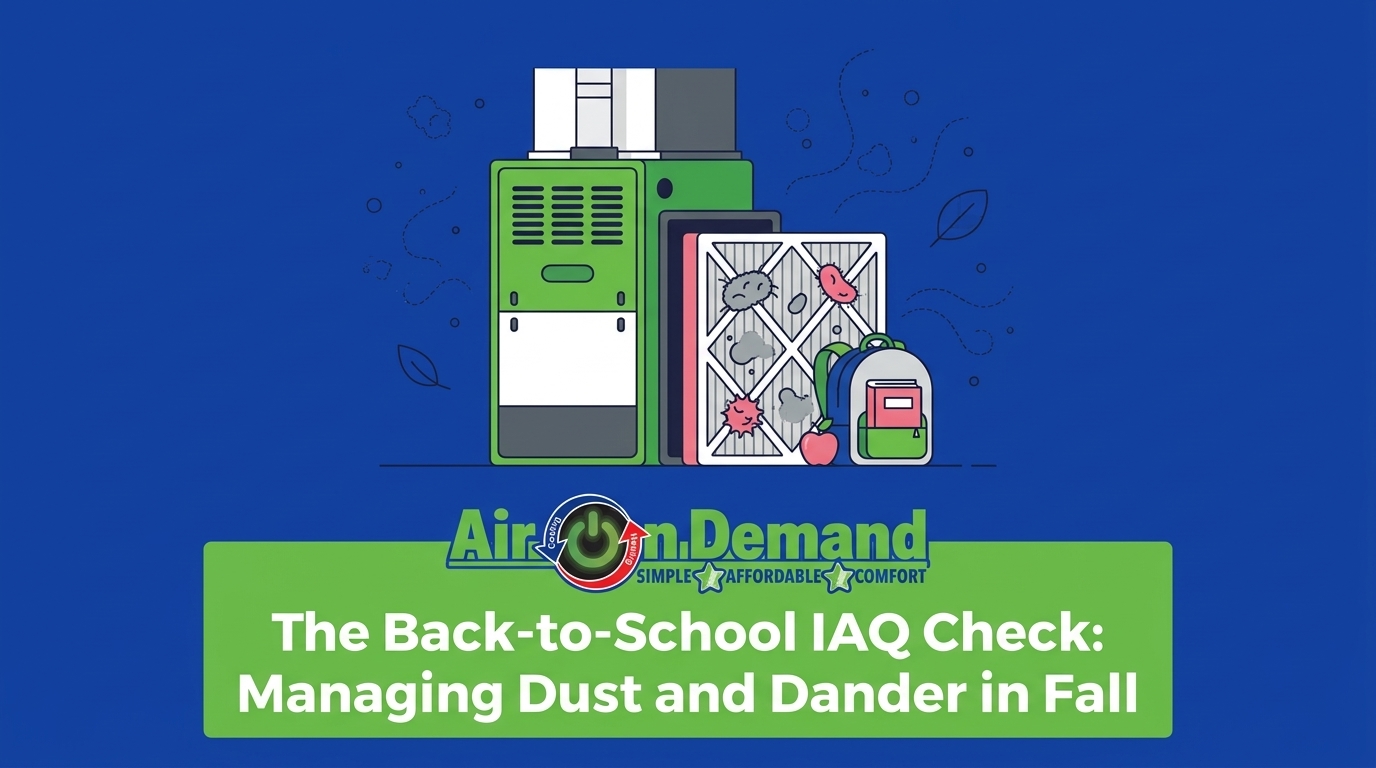
The Back-to-School IAQ Check: Managing Dust and Dander in Fall
September 28, 2026
September is officially here, and if you are noticing a sudden spike in indoor allergens as the kids head back to class, it is time for The Back-to-School IAQ Check: Managing Dust and Dander in Fall. At Air On Demand, our technicians consistently see a rise in indoor air quality concerns during this time of year. The September back-to-school transition brings a massive increase in household foot traffic, introducing a fresh wave of outdoor contaminants right into your living spaces. While outdoor temperatures remain scorching, your indoor air quality quietly drops as these new particles circulate through your ductwork. You have to proactively adjust how you monitor and cycle your HVAC system to keep your home's air clean and breathable.
For comprehensive solutions to this seasonal shift, explore our expertise in indoor air filtration and learn more about upgrading your air conditioner filters in Miami.
During the summer months, your household likely settles into a predictable routine. The doors stay closed to keep the heat out, and your air conditioning system manages a relatively stable environment. However, the September back-to-school transition shatters this equilibrium. Suddenly, family members are leaving early in the morning and returning during the peak heat of the afternoon. Every time that front door swings open, a rush of unconditioned, allergen-heavy air floods into your hallway.
This disruption does not just bring in hot air; it introduces a completely different profile of airborne contaminants. Fall weed pollen, particularly ragweed, begins to peak just as the school year starts. Because outdoor temperatures in South Florida are still incredibly high, your air conditioner is running at near-peak capacity. As soon as those new particles enter the house, your HVAC system's return vents pull them in, circulating them into every room before they have a chance to settle.
Understanding this dynamic is the first step in protecting your family's respiratory health. The foundation of a healthy home during this busy season relies entirely on how well your system captures these invaders. If you do not adjust your maintenance habits to account for this sudden influx of dust and pollen, your system will struggle to keep up, and your indoor air quality will visibly decline.
The physical dynamic of your home changes drastically the moment the school bell rings for the first time. Think about the sheer volume of door openings and closings required for school drop-offs, bus pickups, and afternoon sports practices. These events usually occur during the hottest parts of the day, creating massive pressure differentials between the inside of your home and the outside environment.
The problem: Every time an exterior door opens, the cool, dense, conditioned air spills out, and the hot, humid, particle-laden air rushes in to replace it. This is not a slow drift; it is a rapid exchange driven by temperature and pressure differences.
The cause: Unlike northern states where homeowners might turn off their cooling systems and open windows to enjoy a crisp autumn breeze, our team knows firsthand that the Miami FL indoor climate demands that homes remain tightly sealed. Our air conditioners run constantly. Because modern homes are built to be highly energy-efficient and airtight, any contaminants that enter through those frequent door openings are effectively trapped inside.
The solution: According to the Environmental Protection Agency (EPA), indoor air can be two to five times more polluted than outdoor air, and this statistic becomes glaringly obvious during the back-to-school rush. Relying on standard, low-grade filters is no longer enough. You need a strategic update to your filtration approach when household traffic increases, ensuring your system can process the heavier particulate load without suffocating the blower motor.
The contaminants entering your home in September are not just floating in on the breeze; they are being actively carried inside. Children act as highly effective contaminant shuttles. They spend time on school playgrounds, athletic fields, and buses, picking up microscopic dust, mold spores, and pollen along the way.
When kids drop their backpacks on the floor and kick off their shoes, they release a cloud of these schoolyard allergens directly into your living space. This new influx immediately mixes with the existing contaminants already present in your home, most notably pet dander. Dogs and cats shed microscopic skin flakes constantly, which settle into carpets, rugs, and upholstery.
When the afternoon rush hits, the heavy foot traffic kicks that settled pet dander back up into the air, right as the new schoolyard dust is being introduced. This collision creates a heavy, complex mixture of particulates that places an enormous burden on your HVAC system. When our technicians inspect ductwork and blower motors in the early fall, a pattern we see often is the rapid buildup caused by this afternoon phase. The airborne particles are drawn into the return vents, rapidly clogging your filters and coating your indoor coils if the filtration is inadequate.
To manage this specific combination of heavy dander and fine outdoor pollen, many homeowners find that standard HVAC filters need backup. Integrating dedicated air cleaners and purifiers into your home's ecosystem helps neutralize these contaminants before they ever reach your primary ductwork, keeping your main AC system clean and your air breathable.
One of the most persistent myths we encounter in home maintenance is that air filters only need to be changed on a strict 30-day or 90-day calendar cycle. While calendar reminders are helpful, they ignore the most critical variable in air quality: how the home is actually being used.
Increased household activity drastically reduces a filter's effective lifespan. A filter that lasts three months during a quiet, low-traffic summer might clog completely in just four weeks once the back-to-school rush begins. Shifting your mindset from time-based maintenance to traffic-based maintenance is essential for keeping your system running efficiently.
• Time-Based (Calendar) — Filter Check Frequency: Every 30 to 90 days — Trigger for Replacement: The date on the calendar — Impact on HVAC System: High risk of strain during busy months
• Traffic-Based (Usage) — Filter Check Frequency: Bi-weekly during transitions — Trigger for Replacement: Visual inspection and dirt buildup — Impact on HVAC System: Maintains optimal airflow and efficiency
You do not need specialized tools to check your filter's status. The safest, non-licensed visual cue is the light test. Simply pull the filter out and hold it up to a bright overhead light. If you cannot see light shining through the media, the filter is full and needs to be replaced immediately, regardless of how long it has been installed.
Staying on top of this schedule is vital. Timely air filter replacement in Kendall and surrounding areas prevents the blower motor from overheating and ensures your family is not breathing recycled schoolyard dust.
Contextualizing your indoor air quality strategy requires a hard look at the reality of our local weather. As Miami HVAC professionals, we know the calendar might say it is fall, but the Miami FL indoor climate tells a very different story. Average September highs remain hovering around 89 degrees, accompanied by stifling humidity. Your air conditioning system is not taking a break; it is still operating under peak summer conditions.
Because your AC system is running constantly to combat the heat, it cycles the indoor air rapidly. This high-velocity circulation pulls dust and dander into the return ducts much faster than it would during milder weather. However, the real complication is the humidity.
When indoor humidity levels rise—often caused by those frequent door openings letting in sticky afternoon air—airborne particles absorb that moisture. Dust, pollen, and pet dander physically swell and become heavier. Instead of floating easily into your return vents to be caught by the filter, these heavy, damp particles stick to your walls, settle deep into your carpets, and coat your furniture.
If your AC is not effectively dehumidifying the air, these sticky allergens create an uncomfortable, stuffy environment that exacerbates indoor allergy symptoms. Fall HVAC maintenance in South Florida must account for this continuous, heavy-duty cooling requirement rather than preparing for a transition to heating.
Standard fiberglass air filters—the cheap, see-through blue or green ones you find at the hardware store—are designed to do exactly one thing: protect the HVAC equipment from large debris like hair and heavy dust bunnies. They are completely ineffective at capturing the fine pollen, mold spores, and microscopic pet dander introduced during the back-to-school season.
In our experience installing and maintaining AC systems across Miami, when you combine high household traffic with the heavy moisture loads of the local climate, standard filters quickly become overwhelmed. The cardboard frames can warp from the humidity, allowing dirty air to bypass the filter entirely and coat your sensitive evaporator coil with grime.
To properly manage this seasonal shift, you need specialized high-humidity filtration solutions designed to resist moisture while capturing microscopic allergens. Upgrading to a Health Smart filter provides superior particulate capture without restricting the vital airflow your system needs to survive the South Florida heat. These advanced filters use synthetic media that will not degrade when exposed to high moisture levels, ensuring a tight seal and consistent performance.
Because these filters capture significantly more debris than standard options, they require careful monitoring during high-traffic periods. Understanding the nuances of changing your Health Smart filter as the seasonal load increases is the key to maintaining pristine indoor air quality all autumn long.
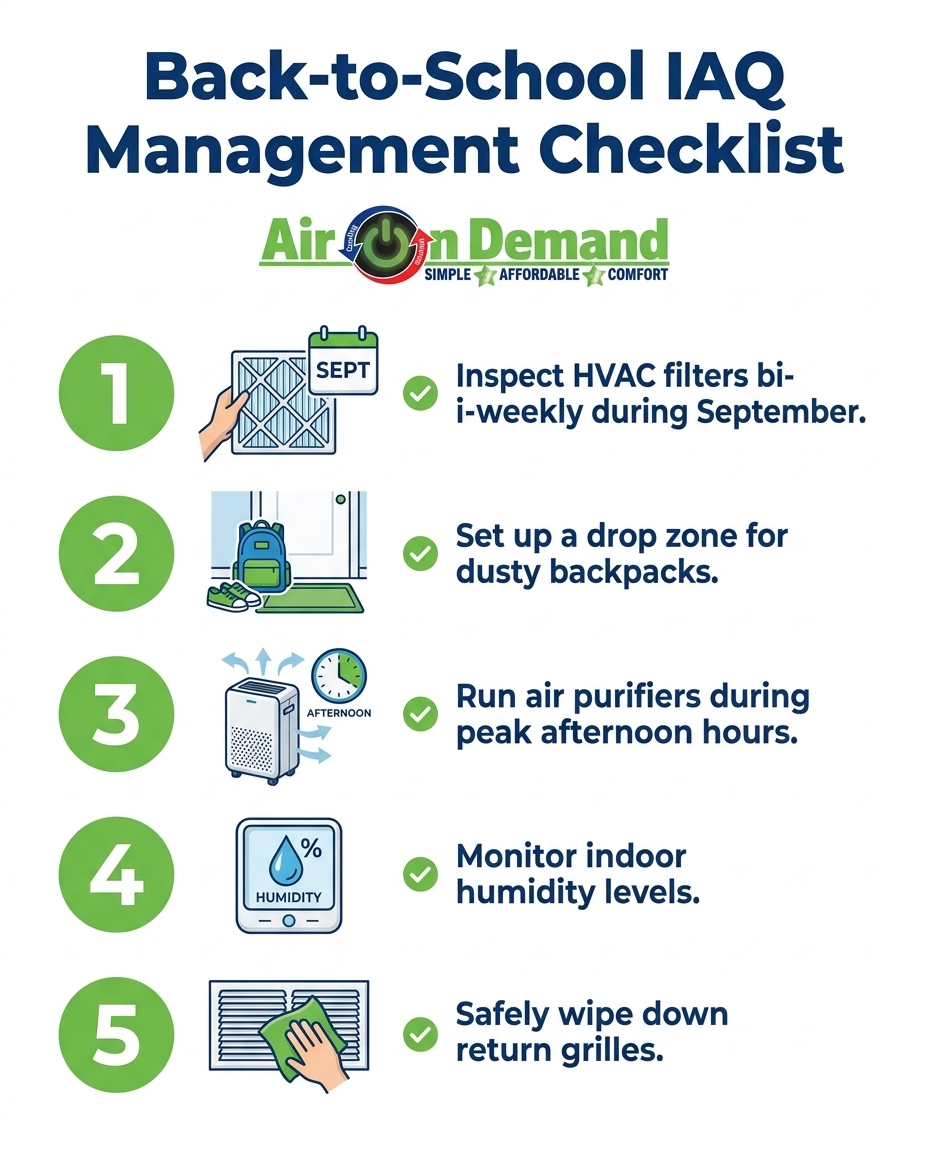
Taking control of your home's environment during the September back-to-school transition does not have to be overwhelming. By implementing a few strategic habits, you can drastically reduce the amount of dust and dander circulating through your ductwork. Follow this actionable checklist to keep your air clean and your HVAC system running smoothly:
• Inspect HVAC filters bi-weekly: During the first month of school, check your filters every two weeks. The sudden increase in foot traffic will clog them much faster than during the quiet summer months.
• Establish a dedicated 'drop zone': Set up a specific area right at the entryway for backpacks, shoes, and sports gear. Keeping these items contained prevents outdoor dust and pollen from spreading into your main living areas.
• Cycle air purifiers strategically: Schedule your standalone or whole-home air purifiers to run continuously during the peak afternoon hours when kids get home and kick up settled pet dander.
• Monitor indoor humidity: Keep an eye on your thermostat's humidity reading. Ensure your AC is effectively dehumidifying the air to prevent heavy, moisture-laden dust from sticking to your surfaces.
• Wipe down return grilles: Safely use a microfiber cloth to wipe the dust off the exterior of your return vents and grilles. Do this safely from the ground without opening the ductwork or removing any hardware.
Your house gets dusty in the fall primarily due to increased foot traffic from busy school and work schedules. Every time the door opens, new contaminants rush in. Additionally, peak fall weed pollen (like ragweed) enters the home on clothing, and continuous AC usage rapidly circulates this settled dust through your rooms.
Filter replacement frequency depends heavily on household traffic, the presence of pets, and your local climate. In high-traffic homes located in continuous cooling climates, you may need to check and replace your filters every 30 days during the busy back-to-school transition to maintain proper airflow.
Indoor allergies often spike in September because outdoor allergens are brought inside and trapped in sealed, air-conditioned homes. If your HVAC filters are already full from summer usage, the system cannot remove these new particles, causing it to distribute trapped allergens directly into your breathing space.
To effectively reduce dust, upgrade to specialized high-humidity filters that capture finer particles without warping. Utilize dedicated air purifiers during the afternoon rush to catch airborne dander, manage entryway traffic by creating a drop zone for bags, and clean your exterior vents regularly.
Yes, frequent door openings let out perfectly conditioned air and let in hot, humid, and dirty air. This physical dynamic significantly increases the cooling load on your compressor and accelerates filter clogging, forcing your HVAC system to work much harder to maintain the set temperature.
Managing the hidden September IAQ drop requires proactive filter checks and a clear understanding of how household traffic impacts your HVAC system. By staying ahead of the sudden influx of dust and dander, you keep your home comfortable, your air clean, and your cooling system running efficiently. Take the time to adjust your maintenance routines for the back-to-school season. Our team at Air On Demand is always here to help you navigate these seasonal transitions and explore professional indoor air quality solutions to fully support your home's changing needs.