
Assessing the Value of Daikin Extended Labor Warranties for Ductless Mini Splits
July 31, 2026
Assessing the Value of Daikin Extended Labor Warranties for Ductless Mini Splits is one of the most crucial steps homeowners in Miami FL must take to ensure their new climate control system is fully protected when something goes wrong. After finalizing the installation of a high-efficiency climate control system, many face a critical decision during the paperwork phase: determining whether standard coverage is enough, or if an extended labor plan is necessary. Modern inverter technology is incredibly reliable, but the physical reality of continuous operation under peak summer heat creates inevitable wear and tear. You have invested in superior comfort, but protecting that investment requires a thorough understanding of the fine print within your coverage documents.
The choice between a standard parts-only policy and comprehensive labor protection is frequently misunderstood. In our years of experience at Air On Demand installing and maintaining these units, our team frequently sees homeowners assume that a long-term manufacturer guarantee shields them from all future repair bills. However, the advanced mechanical complexity of ductless mini split systems makes extended labor coverage a necessity rather than a luxury for many households. The compact, dense nature of these modern units requires specialized diagnostic procedures and meticulous disassembly time. As we explore the technical realities of servicing these systems, you will see why evaluating your warranty options is one of the most important steps in securing your long-term home comfort. The decision ultimately comes down to understanding the difference between receiving a free replacement part and paying for the highly skilled labor required to install it.
To make an informed decision about extended coverage, you must first establish a baseline knowledge of what the manufacturer provides right out of the box. The standard factory protection is designed to shield you from manufacturing defects, but it has specific boundaries regarding how that protection is applied to your Daikin equipment.
When you purchase a new system, it typically comes with a robust standard parts warranty. Upon proper system registration, this coverage often extends to 10 or 12 years, depending on the specific model and tier of the equipment. This baseline policy is highly valuable because it protects against premature failure in major, highly engineered components. If your system experiences a manufacturer defect in the outdoor inverter compressor, the sophisticated electronic expansion valves, or the primary control boards, the hardware itself is covered. For owners of Daikin multi-zone wall cassettes, knowing that the internal mechanical parts and complex inverter boards are guaranteed provides significant peace of mind regarding the hardware's longevity.
The critical gap in standard coverage lies in the execution of the repair. Standard warranties typically offer very limited or zero long-term coverage for the specialized labor required to actually diagnose the issue, remove the broken part, and install the new one. Free parts do not equate to a free repair. When a component fails, a licensed technician must travel to your home, utilize advanced diagnostic tools to pinpoint the electrical or mechanical failure, safely dismantle the unit, integrate the new component, and recalibrate the system. The technician's time, expertise, and specialized tools are entirely separate from the hardware itself. If you rely solely on the standard parts policy, you remain fully responsible for the labor costs associated with every repair call over the next decade.
The Problem: Many homeowners do not realize just how densely engineered indoor ductless units are until a repair is necessary. Unlike traditional central air handlers that reside in spacious garages or large utility closets, ductless systems must fit complex mechanical processes into a highly compact, aesthetically pleasing footprint on your wall.
The Cause: To achieve this space-saving design, engineers tightly pack the blower wheels, condensate management systems, thermistors, and delicate electrical boards into a very small chassis. When a component deep inside the unit requires attention, a technician cannot simply pop off a large metal access panel and reach inside. Instead, they must carefully navigate a maze of tightly woven wiring harnesses and interlocking plastic housing components.
The Solution: Our technicians at Air On Demand know firsthand that completing a mini split repair in Miami requires a methodical, step-by-step disassembly process. This intricate work drastically increases the labor time compared to traditional central AC repairs. Because the mechanical reality of these systems demands more hands-on technician time, having labor coverage becomes incredibly valuable.
Consider the process of replacing a blower wheel motor inside Daikin multi-zone wall cassettes. The technician must first safely disconnect the power, then carefully remove the outer chassis covers. Next, they must unclip the automated louvers, taking care not to snap the fragile plastic retention tabs. The primary electrical control board often sits directly in the path of the mechanical components, meaning it must be carefully unscrewed and gently moved aside without stressing the delicate wiring harnesses. Finally, the condensate drain pan must be lowered to access the blower assembly. This precision work requires patience and expertise to avoid damaging adjacent parts. The time required to safely disassemble and reassemble a compact unit significantly increases the labor investment for even minor component swaps.
Ductless technology offers incredible flexibility, allowing you to customize the temperature in different areas of your home independently. However, homes with multiple indoor units inherently carry a higher probability of labor needs over a 12-year lifespan. Understanding how this architecture impacts your long-term maintenance is crucial when evaluating warranty options.
A multi-zone setup connects several independent indoor units to a single outdoor condenser. While this is fantastic for energy efficiency and personalized comfort, it changes the math on potential repairs. In a traditional central system, you have one indoor air handler containing one blower motor, one primary coil, and one condensate drain system. In a four-zone ductless application, you have four separate indoor blower motors, four distinct electronic control boards, four sets of automated louvers, and four individual condensate management systems.
Each individual indoor unit contains its own motors, sensors, and moving parts. This architecture effectively multiplies the potential labor points across your home. If a power surge affects the electronics, or if standard wear and tear eventually catches up with the blower motors, you have multiple units that may require specialized teardowns. When you are matching indoor air handlers with new Daikin condensers, you are building a highly sophisticated, decentralized climate network. Because the number of mechanical components is multiplied by the number of zones installed, the value of an extended labor warranty scales directly with the size of your multi-zone system. Protecting four highly intricate wall cassettes with comprehensive labor coverage ensures that the multiplied complexity does not result in multiplied out-of-pocket labor expenses.
The environment in which your HVAC system operates plays a massive role in its overall lifespan and the frequency of required maintenance. Equipment installed in mild, temperate regions experiences far less mechanical stress than equipment tasked with battling extreme subtropical environments.
HVAC systems in our specific subtropical environment lack a true off-season. While systems in northern states might sit dormant for months at a time, local units run nearly year-round to maintain indoor comfort. This continuous operational load accelerates the standard wear-and-tear timeline. Parts that might last 15 years in a mild climate may reach the end of their mechanical lifespan much sooner when subjected to constant, heavy use. Because the probability of needing a repair over a decade is higher in this environment, labor-backed repair coverage transitions from a cautious luxury to a highly practical necessity.
Variable-speed inverter technology is brilliant because it adjusts its output to match the exact cooling demand of the home, running at lower speeds to save energy. However, during the July peak summer heat, these inverter compressors must sustain maximum high-capacity output levels to manage the extreme external temperatures. Weaving through consecutive weeks of blistering heat forces the compressor and the outdoor fan motor to work relentlessly. This sustained high-capacity operation places immense long-term stress on the outdoor unit's mechanical and electrical components.
It is not just the heat that challenges the equipment; it is the sheer volume of moisture extracted from the air daily. High humidity forces the indoor units to pull gallons of water out of your living space continuously. This places a constant, heavy strain on the condensate drain lines, internal drip pans, and any integrated condensate pumps. Managing this massive amount of water day after day means these drainage components require frequent professional attention to prevent clogs and water backups. The continuous battle against humidity ensures your system is always working hard, further validating the need for comprehensive protection.
To facilitate your final decision, it helps to view the core differences between standard and extended coverage in a clear, side-by-side format. Understanding exactly where your responsibility begins and ends is the key to avoiding surprises during a service call. The value of extended coverage is found not just in the frequency of repairs, but in the complexity of the labor required for those repairs.
• Manufacturer Defects — Standard Parts Warranty: Hardware replacement covered — Extended Labor Warranty (e.g., Daikin Asure): Hardware replacement covered
• Diagnostic Fees — Standard Parts Warranty: Homeowner responsibility — Extended Labor Warranty (e.g., Daikin Asure): Covered under policy terms
• Disassembly Time — Standard Parts Warranty: Homeowner pays hourly labor rate — Extended Labor Warranty (e.g., Daikin Asure): Covered under policy terms
• Reassembly & Testing — Standard Parts Warranty: Homeowner pays hourly labor rate — Extended Labor Warranty (e.g., Daikin Asure): Covered under policy terms
• Term Length — Standard Parts Warranty: Up to 12 years (with registration) — Extended Labor Warranty (e.g., Daikin Asure): Matches extended term (often 10-12 years)
• Unexpected Bills — Standard Parts Warranty: High risk for complex cassette teardowns — Extended Labor Warranty (e.g., Daikin Asure): Shields homeowner from complex labor costs
The Standard Path: Relying solely on the standard parts guarantee covers the physical hardware but leaves you entirely responsible for the diagnostic fees, the meticulous disassembly time, and the physical repair labor. If a repair takes three hours due to the tight clearances of a wall cassette in Miami FL, you are responsible for those three hours of highly specialized labor.
The Extended Path: Opting for an extended labor plan, such as Daikin Asure, covers the technician's time and expertise. This path effectively shields you from unexpected repair bills for complex cassette teardowns, ensuring that a covered hardware failure does not result in a significant out-of-pocket labor expense.
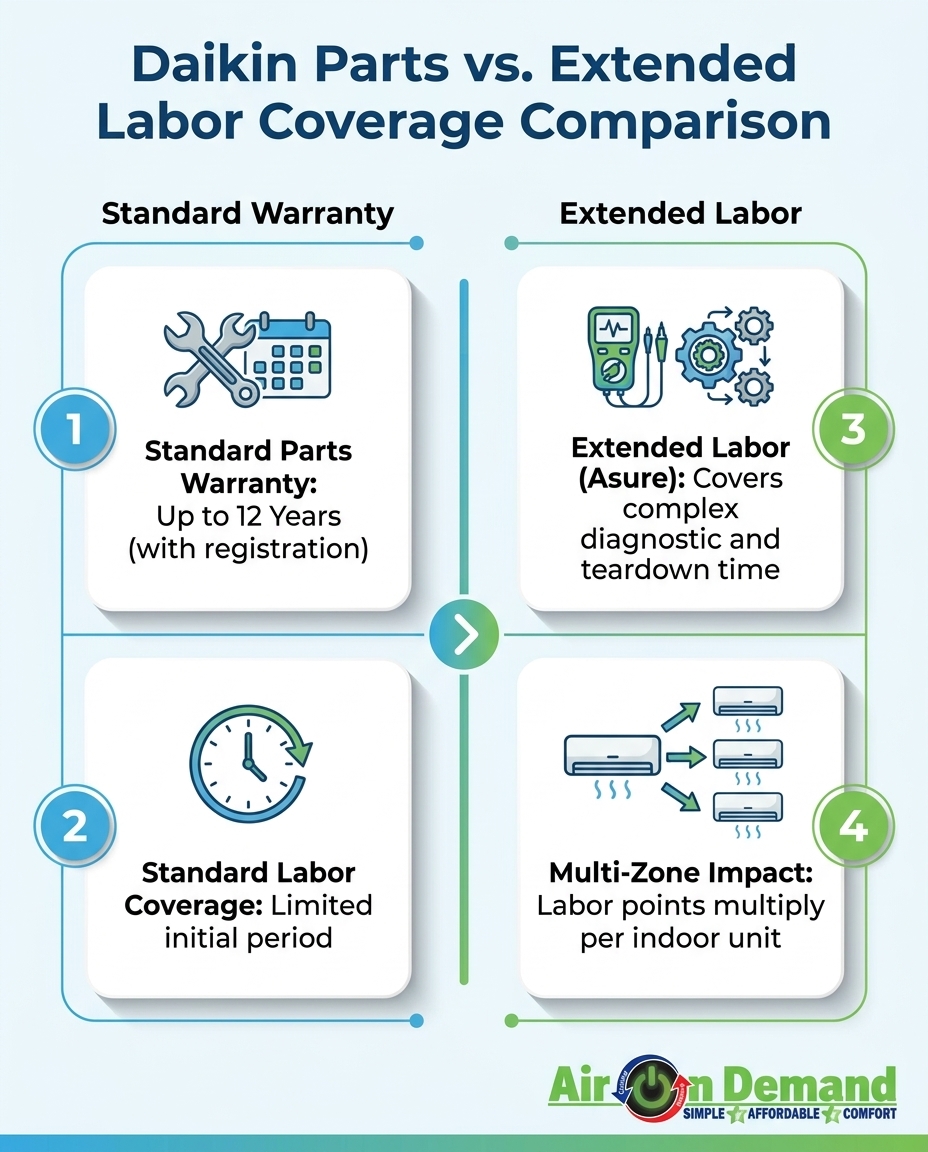
Regardless of whether you choose the standard parts route or upgrade to extended labor coverage, you must adhere to strict manufacturer requirements to maintain your warranty status. Failing to follow these guidelines can accidentally void your coverage, leaving you entirely responsible for both parts and labor.
• Strict Registration Windows: Most manufacturers enforce a strict 60-day window for registering new equipment. If you fail to register the system within this timeframe, the standard 12-year parts term often drops significantly, sometimes reverting to a mere 5-year baseline.
• Professional Installation: Warranties mandate professional installation by certified technicians. Utilizing specialized Daikin installers like Air On Demand ensures all warranty guidelines are strictly followed from day one, protecting your investment from the start.
• No DIY Repairs: Attempting to fix a complex inverter system yourself, or hiring an unlicensed handyman, will instantly void manufacturer protections. These systems require specialized tools and training.
• Routine Maintenance: Neglecting annual professional maintenance can also jeopardize your coverage. Manufacturers require proof that the system has been reasonably maintained to honor claims on failed components.
• Transferability Rules: If you plan to sell your property, check the transferability rules. Some policies allow you to transfer the remaining coverage to the new homeowner, adding excellent resale value to the home, provided you file the correct transfer paperwork within the required timeframe.
By understanding these compliance rules, you ensure that your Daikin multi-zone wall cassettes remain fully protected throughout their intended lifespan. Your mini split installation is a major upgrade to your home; treating the warranty paperwork with the same level of care ensures lasting peace of mind.
Does a standard Daikin warranty cover labor costs?
The standard factory warranty primarily covers the cost of replacement parts, not the labor required to install them. While there may be a very brief initial labor coverage period immediately following installation, long-term labor costs are generally the homeowner's responsibility unless an extended labor plan is purchased.
Is an extended labor warranty worth it for a multi-zone mini split?
Yes, an extended labor warranty is highly recommended for multi-zone configurations. Because each indoor unit contains its own motors, sensors, and control boards, a multi-zone setup multiplies the potential labor points in your home. Extended coverage protects you from the specialized labor costs required to dismantle and repair these compact individual units.
What is the difference between a parts and labor warranty for Daikin?
A parts warranty guarantees that the manufacturer will provide a free replacement component if a part fails due to a defect. A labor warranty covers the cost of the licensed technician's time, expertise, and diagnostic work required to safely remove the broken component and install the new one.
What specific actions will void a Daikin mini split warranty?
Attempting do-it-yourself repairs, hiring unlicensed individuals for service, or failing to perform regular professional maintenance can instantly void your coverage. Additionally, using unapproved third-party replacement parts or failing to register the equipment within the required timeframe can severely limit or cancel your protections.
How long do I have to register my new Daikin system for full coverage?
Homeowners typically have a strict 60-day window from the date of installation to register their new equipment with the manufacturer. Completing this registration on time is critical, as it usually extends the baseline parts coverage to the full 10- or 12-year term.
Securing the right Daikin mini split warranty ensures your home remains comfortable without the stress of unexpected repair labor. By understanding the mechanical reality of your ductless system, you can make an informed choice that truly protects your investment. If you need expert guidance on choosing the right coverage or require a professional tune-up to maintain your current warranty compliance, reach out to our team today for a comprehensive evaluation.